

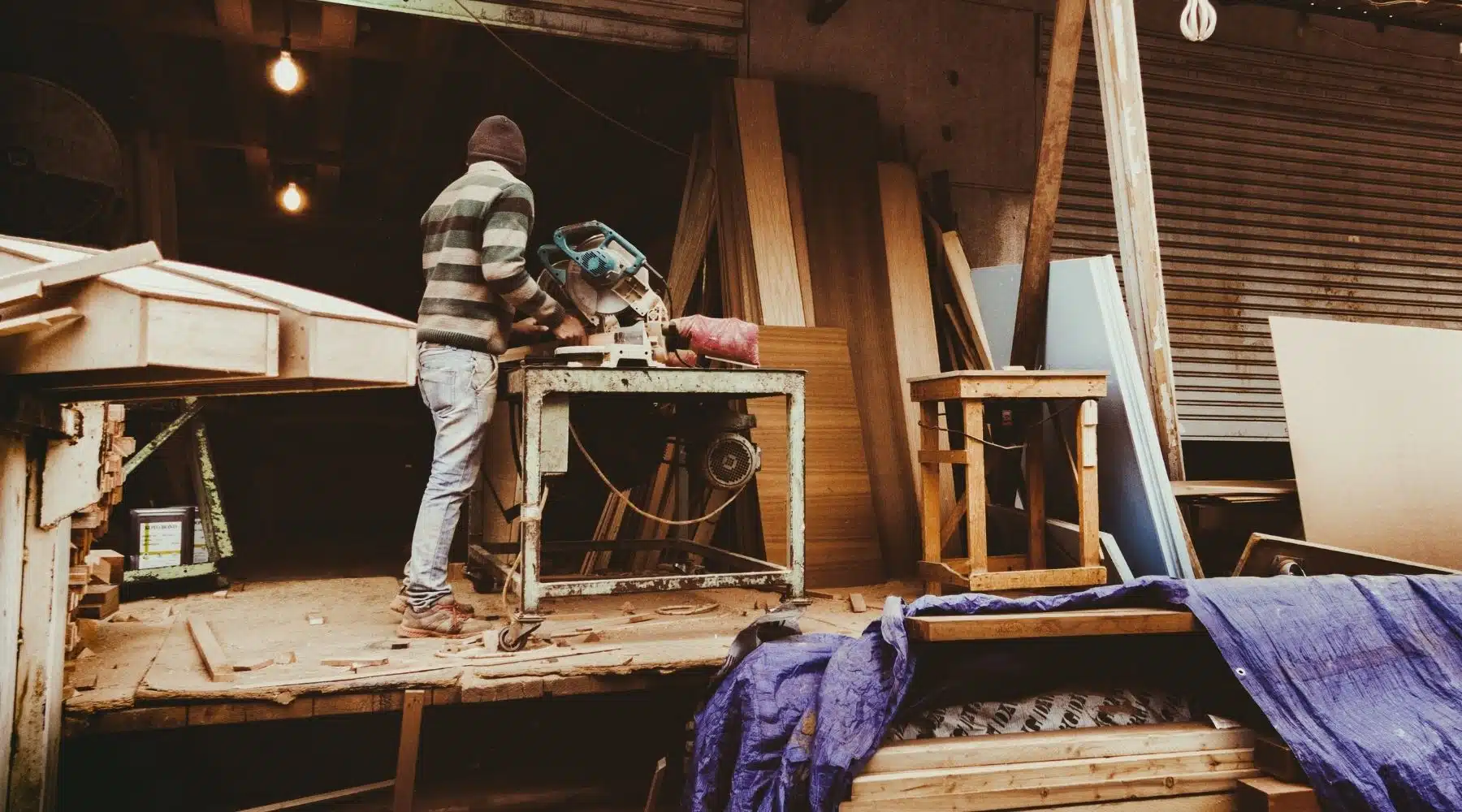
It’s safe to say Australia has a lot of tradies. According to the Australian Bureau of Statistics (ABS), there were 478,651 construction businesses in operation as of the end of the 2025-26 financial year. That’s comfortably the most of any industry, adding up to 17.0% of all businesses across the country at that time.
With so many builders, plumbers, electricians and carpenters out there running businesses of all shapes and sizes, there’s no one-size-fits-all approach when it comes to finance. For example, what an apprentice can access will be different to what their boss can. That’s why Aussie lenders offer a range of tradie finance options to suit different trade operations.
What is tradie finance?
Tradie finance refers to any type of finance product designed to help tradespeople and trade businesses fund what they need to operate, whether that’s a work vehicle, tools and equipment or day-to-day cashflow. It isn’t a single product in its own right, but rather an umbrella term covering several types of business and asset finance tailored to how tradies work and earn.
Because income and business structures vary so much across the trades, from apprentices on a wage to established company owners, tradie finance can look very different for different borrowers. What you can access, and on what terms, depends heavily on your employment status, ABN and GST registration, and how long you’ve been trading.
Finance options available to tradies
The finance available to you as a tradie depends largely on where you sit in your trade career, from an apprentice just starting out to a company owner with years of trading history behind you.
Apprentice
As the least experienced and lowest paid of all tradies, finance options for apprentices tend to be more limited. That doesn’t mean you’re locked out altogether, though: a standard secured consumer car loan or unsecured personal loan is generally still available while you’re completing your apprenticeship.
Since you’re earning a wage rather than running your own ABN, commercial finance is less common at this stage. You can still claim a tax deduction for the business-use portion of what you finance, including interest and fees on a car or personal loan.
It’s worth being cautious about applying too early. If you’re fresh out of high school or only just starting your apprenticeship, applying for finance straight away is likely to end in rejection. Waiting until you’re at least three to six months into your apprenticeship gives you a better shot at approval.
Full-time tradesperson
Your situation looks similar to an apprentice’s, but your odds of approval improve thanks to higher pay and generally steadier employment.
The same options are available to you, with secured vehicle finance and personal loans both coming with tax benefits tied to business use. If you’d rather take out a business loan instead, you’ll need an ABN and to meet your lender’s usual criteria.
Sub-contractors (self-employed)
Once you’re operating under your own ABN as a self-employed sub-contractor, your lending options open up considerably. Commercial finance for vehicles and equipment becomes far more common than it was as an employee.
This also gives you access to unsecured business loans, which let you use the funds however you like (provided they’re used for business purposes). Personal loans are still an option but less commonly used by sub-contractors, since business loans typically offer higher limits once you’ve built a solid trading and repayment history.
If you don’t have the financials a lender would usually ask for, low doc finance is worth considering instead. Depending on your profile, you may not need to provide any proof of income at all. Lenders will generally focus on how long you’ve held your ABN and GST registration, along with any assets in your name, instead.
Company owner
As a company owner, your borrowing power and approval odds are closely tied to your business’s trading history. A brand-new ABN and GST registration won’t get you very far on its own.
With two or more years of both, and solid financials behind you, you’ll be seen as a far stronger prospect than most other commercial applicants. Both unsecured and secured business loans become realistic options at this stage, as well as dedicated asset finance deals for vehicles and equipment.
What assets and equipment can I finance as a tradie?
There’s a wide range of assets, equipment and tools tradies commonly look to finance, most often through a chattel mortgage, or by leasing through a finance lease or operating lease instead of buying outright.
What you need varies by trade, but here’s a general guide to the essentials:
| Trade | Mandatory | Equipment and tools |
|---|---|---|
| Electricians | Ute or van | Power tools, ladders, testing equipment, conduit benders |
| Bricklayer | Ute or small truck, mixer, scaffold | Mixer, trowels, levels |
| Plumbers | Ute, van or small truck | Drain cameras/jet rods, pipes, excavator or trenching machine – trailer |
| Carpenters | Ute or van | Saws, drills, nail guns, ladders, levels |
| Concreters | Ute or small truck | Mixer, excavator, screeds, trowels |
| Roofers | Ute or small truck | Scaffold, edge protection, ladders, harnesses |
| Landscaper | Ute or small truck | Excavator, wheelbarrows, chainsaws, trimmers |
| Mechanic | Workshop/garage | Hoist, tool chests, diagnostic equipment |
Whether it makes sense to buy or lease usually comes down to how long you’ll need the asset and whether you want to own it outright at the end of your agreement. Buying through a chattel mortgage means you build equity in the asset and can claim depreciation, while leasing can free up cashflow and suit equipment you’ll want to upgrade regularly.
How much will my tradie finance deal cost?
Because tradie finance covers everything from a work ute to a business loan for cashflow, there’s no single answer to what it’ll cost. Several factors influence your rate and overall cost, regardless of which type of finance you choose:
- Type of finance: of course, a loan will look different to a lease in terms of the cost, so it’ll all depend on what you end up choosing.
- Interest rate: perhaps the most important factor going into your overall cost, rates vary significantly depending on the type of finance, whether it’s secured or unsecured and your credit and trading history.
- Trading history: the longer your ABN has been registered and you’ve shown successful trading, the more competitive a rate you’re likely to be offered.
- Security: financing an asset like a vehicle or piece of equipment, or offering other security, will generally get you a lower rate than an unsecured facility.
- Deposit: putting down a deposit reduces the amount you need to finance, which in turn reduces your total interest.
- Loan term: a shorter term increases your regular repayments but lowers the total interest you’ll pay over the life of the loan.
- Fees: most lenders charge a one-off establishment fee, as well as an ongoing monthly annual fee for the life of the loan. Some may exclude one or both from their agreements, however.
- Early repayment: if your finance deal allows you to clear your debt ahead of schedule, you could save on interest and fees significantly. Business loans typically allow you to do this, but asset finance agreements often don’t.
Case study: the cost of starting up a plumbing business
After working in the industry for five years, Noah is looking to start up his own plumbing business. Before he can get to work, he needs to buy his vehicle, trailer, tools and insurance to get going. He maps out how much each one will cost him:
| Item | Cost |
|---|---|
| Ford Ranger Single Cab XL 2.0 4×4 | $45,600 |
| Trailer | $4,899 |
| Tools and equipment | $3,000 |
| Business insurance (annual) | $1,500 |
| Car insurance (annual) | $1,350 |
| Total | $56,349 |
| Base price of vehicle obtained from carsguide and trailer prices are indicative only. Both may vary by dealer and location. | |
There are a few ways to do this. He could take out a loan for the ute alone ($45,600) and cover the trailer, tools and insurance separately, extend the loan to include the trailer ($50,499) and pay for tools and insurance out of pocket or bundle everything into a single business loan.
Because his business is brand-new, Noah won’t be able to include everything in the same loan. However, thanks to his continuity in the industry, he can take out a loan for his ute and roll the trailer in, but will need to cover the cost of tools, equipment and insurance policies himself. He’s approved for a loan of $50,499 over one year and pays the remaining startup costs out of pocket.
Case study: finance for new and established trade businesses
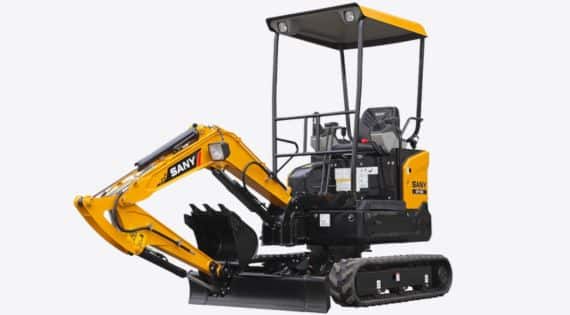
Trading history plays a significant role in what rate you’re offered, even on the same asset. Here’s how that plays out for a SANY SY16C Excavator and Trailer Package, listed at $36,999, financed by three different businesses.
SANY SY16C Excavator + Trailer Package ($36,999)
| ABN and GST registration | Interest rate | Monthly payment | Total interest payable |
|---|---|---|---|
| 0-1 years | 9.45% p.a. | $776 | $9,569 |
| 4+ years | 7.84% p.a. | $747 | $7,844 |
| 8+ years | 7.79% p.a. | $746 | $7,791 |
|
0-1 years 4+ years 8+ years |
|
9.45% p.a. 7.84% p.a. 7.79% p.a. |
|
$776 $747 $746 |
|
$9,569 $7,844 $7,791 |
Price and model based on a constructionsales listing obtained on 26 August 2026. Calculations based on a five-year loan term and don't include additional purchase costs or loan fees. Interest rates based on the lowest rates available through Savvy partners as of August 2026 and may not reflect the rate your business is offered.
A business in its first year and one with four years on the board financing the same excavator end up over $1,700 apart in total interest, purely based on how long they’ve been trading. The business with four or more years of ABN and GST registration behind it is seen as a lower risk and is rewarded with a better rate as a result.
This is a good example of why building a trading history matters, even if you don’t need finance right away. The longer you’re registered and trading, the stronger your position will be when you do.
Tradie cashflow finance options
Cashflow is one of the most common reasons tradies turn to finance, particularly when payments from clients are slow to come through but wages, suppliers and overheads still need covering. These options are generally unsecured, though attaching an asset as security can boost your borrowing power:
- Unsecured business loan: lets you borrow up to $300,000, depending on your individual borrowing power, and use the funds however your business needs.
- Line of credit: works like a credit card for your business. Rather than receiving a lump sum, a line of credit allows you to draw down funds as you need them and only pay interest on what you’ve used. Available as a secured or unsecured facility.
- Invoice finance: lets you access funds tied up in unpaid invoices rather than waiting on clients to pay. This can be done through invoice factoring, where you sell your invoices to a third party who chases up payment, or invoice discounting, where you borrow against the value of your invoices and collect them yourself. Factoring can advance up to 95% of an invoice’s value, compared to around 85% for discounting.
Which option makes the most sense depends on how you use it. A line of credit suits ongoing, unpredictable gaps in cashflow, while invoice finance is a better fit if slow-paying clients are the specific problem rather than cashflow more broadly.
Can I take out a tax debt loan as a tradie?
Yes, a tax debt loan lets you clear what you owe the ATO and repay it to your lender instead on a schedule that suits your business rather than the ATO’s terms.
This has become more relevant given recent changes to legislation that made interest on ATO debts no longer tax-deductible. Taking out a loan to clear your tax debt can help you avoid that non-deductible interest continuing to build, while giving you a manageable repayment schedule and taking the pressure of ATO collection action off your plate. Interest on the loan itself may also be tax deductible, depending on your circumstances.
Tax debt loans are generally structured as unsecured business finance, though offering security may help you access a larger amount or a more competitive rate if your ATO debt is substantial.
How to apply for tradie finance with Savvy
-
Fill out our online form
Tell us about yourself, your tradie work and what you want to finance.
-
Submit required documents
Send any necessary docs through our online portal to verify your profile.
-
Get a call from your Savvy broker
Talk through your finance options and the next steps with your application.
-
Have your application prepared
We’ll put everything together and submit it to your lender for assessment.
-
Approval and settlement
Once approved, we’ll handle settlement and your deal will be secured.
Why apply for a business loan with Savvy?
Tradie finance eligibility and documentation requirements
Eligibility
- At least 18 years of age
- An Australian citizen or permanent resident (or, in some cases, an eligible visa holder)
- Have an ABN registered in your name (loans are available from as soon as one day after registration)
- Meet business usage requirements (at least 51% of any asset you buy, for example)
- Meet your lender’s minimum personal and business credit score requirements
- Choose an asset that meets your lender’s requirements (secured asset finance only)
Documentation
- Personal information such as your full name, date of birth, address and contact details
- Front and back of your driver’s licence or another form of government-issued ID
- Information about your business’ assets and liabilities, as well as those in your name
- At least three to six months of business bank statements
- Completed financials from the previous financial year, which can include BAS, a trust deed and any amendments (low doc options exist for businesses without access to some or all of this information)