

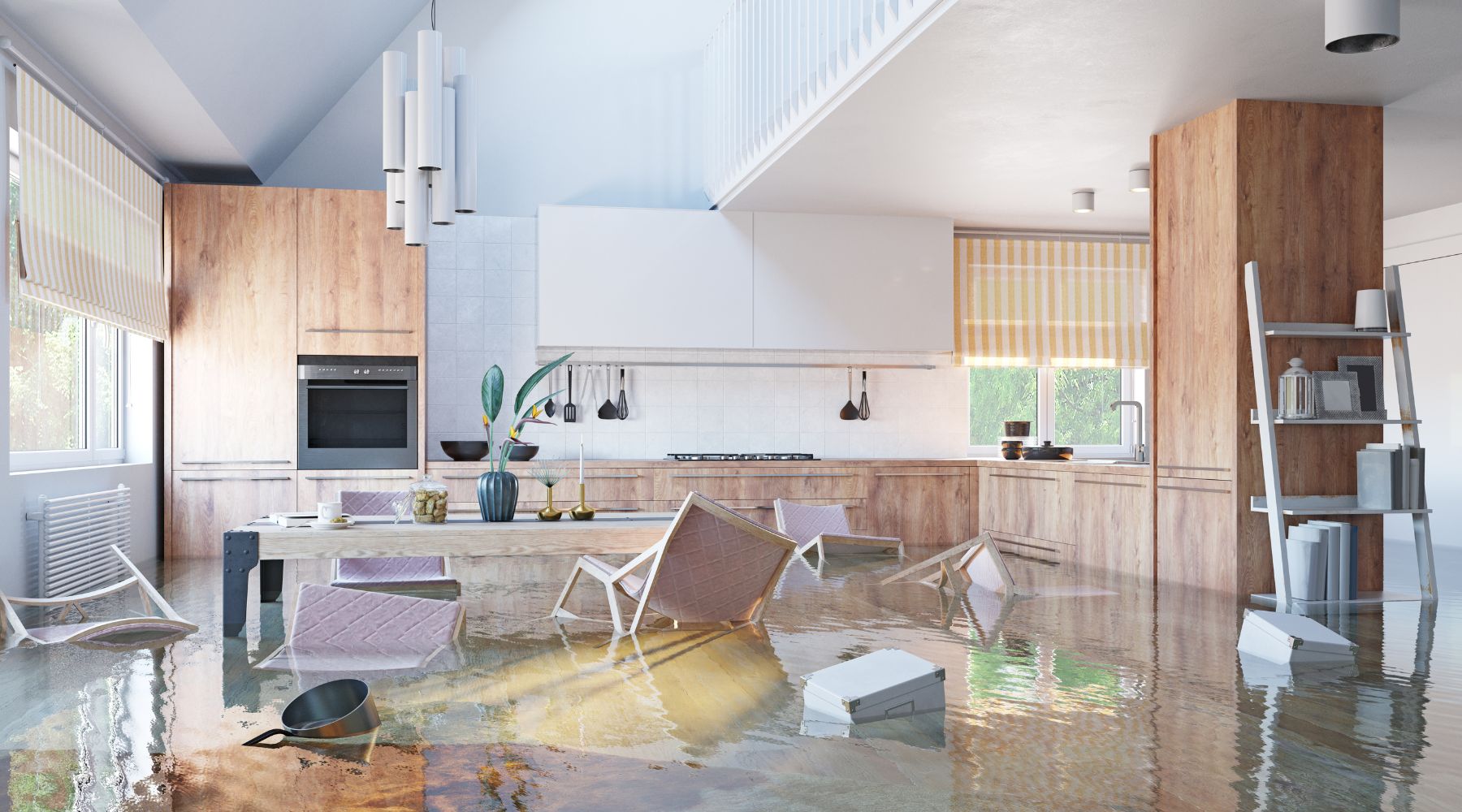
Flooding continues to pose a significant risk to homes and people across Australia in terms of both safety and value. Analysis by Climate Council and PropTrack found that homes in flood-prone areas are worth $42.2 billion less overall, with fears that this could widen over time.
However, the ICA found in its most recent Insurance Catastrophe Resilience Report that despite 242,000 Australian homes being at severe or extreme risk of flooding, around 77% of them aren’t covered by flood insurance. Whether that’s due to the cost of cover, a lack of options or simply because you haven’t looked into it, it’s crucial to understand what flood cover can offer you.
What is flood insurance?
Flood insurance, or flood cover, is a feature of home insurance policies that covers your property and belongings for damage caused by flooding. Each insurer defines what counts as a “flood” slightly differently but cover generally applies to water escaping from a natural source, such as a river, creek, lake or another natural watercourse, as well as a dam, canal or reservoir.
Whether flood cover is included, available as an add-on or excluded altogether depends entirely on your insurer and the specific policy you choose. It’s worth checking your Product Disclosure Statement (PDS) carefully, or asking your insurer directly, rather than assuming you’re covered.
What does home insurance with flood cover include?
What’s covered under your flood insurance depends on whether you hold building cover, contents cover or both. The most common inclusions across both types of insurance are:
Home building insurance with flood cover
- Damage to the structure of your home, such as its floors and walls
- Damage to sheds, garages and other permanent structures on your property
- Damage to switches, wiring and other electrical systems
- Damage to cabinetry, built-in robes, plumbing and other home fixtures
- Temporary accommodation costs if your home floods and is unable to be lived in
Contents insurance with flood cover
- Damage to chairs, couches and other furniture
- Damage to carpets and rugs
- Damage to clothing, linen and accessories
- Damage to electronics and electronic appliances
- Damage to high-value items like jewellery and artwork, though limits often apply
What flood insurance doesn’t cover
Even with flood cover in place, some types of damage typically fall outside your policy. Common exclusions include:
- Damage caused by rising seawater, king tides or other “actions of the sea”
- Water damage caused by renovations to your home
- Damage caused by gradual water seepage, rising damp or hydrostatic pressure
- Damage caused by earth or soil movement that didn’t occur as a direct result of the flood
- Damage to pools and their equipment, or to vehicles parked on your property
- Damage to personal contents due to mildew or mould
- Damage to (or loss of) cash or contents improperly or unsafely stored
Since definitions vary between insurers, it’s worth reading your PDS closely to understand exactly where the line sits on your policy.
Total replacement vs sum insured flood cover
Most home insurance policies fall into one of two categories, and which one you have affects how much you’ll actually receive if a flood damages your home.
A total replacement policy covers the full cost of repairing or rebuilding your home to its original size and standard, regardless of what that ends up costing. A sum insured policy instead pays out up to a set amount you’ve agreed with your insurer in advance. If that amount underestimates the true cost of rebuilding after a flood, you could end up underinsured and covering the shortfall yourself.
Given how costly flood damage can be to repair, it’s important to check which type of policy you hold and whether your sum insured amount realistically reflects what it would cost to rebuild your home today.
Flood cover vs storm cover
Flood and storm damage might seem similar on the surface, but insurers treat them as two distinct types of cover, and the source of the water is usually what decides which one applies.
| Factor | Flood cover | Storm cover |
|---|---|---|
| Source of damage | Water escaping a natural source, like a river, creek, dam or lake | Wind, hail, lightning or heavy rain entering your home directly |
| Rainwater run-off | Typically not included | Included by some insurers instead of flood cover |
| Storm surge (sea level rise from a storm or cyclone) | Generally excluded | Included by some insurers as standard, except when classified as “actions of the sea” |
| Typically included as standard | Sometimes, varies by insurer | More commonly included as standard |
| Waiting period before claims apply | 48 to 72 hours | 48 to 72 hours |
| Coverage varies by insurer and policy. Always check your PDS to confirm what’s included under each type of cover. | ||
Because rainwater run-off and storm surge can fall under either category depending on your insurer, checking your PDS closely rather than assuming one type of cover automatically includes the other will give you greater certainty and peace of mind. If you live in a coastal area, this distinction matters even more, since storm surge isn’t always classified in the way you’d expect.
How much does home insurance with flood cover cost?
The main way premiums are assessed when it comes to flood coverage is risk. Insurers make use of the National Flood Information Database (NFID), which was commissioned by the Insurance Council of Australia (ICA) to provide details on the risk posed to homes around Australia.
Today, this database has information on 13.7 million addresses, but it isn’t publicly available. If your home is deemed at risk of flooding, your premiums will be more expensive or, in extreme cases, you may be denied insurance entirely.
You can see how much of a difference flood insurance can make across various locations in New South Wales and Queensland here:
| City/town | Ave. H&C quote | Ave. H&C with flood | Ave. cost difference | % increase |
|---|---|---|---|---|
| Sydney | $1,199 | $1,234 | $35 | 2.9% |
| Tweed Heads | $1,602 | $1,646 | $43 | 2.7% |
| Macksville | $1,844 | $1,920 | $76 | 4.1% |
| Taree | $809 | $1,243 | $434 | 53.6% |
| Brisbane | $957 | $2,294 | $1,337 | 139.8% |
| Tennyson (QLD) | $1,487 | $3,736 | $2,248 | 151.1% |
| Quotes based on a freestanding, non-elevated, single-storey house built in 2023 and lived in by the current 45-year-old owner since then with no mortgage on the property and no home insurance claims in the last five years. The wall material is double brick and the roof material is Colorbond, with an alarm system installed. Home replacement cost is $650,000 and contents replacement cost is $50,000. Home excess is $1,000 and contents excess is $750. Quotes obtained from five select insurers on 20 August 2026. | ||||
As you can see, the cost of adding flood cover can range from as little as $35 for a home in Sydney to almost $2,250 in the suburb of Tennyson in Brisbane. In flood-affected areas, especially in Queensland, adding flood cover can more than double the cost of your home and contents insurance.
However, the exact quote will depend on a range of variables, including:
- Location: properties in flood-prone areas or those with higher rates of crime typically face higher premiums, since insurers price your cover based on the likelihood of a claim.
- Sum insured: the higher your building and contents are insured for, the more you’ll generally pay in premiums.
- Excess: choosing a higher excess can lower your premium, but means you’ll pay more out of pocket if you make a claim.
- Type of cover: combined building and contents policies cost more than a building-only or contents-only policy, but it’ll often be cheaper to bundle it with the same insurer than taking them out with separate insurers.
- Construction type: homes built from more flood-resistant materials, or raised above ground level, may attract lower premiums than those without these features.
- Claims history: a history of previous flood, water damage or any other claims, either yours or the property’s, can push your premium higher.
- Optional extras: add-ons beyond standard flood cover, like accidental damage or higher contents limits, will increase your overall premium.
Renting and flood cover
If you’re a renter living in an area at risk of flooding, you can still look at taking out a contents insurance policy that offers flood cover. That way, your valuables can still be covered even though you don’t own your home. Even in furnished rentals, you might decide that some of your belongings are valuable enough to warrant a policy being taken out. For landlords, your specialised insurance policy should also offer cover for flooding.
What’s the process of making a flood insurance claim?
If your home is affected by flooding, here’s what you can generally expect when lodging a claim:
-
Ensure your safety first
Don’t return to a flooded property until authorities confirm it’s safe to do so and never attempt to walk or drive through floodwater.
-
Contact your insurer as soon as possible
Most insurers have dedicated emergency claims lines during major flood events, so lodging early can help get your claim moving faster.
-
Document the damage
Take photos and videos of affected areas and belongings before you clean up or dispose of anything, since this evidence supports your claim.
-
Avoid throwing anything out prematurely
Even badly damaged items can be useful for your insurer’s assessment, so hold onto them until you’re told otherwise.
-
Arrange an assessment
Your insurer will typically send an assessor to inspect the damage and determine what’s covered under your policy.
-
Receive your outcome
Depending on your policy and the extent of the damage, this could mean a cash settlement, repairs arranged by your insurer or a full rebuild.
If you’re unhappy with how your claim is handled, you can raise a complaint directly with your insurer. Failing that, you can escalate it to the Australian Financial Complaints Authority (AFCA) if it isn’t resolved to your satisfaction.
Flood insurance pros and cons
Pros
-
Covers you if your home is flooded
It does what it says on the tin: flood insurance covers you for a variety of damage that your house and/or belongings may sustain in the event of flooding.
-
Inexpensive for lower-risk customers
If you want to add flood cover to your home and contents insurance policy, it may only cost a small amount, depending on your risk (or be built into your policy as is).
-
Peace of mind
For homeowners living in a higher-risk area, covering for flood damage can ease concerns about being left with a hefty bill for extensive damage.
Cons
-
Doesn’t cover all types of flood damage
Any flooding caused by action of the sea, such as an increase in sea level or wave action, or a storm surge is unlikely to be covered by flood insurance.
-
Could significantly increase your home insurance premium
For those living in an area at risk of flooding, the cost of adding cover for this damage could more than double the amount you’ll have to fork out for home insurance.
-
May not be necessary
If your property is at a very minimal or non-existent risk of flood damage, it might not be worth taking out cover if there’s an extra cost associated.
Should I take out a flood insurance policy to protect my home?
Whether you should take out flood insurance depends on your individual situation. If you want to get an idea of whether your home may be considered a flood risk, and therefore whether home insurance with flood cover is right for you, consider the following:
- Has there been flooding in my area in the past?
- Am I near a river, creek, dam or other natural body of water (especially downhill from one)?
- Am I living in a coastal area?
- Have there been other extreme weather events in my city, town or state or territory in recent times?
If the answer to one or more of these questions is yes, your home could be at risk of flood damage. Whether you decide to add it as an extra will come down to how much it costs to add and the peace of mind that it’ll bring by having it.
If you live in an area with no history of flooding and aren’t near any bodies of water, though, your chances of damage are understandably lower. That doesn’t necessarily mean you shouldn’t look for flood coverage on your home and contents insurance policy, as it’s likely you’ll be paying very little extra for the additional coverage.
- Property Value Report: How climate change could worsen Australia’s $42 billion flood risk - Climate Council
- Insurance Catastrophe Resilience Report: 2024-25 - Insurance Council of Australia