


If you’re looking to take out a car loan, one way to keep monthly costs down is by adding a balloon payment. This can help make your regular repayments more manageable, but it also affects the total cost of your loan.
What is a balloon payment on a car loan?
A balloon payment is a lump sum due at the end of your car loan. It’s called a “balloon” because it’s larger than your regular instalments and inflates the repayment at the end of the term.
Adding a balloon essentially splits your loan into two parts:
- Lower monthly repayments
- A final lump sum (i.e. the balloon payment) due at the end of the term
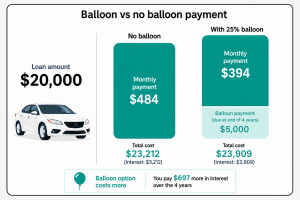
For example, if you take out a $20,000 car loan over four years at 7.5% p.a. interest, your monthly payments would be around $484. If you add a 25% balloon, your monthly repayments would be reduced to around $394, but you’d need to pay $5,000 at the end to close the loan.
This structure allows borrowers to reduce their monthly costs during the loan term, which can help with short-term budgeting.
However, you’ll need to plan ahead to cover the balloon amount plus any interest when the loan ends. You’ll also pay interest on the balloon amount throughout the course of the loan alongside your regular repayments, increasing the overall cost.
How big will my car loan balloon payment be?
The amount you can set for your balloon payment will be agreed with your lender at the start of the loan, and can be influenced by factors like the car’s age and value, the loan term and your financial profile.
However, most lenders will set minimum and maximum limits, usually between 20% and 50% of the loan amount. This helps to keep repayments affordable and prevent the balloon from becoming overwhelming, as well as reducing the lender’s risk by ensuring the car’s value is likely to cover the final amount due.

Decide whether a balloon is right for you
"A balloon is optional on most car loans, so you do not have to include one if it doesn't suit your plans.
If you do choose a balloon, check the final dollar amount, compare repayments with and without it, and make sure the end-of-loan payment fits your budget and how long you plan to keep the car."
How can I pay my balloon at the end of my car loan?
If you have a balloon payment due at the end of your car loan, you’ll have a few options to settle the remaining balance:
-
Keep the car
If you’re happy with your vehicle and have the savings available, you can pay off the balloon amount in one go and continue driving your car.
-
Sell your car
You can sell the vehicle privately or to a dealer and use the proceeds to cover the balloon payment. If the sale price exceeds the balloon, you keep the difference.
-
Trade in your vehicle
Many dealerships allow you to trade in your car and use its value to pay off the balloon. If your car’s value is higher than the balloon, you can put the extra towards your next vehicle.
-
Refinance
You may choose to refinance the balloon amount into a new loan, paying it off in smaller instalments. Just keep in mind this will extend your repayment period and increase the total interest paid.
How much does a car loan balloon payment cost?
A balloon payment can reduce your monthly repayments, but it usually increases the total cost of your car loan. This is because interest is charged on the balloon amount throughout the loan term. Unlike a standard car loan, which gradually reduces to a $0 balance, a balloon loan leaves a portion of the principal unpaid until the end, meaning more of the loan continues to accrue interest.
The larger the balloon, the more interest you’re likely to pay overall. The example below shows how repayments and interest change on a $30,000 car loan over five years at 7.5% p.a.
| Balloon size | Final balloon payment | Monthly repayment | Monthly repayment change | Total interest | Total interest change |
|---|---|---|---|---|---|
| No balloon | – | $601 | – | $6,068 | – |
| 20% | $6,000 | $518 | $83 lower | $7,105 | $1,037 more |
| 30% | $9,000 | $477 | $124 lower | $7,623 | $1,555 more |
| 40% | $12,000 | $436 | $165 lower | $8,141 | $2,073 more |
In this example, choosing a 40% balloon reduces the monthly repayment by $165 compared to a loan with no balloon. However, it also increases the total interest by $2,073 and leaves a $12,000 payment due at the end of the loan.
This is the key trade-off: a balloon payment can improve short-term cash flow, but it will cost more over the life of the loan and leave you with a large final payment to manage.
The size of your loan also affects the balloon and overall cost, with a higher loan amount meaning a higher balloon sum and more interest to pay in total. Here's how a 35% balloon payment could impact the overall cost of three popular car models in Australia, based on a five-year loan with a 7.5% p.a. interest rate.
Mazda3 Pure
$33,000

| Balloon payment | Monthly repayment | Total interest |
|---|---|---|
| No balloon | $661 | $6,675 |
| $11,550 | $502 | $8,670 |
|
No balloon $11,550 |
|
$661 $502 |
|
$6,675 $8,670 |
BYD Sealion 6 Essential
$46,700

| Balloon payment | Monthly repayment | Total interest |
|---|---|---|
| No balloon | $936 | $9,446 |
| $16,345 | $710 | $12,269 |
|
No balloon $16,345 |
|
$936 $710 |
|
$9,446 $12,269 |
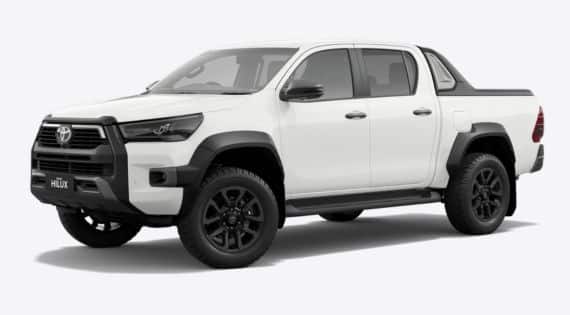
Toyota Hilux Rogue
$77,800
| Balloon payment | Monthly repayment | Total interest |
|---|---|---|
| No balloon | $1,561 | $15,757 |
| $27,265 | $1,185 | $20,467 |
|
No balloon $27,265 |
|
$1,561 $1,185 |
|
$15,757 $20,467 |
How are balloon payments different to residual payments for cars?
Balloon payments and residual payments are both lump sum amounts due at the end of a car finance term, but they’re used in different types of agreements.
Here’s how they compare:
| Car loan with balloon | Car lease with residual | |
|---|---|---|
| What is it? | Final lump sum based on purchase price | Predicted value of car at lease end |
| Applies to | Car loans for personal use | |
| How it’s calculated | % of total loan amount | Based on estimated end-of-lease value (must meet ATO minimum thresholds) |
| Is it mandatory? | Optional, except for some dealer finance | Yes, all leases must include a residual |
| Do you own the car during the term? | Yes, from day one | No, you lease it until the end of the term |
| What happens at the end? | Pay the balloon, or refinance, trade in or sell the car to cover the balloon | Pay the residual to buy the car, or refinance, trade in or sell the car to cover the residual |
The pros and cons of balloon payments on car loans
Pros
-
Lower monthly payments
By deferring a portion of the loan amount to the end, your regular monthly payments are lower, potentially freeing up cash for other expenses or investments.
-
Easier on your budget
Having a balloon payment lowers your monthly repayments, which can be helpful if you have a limited budget initially but anticipate having a larger sum available by the end of the loan term.
-
End-of-loan flexibility
At the end of the loan term, you can clear your balloon by paying it outright, selling or trading in your car or refinancing it to extend your term.
Cons
-
Higher overall cost
Adding a balloon to your car loan can increase the amount you pay in interest by hundreds or even thousands of dollars.
-
Large final payment
You'll be responsible for a significant lump sum payment at the end of the loan term. This can be a burden if you haven't planned and saved accordingly or if your financial situation changes.
-
Potential negative equity
If the car's value depreciates faster than the loan amount, you may owe more than the car is worth at the end of the loan term. This could mean you end up having to cover the shortfall if the amount you receive from selling it or trading it in is less than the balloon.
Is a car loan balloon payment right for me?
A balloon payment can be a way to lower your monthly repayments, which may suit you if you’re looking to free up cash flow in the short term and are confident you can handle a lump sum at the end of the loan.
For example, it might work well if you:
- Want to upgrade your car at the end of the term
- Plan to sell or trade the car in at the end of the term
- Are able to save towards the final payment
It’s also popular among small business owners who want to manage expenses and ensure cash flow while keeping a vehicle on the road.
Choose a car that’s likely to hold its value and start saving early if you’re considering a balloon. That way, you’ll be better prepared when the final payment is due.
However, if you’re someone who prefers to pay down your loan steadily or you’re not sure if you’ll be able to afford a large lump sum later, a traditional loan without a balloon might be a better fit.