What is leisure finance and how does it work?
Leisure finance is a loan that lets you buy a recreational asset like a boat, caravan, jet ski or motorbike and pay it off over time. The lender pays the seller, and you repay the amount borrowed plus interest in regular instalments over an agreed term. You can apply for finance to buy:
Any brand or model can be financed as long as it meets the lender’s requirements in relation to age, condition and asset type. We’re partnered with lenders who can help customers purchase leisure assets across Australia.
How much can I borrow?
Most lenders will let you borrow up to 100% of the value of your asset, as long as it meets their criteria and the loan is affordable for you. There’s a range of factors that affect how much you can borrow, including:
- The asset: its type, age and value affect how much a lender will finance. The maximum boat loan will likely be very different to the maximum motorbike loan, for example.
- Income: lenders look at how much you earn and how stable it is.
- Employment: a longer time in your current job can help your application.
- Living expenses: regular costs reduce what you can put towards repayments.
- Existing debts: a home loan, car loan or credit card balance lowers your borrowing power.
- Credit history: a strong record can open up more lenders and better rates.
- Deposit: putting money down reduces the amount you need to borrow and can improve your chances of approval.
Leisure finance rates
As of January 2026, the lowest leisure finance interest rates available through Savvy are as follows:





Comparison rates based on a $30,000, five-year loan.
Note that the rate for each type of asset isn’t necessarily equal. For example, caravans will typically be financed for a far lower rate than the likes of a jet ski. However, every lender treats each type of leisure loan slightly differently, which might mean that while they are the cheapest financier for an RV they might be an expensive lender for a marine vessel.
Secured vs unsecured leisure finance
Leisure finance comes in two main forms: secured and unsecured. Which one you choose affects your rate, how the loan is paid out and what’s at stake if you fall behind on repayments.
Secured leisure finance
A secured loan uses the asset you’re buying as security. If you can’t keep up with repayments, the lender can repossess it to recover what you owe. Because that lowers the risk for the lender, secured loans usually come with lower interest rates, and most leisure loans are structured this way.
The lender pays the seller directly, so it suits buying a specific boat, caravan or bike from a dealer or private seller.
Unsecured leisure finance
An unsecured loan isn’t tied to the asset, so the lender can’t repossess it. Instead, approval rests on your income, credit history and ability to repay, and rates are usually higher to reflect the extra risk.
The money is often paid to you, which gives you the flexibility to buy from several sellers or cover extras like gear and accessories.
| Secured | Unsecured | |
|---|---|---|
| Interest rate | Usually lower | Usually higher |
| Asset as security | Yes | No |
| If you can’t repay | The asset can be repossessed | The asset isn’t at risk, but your credit file is |
| How funds are paid | To the seller | Often to you |
| Best for | A single, specific purchase | Flexibility across purchases |
How much does leisure finance cost?
The cost of your leisure finance deal comes down to several key variables, including:
- Type of asset: different assets attract different rates. Motorbikes often cost more to finance because they depreciate faster, for example.
- New or used: new assets often qualify for lower rates because lenders see them as lower risk. Used assets can cost more because they usually have a lower resale value.
- Interest rate: this is the main cost factor to keep an eye on. The higher your interest rate, the more you’ll pay.
- Secured or unsecured: a secured loan uses the asset as security, which usually means a cheaper rate than an unsecured loan.
- Loan term: a longer term lowers your repayments, but you pay more interest overall.
- Deposit: a larger deposit means you borrow less, which reduces the interest you pay.
- Your personal profile: lenders look at your credit history, income and financial stability. A strong profile usually means a lower rate, while a poor credit score or unstable income can push it higher.
- Fees: application, account-keeping and early repayment fees add to the overall cost.
To show what a leisure loan could cost, here are repayments for a popular model in each category. Each example is a new asset over a five-year term at the lowest rate currently available for that asset type through Savvy.
Yamaha YZF-R7LA
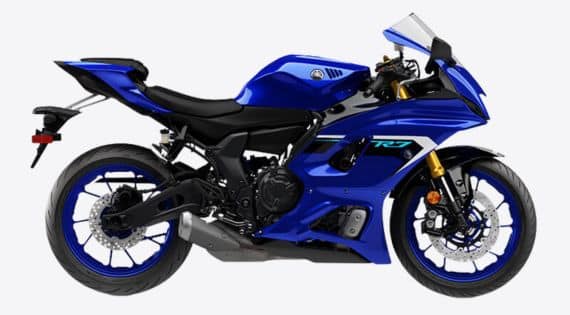
| Price | Interest rate | Monthly repayment | Overall interest | Total cost |
|---|---|---|---|---|
| $15,500 | 6.99% p.a. | $307 | $2,911 | $18,411 |
|
$15,500 |
|
6.99% p.a. |
|
$307 |
|
$2,911 |
|
$18,411 |
Sea-Doo GTR 230
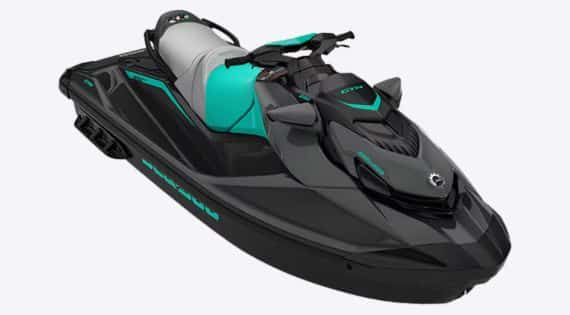
| Price | Interest rate | Monthly repayment | Overall interest | Total cost |
|---|---|---|---|---|
| $22,500 | 6.95% p.a. | $445 | $4,200 | $26,700 |
|
$22,500 |
|
6.95% p.a. |
|
$445 |
|
$4,200 |
|
$26,700 |
Ezytrail Winton 13 MK2
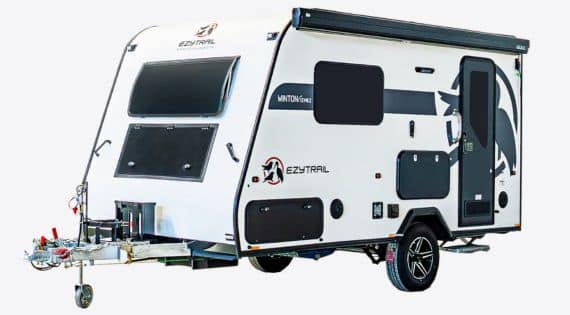
| Price | Interest rate | Monthly repayment | Overall interest | Total cost |
|---|---|---|---|---|
| $42,000 | 6.84% p.a. | $828 | $7,709 | $49,709 |
|
$42,000 |
|
6.84% p.a. |
|
$828 |
|
$7,709 |
|
$49,709 |
Quintrex 500 Cruiseabout
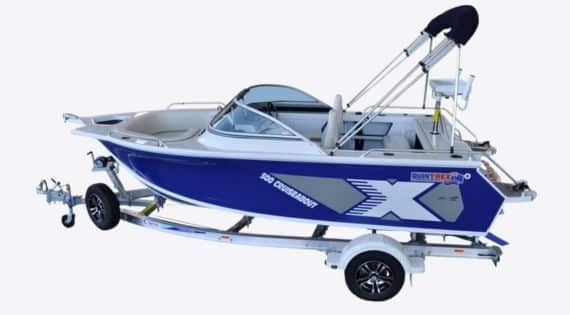
| Price | Interest rate | Monthly repayment | Overall interest | Total cost |
|---|---|---|---|---|
| $60,000 | 6.95% p.a. | $1,187 | $11,199 | $71,199 |
|
$60,000 |
|
6.95% p.a. |
|
$1,187 |
|
$11,199 |
|
$71,199 |
Calculations are for illustrative purposes only and exclude fees and insurance. Rates represent the lowest available option for each asset type as of October 2026. They may not be representative of the rate you’re offered on your leisure finance deal.
Leisure finance calculator
Your estimated repayments
$98.62
| Total interest paid: | Total amount to pay: |
| $1233.43 | $5,143.99 |
Average leisure finance amounts: 2025-26
How to apply for leisure finance with Savvy
-
Complete your online form
Fill out our application form with info about yourself, the asset you’re after and how much you want to borrow.
-
Submit required documentation
We’ll need to verify your identity and income as part of the process, so send through any required docs.
-
Have a chat with your broker
Your broker will give you a buzz and talk through your potential leisure finance options.
-
Have your application prepared
After you give the all-clear, your broker will get to work putting your application together and submitting it.
-
Get approved and sign off
Once your lender approves your application, we’ll handle loan settlement and the leisure craft is yours!
Why apply for a leisure loan with Savvy?
Is leisure finance different to a personal loan?
Leisure finance is a type of personal loan, but it’s designed specifically for buying recreational assets like boats, caravans, jet skis and motorbikes, whereas a personal loan more generally can be used for almost anything.
The main differences come down to security, how the money is paid and what it can be used for:
| Leisure finance | Unsecured personal loan | |
|---|---|---|
| Purpose | A specific recreational asset | Almost anything, such as debt consolidation or home improvements |
| Security | Usually secured against the asset | No security required |
| Loan amount | Up to 100% of the asset’s purchase price (subject to loan limits and affordability) | Typically capped at between $50,000 and $75,000 |
| How funds are paid | Generally to the seller or dealer | A cash lump sum to you |
| Rate | Usually lower, because the asset is security | Usually higher, because there’s no security |
Are leisure loans more expensive than car loans?
Usually, but not always. Leisure finance rates are generally higher than car loan rates, although the gap can be small, and some assets, such as caravans, can be financed at the same rate.
Lenders tend to see leisure vehicles as non-essential purchases with a higher risk of damage or loss. They can also be harder to sell, with fewer buyers and less predictable resale values, which can push the cost of the loan up.
As of October 2026, our car loan rates start from 6.84% p.a. Leisure finance rates start from 6.84% p.a. as well for caravans, but boats and motorbikes are higher at 6.95% p.a. and 6.99% p.a., respectively. On a $30,000 loan over five years, that’s roughly $90 more in interest for a boat and roughly $130 more for a motorbike, while a caravan costs the same as a car loan.
| Loan type | Interest rate | Monthly repayment | Total interest | Total cost |
|---|---|---|---|---|
| Car loan | 6.84% p.a. | $592 | $5,506 | $35,506 |
| Caravan loan | 6.84% p.a. | $592 | $5,506 | $35,506 |
| Boat loan | 6.95% p.a. | $593 | $5,600 | $35,600 |
| Motorbike loan | 6.99% p.a. | $594 | $5,634 | $35,634 |
| Calculations are for illustrative purposes only. They exclude fees and insurance. This may not be representative of the rate you’re offered on your car loan or leisure finance deal. | ||||
These figures are based on the cheapest rates available. In practice, your repayments may be higher depending on your credit profile, the lender you choose and the asset you’re financing.