
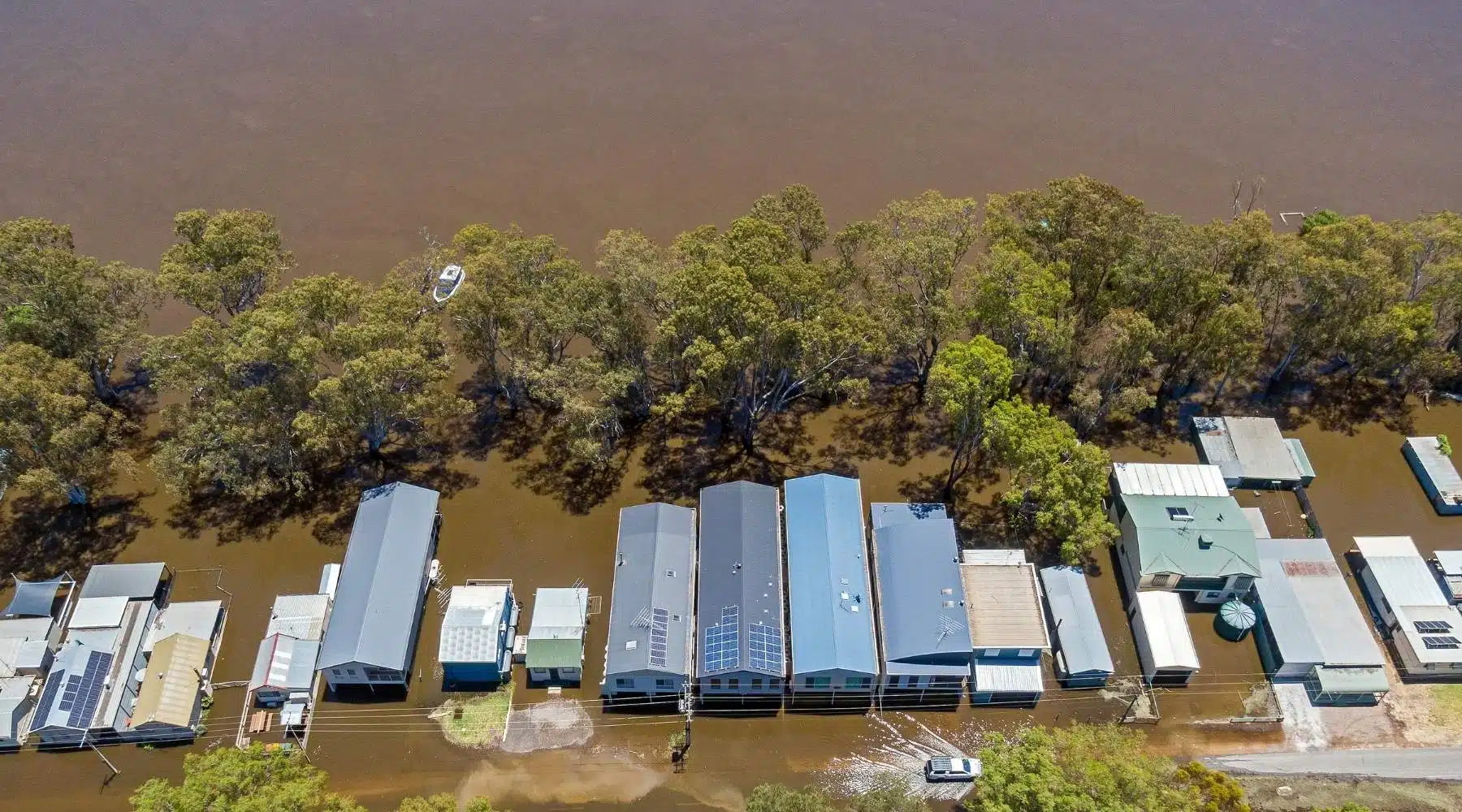


With floods, storms and bushfires becoming more frequent, Australian homeowners are feeling the pressure on their insurance premiums. Rising costs are leaving many households weighing whether to stay covered, but going without could be far riskier than it seems.
Extreme weather is pushing up insurance costs
Home insurance premiums are rising across Australia as increased claims from floods, storms and fires push costs higher.
According to the Insurance Council of Australia, total insured losses from extreme weather events reached $22.5 billion in the first half of the 2020s – a 67% increase compared to the previous five-year period.
In 2025 alone, extreme weather events resulted in almost $3.5 billion in insured losses.
These rising losses are translating into higher premiums for homeowners. Data analytics firm Finity reported that home insurance premiums have risen by 51% in the past five years, with the average premium sitting at $2,938 a year as of October 2025.
However, the costs are even higher in high-risk areas, often adding thousands more to a household’s annual premium.
Rising premiums are putting homeowners under pressure
As costs rise, concern is growing among homeowners in high-risk areas.
Recent research by the Climate Council found that:
- 54% of Australians with home or contents insurance are worried cover could become unaffordable or unavailable in their area
- 46% have already seen their premiums increase
- 22% would consider going without home insurance if premiums continue to rise
Alongside wider cost-of-living pressures, many people are finding it increasingly difficult to keep up with the rising costs of insuring their home.
Dropping home insurance could cost far more
Around one in five households in high-risk areas say they might consider going without insurance if premiums keep rising. But being uninsured or underinsured can be far more expensive than paying the premiums. Without cover, homeowners would need to pay the full cost of:
- Rebuilding their home
- Replacing contents
- Temporary accommodation while repairs are made
On top of that, they may also be at risk of breaching the terms of their home loan and liable if someone is injured on their property.
From this perspective, while paying thousands of dollars a year for insurance is a serious cost, it protects a home and contents worth hundreds of thousands. Without that coverage, homeowners would be responsible for all costs themselves if their property is damaged or destroyed.
While premiums are an ongoing expense, they’re relatively small compared to the potential cost of rebuilding. In Melbourne, for example, the average annual premium sits at around $1,384 for a home with a replacement cost of $500,000 – less than 0.3% of the asset it covers. This gap highlights the financial risk homeowners take on if they choose to go without cover.
Review it, don’t remove it
The Insurance Council of Australia has called for federal investment in climate resilience to help protect climate-vulnerable communities and close the widening protection gap between those who can and cannot afford insurance. But until that happens, the responsibility falls to homeowners.
If premiums are putting pressure on your budget, cancelling cover isn’t the answer. Instead, review your policy to find the best-value cover for your situation. In many cases, premiums can be adjusted by:
- Reviewing the level of cover
- Adjusting excess amounts
- Checking whether optional extras are still needed
Comparing your home insurance options can help you find cover suited to your property and risk profile, ensuring you get the best value while keeping your home and belongings properly protected.
- Australia’s insurance industry snapshot 2025 - Insurance Council of Australia
- Australian home insurance premiums climb 51% in five years - Insurance Business
- New poll reveals climate stress hitting Aussie homeowners - Climate Council
- Renewed calls for climate resilience funding on Alfred anniversary - Insurance Council of Australia