

Business car finance can help you buy or lease vehicles used predominantly for commercial use, with options to suit a range of business needs.
Whether you're looking for a single work vehicle or an entire fleet, the right finance arrangement can get you on the road sooner without putting pressure on your cash flow.
Business car finance rates
As of October 2026, the cheapest business car loan interest rates available through Savvy's partnered lenders are as follows:










Rates are indicative only and based on a business with an ABN registered for at least eight years, GST registration for at least four years, a 60-month loan term and a $50,000 vehicle purchase. Your actual interest rate will depend on factors including your business profile, credit history, financial position, the vehicle being financed, loan amount, term and the lender's assessment criteria.
Types of business car finance
There are four main types of business car finance to consider. Each works differently, particularly when it comes to who owns the vehicle, how repayments are structured and what happens at the end of the term.
| Type of finance | How it works | Ownership | May suit businesses that… |
|---|---|---|---|
| Chattel mortgage | You borrow money to buy the vehicle and repay the loan over an agreed term. | You own the vehicle from the start, with the lender taking a mortgage over it until the loan is repaid. | Want to own the vehicle from the outset and spread the purchase cost over time. |
| Finance lease | The financier buys the vehicle and leases it to your business for regular payments. | The financier owns the vehicle during the lease. At the end, you may be able to buy it, refinance the residual or lease another vehicle. | Want to use the vehicle now and keep end-of-term options open. |
| Operating lease | You lease the vehicle for a set period, often with some running costs included in the payments. | The lessor owns the vehicle and you generally return it at the end of the term. | Want access to a vehicle without taking on ownership or resale risk. |
| Hire purchase | The financier buys the vehicle and hires it to your business while you make repayments. | Ownership transfers to your business once the final payment is made. | Want a similar structure to a chattel mortgage but prefer ownership to transfer only once the loan is fully repaid. |
To qualify as a business vehicle, the car needs to be used at least 51% for business purposes. This could include making deliveries, attending client meetings, travelling to work events or transporting tools and equipment. If the vehicle is also used personally, that use should be tracked carefully as it may have tax implications. If personal use exceeds business use, you will need to look at a personal car loan instead.
"Business owners who primarily use their car for work should strongly consider a commercial loan option. The potential tax benefits can add up to thousands of dollars each year alone. Those are funds that can be reinvested back into growing your business."

How commercial car loans can boost your business
How much does a business car loan cost?
In 2024–25, the average business car loan arranged through Savvy was $49,498.
However, the cost of a business car loan depends on more than just the vehicle’s purchase price. There’s a range of other factors that will influence how much you’ll pay overall.

Interest rates
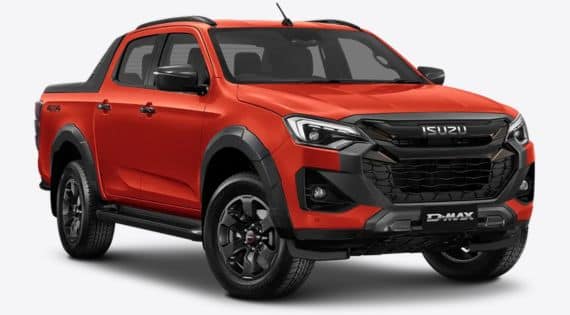
Your interest rate is the single biggest factor in determining loan cost. While a 1.00% p.a. difference in rates may not sound like much, it can add thousands of dollars in interest across the life of the loan. Let’s see how this would look for a five-year loan on an Isuzu D-MAX:
Isuzu D-MAX X-Terrain ($70,500)
| Interest rate | Monthly repayment | Total interest | Total cost |
|---|---|---|---|
| 6.00% p.a. | $1,363 | $11,278 | $81,778 |
| 7.00% p.a. | $1,396 | $13,259 | $83,759 |
| 8.00% p.a. | $1,429 | $15,270 | $85,770 |
|
6.00% p.a. 7.00% p.a. 8.00% p.a. |
|
$1,363 $1,396 $1,429 |
|
$11,278 $13,259 $15,270 |
|
$81,778 $83,759 $85,770 |
Calculations and interest rates are for illustrative purposes only and do not include other car-buying costs. The rate you receive on your car loan may be different to the rates listed above. All figures are rounded up to the nearest dollar.
As the table shows, the difference in monthly repayments between 6.00% p.a. and 7.00% p.a. is only $33. Over five years, though, that adds up to almost $2,000 in extra interest.
Note: Interest on the business-use portion of a vehicle is generally tax-deductible, which can help to offset a significant portion of this expense.
Loan term
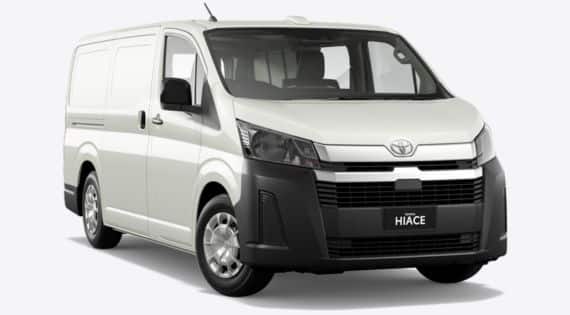
A longer repayment period can also push up the cost of your loan, as you’ll have more interest to pay. Let’s look at an example of a business buying a Toyota HiAce LWB, with an interest rate of 5.99% p.a.
Toyota HiAce LWB ($56,500)
| Term length | Monthly repayment | Total interest | Total cost |
|---|---|---|---|
| 3 years | $1,719 | $5,369 | $61,869 |
| 5 years | $1,092 | $9,022 | $65,522 |
| 7 years | $825 | $12,809 | $69,309 |
|
3 years 5 years 7 years |
|
$1,719 $1,092 $825 |
|
$5,369 $9,022 $12,809 |
|
$61,869 $65,522 $69,309 |
Calculations and interest rates are for illustrative purposes only and do not include other car-buying costs. The rate you receive on your car loan may be different to the rates listed above. All figures are rounded up to the nearest dollar.
As you can see, stretching the loan term out over five years compared to three saves your business over $600 per month in ongoing repayments. Your interest bill will increase by more than $3,500, though.
Other factors
Other variables that could impact the final cost of your business car loan include:
- Fees: on top of interest, car loans come with a range of fees attached that can drive up the cost further. These can include establishment fees, monthly fees and break fees, which can add hundreds to thousands of dollars to the final cost. However, break fees only apply if you pay off your loan ahead of schedule.
- Deposit: putting down a deposit reduces the size of your loan and lowers your interest payments. For example, contributing $10,000 towards the Isuzu D-MAX above would reduce the loan amount to $60,500 and lower the total interest paid over five years at 6.00% p.a. to $9,661. That’s a saving of more than $1,500.
- Additional repayments: if your loan allows extra repayments, using them can reduce interest and help you pay off the loan sooner. For instance, adding $100 per month to the seven-year Toyota HiAce loan could save over $1,700 and clear the debt about ten months early. However, it’s important to consider whether your lender charges any early repayment fees before you do this.
Depending on your agreement, you may also have a balloon payment due at the end of the term,which can impact the total cost of the loan.
Balloon payments and residual values in business car finance
End-of-term payments are common in business car finance, but they work differently depending on the product. With a chattel mortgage, you may be able to choose an optional balloon payment. With a finance lease, a residual value is built into the agreement.
Business car loan balloon
A car loan balloon payment is an optional lump sum paid at the end of your chattel mortgage. Choosing a balloon can lower your regular repayments during the loan term, but it also means you’ll have a larger final payment to cover and may pay more interest overall.
The balloon amount will be agreed at the beginning of your term, typically ranging from 20% to 50% of your loan amount. When choosing a balloon, consider how it fits with your business budget. A larger balloon reduces monthly repayments but increases the final payment and total interest, so it’s important to plan ahead to ensure you can cover the lump sum at the end of the term.
Here’s an example showing how different balloon sizes affect the overall cost of a $40,000, five-year business car loan at 6.50% p.a. interest:
| Balloon size | Balloon amount | Monthly repayment | Total interest |
|---|---|---|---|
| 0% | $0 | $783 | $6,959 |
| 20% | $8,000 | $669 | $8,167 |
| 30% | $12,000 | $613 | $8,771 |
| 40% | $16,000 | $556 | $9,375 |
| Calculations are for illustrative purposes only and may not reflect the interest rate you'll receive or the balloon payment you may be offered. | |||
Car lease residual
Unlike a car loan, a finance lease always includes a residual payment at the end of the term. This is calculated as a percentage of the vehicle’s estimated value at lease-end, based on ATO minimum thresholds, though your leasing company may set a higher residual.
The ATO’s minimum residual values for car leases are:
| Lease term | Residual value | ||
|---|---|---|---|
|
12 months
|
65.63%
|
||
|
24 months
|
56.25%
|
||
|
36 months
|
46.88%
|
||
|
48 months
|
37.5%
|
||
|
60 months
|
28.13%
|
||
| Source: Australian Taxation Office (ATO) | |||
What tax benefits are available through business car finance?
Businesses in Australia can claim tax deductions on eligible expenses when buying or leasing a vehicle for work. This may include claiming GST credits, interest or other operating costs, depending on the type of loan or lease and how the vehicle is used.
The tax benefits vary by finance type. Here's what you could claim for each arrangement:
| Chattel mortgage | Hire purchase | Finance lease | Operating lease | |
|---|---|---|---|---|
| Claimable expenses | GST on the purchase of the vehicle
Interest on loan repayments Running costs/business-use expenses Depreciation of the vehicle |
GST on the purchase (claimable by the financier*)
Interest on loan repayments Running costs/business-use expenses |
GST on the purchase (claimable by the financier*)
Up to 100% of leasing payments Running costs/business-use expenses not included in your payments |
GST on the purchase (claimable by the financier *)
Up to 100% of leasing payments Running costs/business-use expenses not included in your payments |
| * Where GST is claimable by the financier, the business cannot claim the GST on the vehicle purchase directly. Instead, the tax benefit is factored into the lease payments, which are themselves tax deductible. | ||||
What to keep in mind when claiming business vehicle expenses
-
You can only claim the business-use portion
You can only claim deductions for the portion of the vehicle used for business, not personal use. For example, if you lease a vehicle and use it 65% for business purposes, you will only be able to claim 65% of eligible payments and related expenses.
-
Not all trips count as business use
Travel between your home and regular workplace generally does not count as business travel. However, trips to client meetings, conferences, temporary worksites or other work-related locations may be claimable.
Expenses the ATO considers claimable include depreciation, fuel, insurance premiums, repairs and servicing, and vehicle registration. However, costs like licence renewal, fines and penalties are not tax-deductible.
-
GST claims also depend on business use
The amount of GST you can claim is based on how much the vehicle is used for business. If the vehicle is used entirely for commercial purposes, you may be able to claim the full GST amount, up to the maximum credit limit ($6,334 in the 2025-26 financial year). If it is used for both business and personal purposes, only a partial credit may be available.
-
Personal use may trigger FBT
If a business vehicle is also used for personal use by an employee, Fringe Benefits Tax (FBT) may apply. FBT is paid by businesses on the taxable value of certain benefits provided to employees (though not the full cost of the vehicle) at a rate of 47%, which can significantly add to costs.
-
Sole traders and partnerships are treated differently
If you are a sole trader or in a partnership, you aren’t considered an employee, so any benefits you provide to yourself, including vehicle use, aren’t subject to FBT. However, you’ll still need to track business and personal use to correctly claim tax deductions.
This information only serves as a guide. You should speak to your accountant or a tax professional for more information specific to your situation.
How to apply for business vehicle finance
-
Complete our simple online form
Tell us about your business, the vehicle(s) you want and how much you’re looking to borrow.
-
Provide your documents
Provide supporting information, such as ID, proof of income and business financials.
-
Compare your finance options
Your Savvy consultant will review offers from our lending panel and call you with tailored deals.
-
Lock in your vehicle
Choose your vehicle or get help from our in-house car broker team.
-
Submit and finalise your application
We’ll lodge your application and guide you through the approval process.
-
Sign and settle
We’ll handle settlement and the vehicle will be transferred to your business.
Business car loan eligibility and documentation
Eligibility
-
Age
You must be at least 18 years of age
-
Residency
You must be an Australian citizen or permanent resident (or, in some cases, an eligible visa
holder) -
ABN or ACN registration
You must have an active ABN or ACN and GST registration and usually have been running your business for at least 12 to 24 months
-
Credit score
You must meet the lender’s personal or business credit requirements
Documents
-
Proof of identification
Government-issued ID such as passport or driver's licence
-
Business tax returns & BAS
Business tax returns from the past one to two years and recent Business Activity Statements
-
Business bank statements
Up to six months of business bank statements
-
Trust deed
Required if your business operates through a trust
-
Vehicle details
Information about the car(s) you intend to buy