

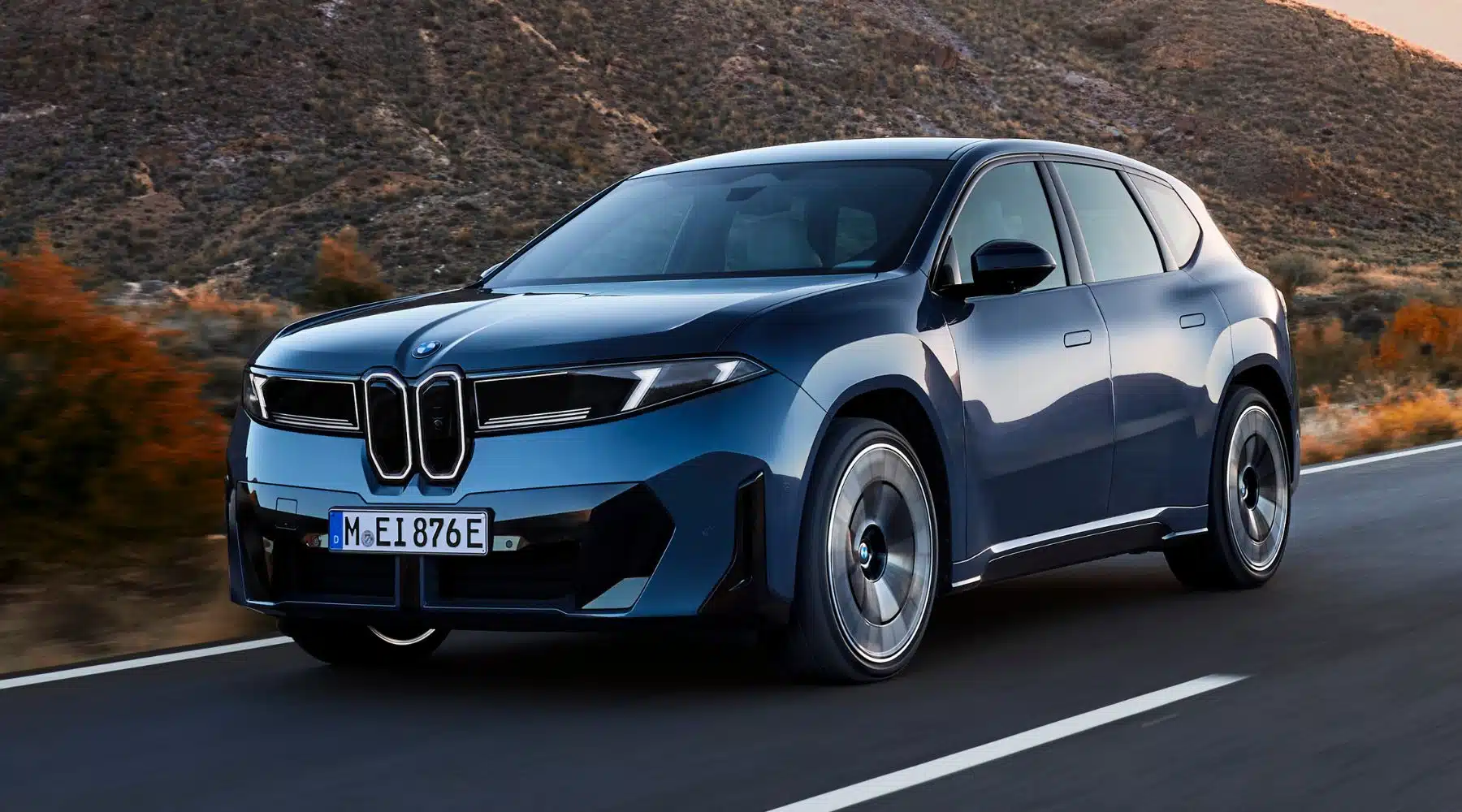



The Australian Government announced last week that it would increase the luxury car tax threshold for electric vehicles (EVs) as part of a new Free Trade Agreement with the European Union.
The move, which ups the threshold from $91,387 to $120,000, only applies to zero-emissions vehicles, meaning hybrids and other low-emissions models will still be subject to the former threshold.
The Free Trade Agreement also centred on the removal of a 5% import tariff on cars constructed in Europe, which applied to all non-electric European models and EVs above the LCT threshold.
With the threshold now significantly bumped up, there are set to be plenty of savings on offer to Aussies in the market for a European EV. So, just how much could you save on your next electric car?
What is the luxury car tax?
Luxury car tax (or LCT) is a tax charged at a rate of 33% for the portion of your vehicle’s purchase price above a certain value, known as the threshold.
As mentioned, this threshold sat at $91,387 for EVs and still applies to non-EVs with a fuel economy up to 3.5L/100km. For models that use more than 3.5L/100km of fuel, a lower threshold of $80,567 applies. The formula for calculating the LCT payable on your vehicle is:
(LCT value − LCT threshold) × 10 ÷ 11 × 33%
You can see how the tax is charged for each vehicle type (and how much the increased threshold will save you on a $100,000 EV) below:
| Car category | Car value | 2025/26 threshold | New threshold | Total LCT payable | Saving |
|---|---|---|---|---|---|
| Electric (zero emission) | $100,000 | $91,387 | $120,000 | $0 | $2,842 |
| Economy up to 3.5L/100km | $100,000 | $91,387 | $91,387 | $2,842 | N/A |
| Economy above 3.5L/100km | $100,000 | $80,567 | $80,567 | $6,413 | N/A |
Which cars will now be exempt from LCT and how much will I save on them?
There’s a long list of EVs that'll now be exempt from LCT thanks to the threshold bump. Some of these models include:
| Model | Price from | LCT saving |
|---|---|---|
| Audi Q6 e-tron | $99,990 | $2,581 |
| BMW i4 eDrive40 | $102,990 | $3,481 |
| BMW iX3 M Sport Pro | $104,990 | $4,081 |
| Genesis GV60 Lux | $103,384 | $3,599 |
| Genesis GV60 Performance Lux | $110,384 | $5,699 |
| Hyundai Ioniq 9 Calligraphy (7 Seat) | $119,750 | $8,509 |
| Kia EV6 GT | $99,590 | $2,461 |
| Kia EV9 Air | $97,000 | $1,684 |
| Kia EV9 Earth | $106,500 | $4,534 |
| Mercedes-Benz EQA350 4Matic | $97,020 | $1,690 |
| Porsche Macan Base | $95,100 | $1,114 |
| Porsche Macan T | $97,900 | $1,954 |
| Porsche Macan S | $118,200 | $8,044 |
| 2026 model prices obtained through CarsGuide on 31 March 2026. | ||
It isn’t all about the vehicles that are exempt, though. Even those still above the threshold are set to benefit significantly, with savings available of up to $8,584 for cars priced above $120,000. That’s because each model will have $28,613 in taxable value wiped out.
This’ll mean that valuable electric models like the Audi Q8 e-tron, BMW iX, Mercedes-Benz G-Class and Kia EV9 GT will all be notably cheaper in the short term. However, there’s no guarantee that manufacturers won’t bump their prices back up in response to the easing of the threshold.
How the new LCT threshold could lead to a novated leasing explosion
The big knock-on effect of the threshold increase is that it raises the bar significantly for EVs that are exempt from fringe benefits tax (FBT) on a novated lease, which is the charge you’d otherwise have to pay out of your post-tax salary. At the moment, the thresholds for FBT and LCT are tied together.
Should the upper limit for FBT rise in line with LCT, you’ll be able to take out a novated lease for a car worth up to $120,000 and have 100% of the payments come out of your pre-tax income. This means you can reduce your taxable income even more aggressively, which could be beneficial for those able to move into a lower tax bracket.
The potential savings on offer are enormous. For a Hyundai Ioniq 5 N, listed at $115,000, the combined savings from GST and PAYG taxes through novated leasing can reach as much as a staggering $71,000. That reduces your approximate net spend on the car to just $43,000.
The BMW iX3 M Sport Pro, listed at a base price of $104,900, would similarly offer close to $70,000 in savings.
The sheer volume of the savings on the table is proving too hard to ignore for many Australians, according to Adrian Taylor, General Manager of Savvy Benefits.
“More and more people are choosing an electric car for their primary mode of transport”, Mr Taylor said.
“Most Australians finance vehicles or pay cash, but for an electric car, a novated lease is often cheaper than both.
“If you aren’t at least considering novated leasing as an option and are able to take one out through your current employer, you could be walking past stacks of money.
“It’s worth noting that there’s no guarantee the Australian Government will raise the threshold for FBT exemption in line with the LCT threshold bump, but it’s still a firm possibility.
“Even if the FBT threshold isn’t raised, the LCT change alone could add more than $8,500 in savings.”
- Australia–European Union Free Trade Agreement - Prime Minister of Australia
- Working out the LCT on a sale - Australian Taxation Office