



In the market for an electric car or ute? Whether you’re shopping on a budget, looking for the longest range available, a model with all the latest tech or just something that has some zip, it’s crucial to do your research to determine which one is best for you.
To come up with our list of the best electric vehicles in Australia, we’ve taken into consideration EV models that we’ve test driven, their price, vehicle sales, battery range, charge time, safety rating and features.
It’s worth noting that EVs are also eligible for cheaper-rate electric car loans, as well as significant tax benefits through novated leasing.
Dive right into our comprehensive breakdown today!
Cheapest electric cars in Australia: 2026
| Ranking | Model | Price from |
|---|---|---|
| 1 | BYD Atto 1 | $19,990 | 2 | Geely EX2 | $26,490 |
| 3 | BYD Dolphin | $29,990 |
| =4 | BYD Atto 2 | $31,990 |
| =4 | GAC Aion UT | $31,990 |
| =4 | MG4 EV Urban | $31,990 |
| 7 | GWM Ora 5 | $32,490* |
| 8 | Leapmotor B05 | $35,888 |
| 9 | Jaecoo J5 | $35,990 |
| 10 | MG4 EV | $36,990 |
| Excludes commercial vehicles. Prices reflect the lowest base price before on-road costs, sourced via carsguide and correct as of 16 September 2026. *GWM Ora 5 price correct for SUV variant only. Hatch price of $30,490 will apply once deliveries are made in Australia. |
||
The cheapest EV available in Australia is still the BYD Atto 1 as of September 2026, which is now available for just $19,990 driveaway. It's not only the first time an EV has been sold in Australia brand-new for under $25,000, but is now the cheapest new car in Australia all together.
The Atto 1 joins BYD's other electric hatchback, the Dolphin (from $29,990), and Geely's EX2 (from $26,490) as the only electric models currently available at a base price below $30,0000.
Their presence has bumped several high-profile models, including the Hyundai Inster, BYD Atto 3 and MGS5 EV, out of the top ten cheapest models currently available in Australia. A national survey conducted by Savvy found price remains the key to EV adoption. On top of that, since 2021, Hyundai has fallen from the most desirable EV brand to fifth.
Best-selling electric cars in Australia: H1 2026
| Ranking | Model | H1 2026 sales |
|---|---|---|
| 1 | Tesla Model Y | 20,396 |
| 2 | BYD Sealion 7 | 12,516 |
| 3 | Geely EX5 | 6,756 |
| 4 | Jaecoo J5 | 5,930 |
| 5 | Zeekr 7X | 5,532 |
| 6 | BYD Atto 2 | 5,401 |
| 7 | BYD Atto 1 | 3,254 |
| 8 | Tesla Model 3 | 3,192 |
| 9 | BYD Atto 3 | 3,052 |
| 10 | Kia EV5 | 2,951 |
| Source: Federal Chamber of Automotive Industries and Electric Vehicle Council | ||
Electric vehicles are soaring, reaching one in four new car sales in June 2026. In the first half of 2026 alone, the number of new EVs sold in Australia has already surpassed the total new sales registered across 2025.
Table of contents
- Electric SUVs
- Electric hatches
- Electric sedans
- Electric utes
- Potential future electric ute arrivals
- Luxury electric vehicles
- Electric vans
- Other EVs coming soon
- Popular PHEVs in Australia: 2025
Electric SUVs
- Tesla Model Y
- MG MGS5 EV
- Hyundai Ioniq 5
- Zeekr 7X
- Geely EX5
- BYD Sealion 7
- Volvo EX40
- Chery E5
- BYD Atto 3
- Jaecoo J5 EV
1. Tesla Model Y
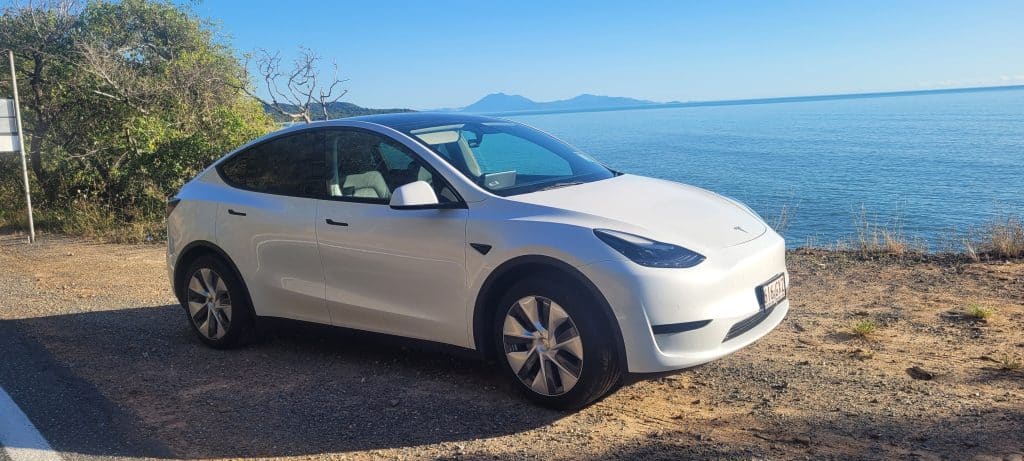
Test-driven: 11-14 August 2024 – by Adrian Edlington
“A short get-away to Cairns and Port Douglas in far north Queensland was the perfect opportunity to hire a Tesla Model Y and put it through its paces. The first thing I noticed was the unconventional controls. They were much different to any of the other EVs I’ve test-driven! I really should have taken the car rental employee up on their offer to show me how to operate the vehicle. As a result, I had to sit in the airport carpark and watch a few handy YouTube videos to learn my way around the controls. The built-in explainer videos did an equally good job, though I didn’t find them until later!
The main difference between a Tesla and other EVs is the absence of a standard dash. No traditional speedometer, either manual or digital, nor rev meter or heads up display, for that matter. The view through the steering wheel is of a completely smooth dash, which is quite novel.
All of the controls and functions are accessed through the central touch screen, which takes a little getting used to. However, I was able to adapt rather quickly. After a couple of days of driving, the car drove and handled like dream. The large and clear navigation map was a stand-out.
Where safety and smart driving features were concerned, it was pretty similar to most other EVs in terms of smart lane assist, adaptive cruise control, collision alert and more. I did notice the metal cruise control roller-button felt especially nice. It was easy to scroll up in 5km increments when slowing down or speeding up on the open road.
We found charging in Port Douglas convenient enough, as one of the hotels had 4 or more dedicated Tesla chargers. Our hotel had two, though one was out of action, while the other didn’t work for our vehicle. Driving north from Port Douglas to Cape Tribulation was easily achievable in a day without depleting the car’s battery beyond 45%.
If I were to buy one, I’d want the Long Range model, though your purchase decision will probably come down to two things: price and whether or not you like the sleek and minimalist interface. Be mindful of the fact that Tesla have slashed prices several times already to maintain competitiveness, while at the same time continuing to improve vehicle range, which could impact resale values.”
- Minimum and maximum price: from $58,900 to $89,400
- Battery capacity: approx. 60kWh to 75kWh
- Range: up to 681km (Model Y L)
This is it: the most popular EV in Australia. American EV manufacturing giant Tesla’s Model Y is far and away the best-selling electric model on the market, with its 22,239 units sold across 2025 placing it almost 9,000 units ahead of the nearest challenger, the Sealion 7. It's already smashed that total in 2026, though, with 31,454 sales up to August placing it firmly in the mix for top spot among all models.
The Model Y is expanding its range to four variants, as the the L Premium (from $74,900) joins the Premium Rear Wheel Drive (from $58,900), Premium Long Range All-Wheel Drive (from $68,900) and Performance (from $89,400). The new L Premium boosts the Model Y's top combined range to 681km compared to the Premium Rear Wheel Drive (466km).
Tesla is secretive when it comes to factors like its engine capacity, power output, torque and charging times, so they can’t be compared as easily in these areas with other vehicles.
However, with Tesla’s Autopilot technology, which includes a range of crucial safety technologies, and interior features such as a 15.4-inch touchscreen, it’s easy to see why many are making the jump to the Model Y (though a recent survey found it's ceding ground to Toyota and BYD among the most desirable EV brands). We haven't yet seen its full autonomous driving capabilities, either, so this remains a watch for the coming years.
2. MG MGS5 EV

- Minimum and maximum price: from $42,990 to $47,990
- Battery capacity: 49kWh to 62kWh
- Maximum power: 150kW/350Nm
- DC fast charge time (30% to 80%): approx. minimum 19 mins
- Range: up to 450km (MGS5 EV 62kWh Essence)
The MGS5 EV is the successor to the Chinese carmaker’s popular ZS EV, which has now been discontinued in Australia. Its range of variants has been trimmed ahead of the 2027 model year, too, with the previous base model, the Excite, being scrapped in favour of 49kWh and 62kWh versions of the Essence. The base price of the MGSV EV has risen by $2,500 as a result.
The range it offers isn’t anything ground-breaking, with a slight hike of up to 450km available through the 62kWh Essence. For the equivalent 49kWh variant, you’ll only be getting up to 335km.
However, one area of notable improvement for the MGS5 compared to the ZS EV is in the safety department. Each variant sports the full range of active and passive safety features, including:
- Intelligent Cruise Assist (ICA) and Speed Limit Assist (SAS)
- Blind Spot Detection (BSD)
- Rear Cross Traffic Alert (RCTA) and Braking (RCTB)
Couple those with some of the entertainment and comfort features like a 12.8-inch infotainment screen, Wireless and Wired Apple CarPlay and Android Auto and satellite navigation, you suspect the MGS5 EV has a bright future ahead of it on Australian roads.
We test-drove the MG ZS EV back in 2023. Watch our video review here.
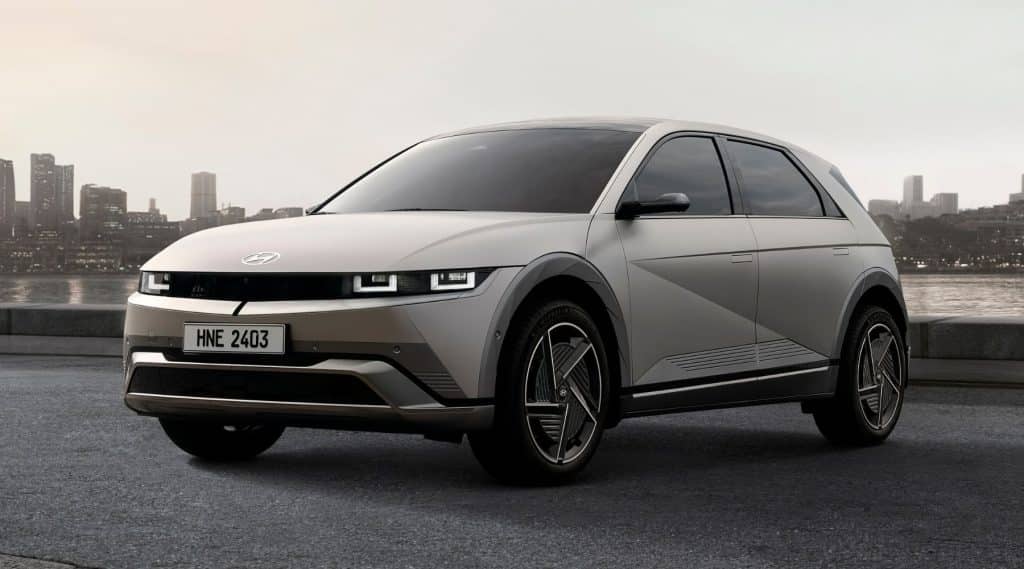
3. Hyundai Ioniq 5
- Minimum and maximum price: from $68,200 to $114,918
- Battery capacity: 84kWh
- Maximum power: 239kW/605Nm
- DC ultra-fast charge time (10% to 80%, 350kW): approx. minimum 18 mins
- Range: up to 570km (Ioniq 5)
Although previously South Korean manufacturer Hyundai’s best-selling EV model, the Ioniq 5 fell even further behind the electrified Kona in sales in 2025. It was only Hyundai's tenth-most popular model for the year in Australia.
The Ioniq 5's price has been cut by $8,000 across the board for the 2027 financial year, making the base Ioniq 5 (from $68,200), mid-spec Elite (from $73,200) and top-spec Premium N Line (from $83,700) more affordable. While the base model and Elite are only available in RWD, the Premium N Line is an AWD.
All models come with Hyundai SmartSense, which includes a variety of safety features such as:
- Parking Collision-Avoidance Assist – Reverse (PCA-R)
- Surround View Monitor (SVM) with 3D Surround View function
Each model also comes with a 12.3-inch HD capacitive touchscreen display, Apple CarPlay and Android Auto compatibility and satellite navigation, while the Elite and Premium N Line also come with an eight-speaker Bose premium speaker system.
It’s clear to see the appeal of the Ioniq 5. Its sleek design is instantly eye-catching and it offers a suite of attractive features in a spacious cabin that make your already comfortable driving experience that much more convenient.
4. Zeekr 7X

- Minimum and maximum price: from $57,900 to $72,900
- Battery capacity: 75kWh to 100kWh
- Maximum power: 475kW/710Nm
- DC fast charge time (10% to 80%, 450kW): approx. minimum 13 mins
- Range: up to 615km (7X Long Range RWD)
The 7X has formed part of the growing contingent of competitively priced Chinese-built EVs reaching our shores. It’s rivalled other emerging names on the scene in the EX5, Jaecoo J5 and BYD Atto 2 in terms of sales, having done enough in the first half of 2026 to sit in the top five among all EVs despite only having started deliveries in late 2025.
What stands out most about the 7X isn’t so much its visual features, but the speed at which you can charge it. Its 800V battery system allows it to be charged at DC fast charging rates as high as 450kW, meaning it can go from 10% to 80% in just 13 minutes.
Some of the safety features available across all three 7X variants are:
- 360° Surrounding Camera and Transparent Chassis
- Lane Keeping Assist and Emergency Lane Departure Correction
- Driver Performance Monitor
- Hands Off Detection
All models also have a 16-inch 3.5K Mini-LED Central Screen and 13.02-inch High-Definition Cockpit Cluster, while some of the eye-catching features available above the base RWD Standard include the 36.21-inch Augmented Reality Head-Up Display, ZEEKR Sound Pro 21-speaker audio system and dual 50W wireless phone charging.
5. Geely EX5

- Minimum and maximum price: from $41,990 to $45,990
- Battery capacity: 68.39kWh
- Maximum power: 160kW/320Nm
- DC fast charge time (30% to 80%, 100kW): approx. minimum 20 mins
- Range: up to 475km (EX5 Complete)
The EX5 from Geely is yet another Chinese-made EV that’s made a splash on Australian shores, and it’s certainly a popular one at that. At the halfway point of 2026, only the Model Y and BYD Sealion 7 have outsold the SUV, with its 6,756 registrations at that stage representing an increase of 266.2% in YTD sales.
With only $4,000 between the base-spec Complete and top-spec Inspire, the EX5 comes in at an approachable price for either variant. Geely has taken the standard range versions of each variant off the table and focused on the extended range exclusively, though at a maximum range of 475km it’s short of some of the other top names on this list.
All EX5 models come with Geely’s full suite of active safety technologies, including the following:
- Collision Mitigation Support Front & Rear
- Evasive Manoeuvre Assist
- Traffic Sign Information
- Driver Fatigue Alert
Pair that with a 15.4-inch Touchscreen Multimedia Display, 13.4-inch Head-Up Display, Wi-Fi connectivity and Geely Connected Services (including Voice Assistant, 4G network connection and live traffic updates for satellite Navigation) and the EX5 puts together a formidable package at a competitive price.
6. BYD Sealion 7

- Minimum and maximum price: from $54,990 to $63,990
- Battery capacity: 82.56kWh
- Maximum power: 390kW/690Nm
- Range: up to 482km (Sealion 7 Premium)
The Sealion 7 has emerged as one of the leading electric cars in Australia, finishing behind only the Model Y for 2025 sales (13,410) and registrations across H1 2026 (12,516). It remains BYD's flagship model as the Chinese manufacturer goes from strength to strength in the Australian market, having surpassed all bar Toyota for total sales across the first six months of the year.
At $54,990, it’s a relatively competitive price point for the segment, though more and more small and mid-sized SUVs under $40,000 and $50,000 are popping up to add competition. Still, it’s hard to argue with the numbers the Sealion 7 is putting up.
Both variants come with all the most common safety technologies available among modern EVs today, such as:
- Intelligent Speed Alert (ISA) and Intelligent Speed Limit Control (ISLC)
- Lane Keeping Control (LKC) and Emergency Lane Keeping Assist (ELKA)
You’ll also get to enjoy the panoramic glass roof and 15.6-inch intelligent Rotating touch screen display on either model, with the performance offering additional comfort features like heated rear seats and steering wheel. There's no doubt the Sealion 7 has already made its mark, but it’s here to stay for the long run.
7. Volvo EX40

- Minimum and maximum price: from $69,990 to $82,990
- Battery capacity: 82kWh
- Maximum power: 300kW/670Nm
- DC ultra-fast charge time (10% to 80%, 200kW): approx. minimum 28 mins
- Range: up to 520km (EX40 Single Motor Extended Range)
Volvo’s XC40 Recharge is now the EX40, with the new name having been unveiled in November of 2023. Like the Ioniq 5, the EX40 has slashed its prices across the range by $7,000, from $76,990 to $69,990 for the Single Motor Extended Range and from $81,990 to $74,990 for the Twin Motor.
With a striking angular exterior, the EX40 boasts a futuristic design which is sure to turn heads. In terms of its performance, the biggest plus from a revhead’s point of view is the 300kW of power and 670Nm of torque. It certainly packs a punch in that department.
Outside of that, though, you can enjoy a suite of handy features, including a 9-inch centre display, 12.3-inch driver display, 360° camera, wireless charging and a Harmon Kardon Premium Sound system. Safety support systems include:
- BLIS and Cross Traffic Alert
- Lane Keeping Aid
- Oncoming Lane Mitigation
If you’re on the hunt for a powerful compact SUV and have a bit more money available, the EX40 is bound to deliver a thrilling ride.
8. Chery E5

- Minimum and maximum price: from $37,990
- Battery capacity: 58.9kWh
- Maximum power: 155kW/288Nm
- DC fast charge time (30% to 80%, 130kW): approx. minimum 30 mins
- Range: up to 430km
The vehicle formerly known as the Chery Omoda E5 is now simply the Chery E5 and currently holds the title of cheapest electric SUV in Australia today. Starting from just $37,990, it rivals the cheapest electric hatches on the market. The Chinese carmaker’s only fully electric model in Australia, the compact E5 sports a striking appearance that is sure to turn heads on the road.
The E5 has been streamlined from two variants to one, having scrapped the previous entry-level Urban in favour of a cheaper Ultimate (down from $40,990). It offers a respectable maximum range of up to 430km and, as a front-wheel drive (FWD), deliver up to 150kW in power and 340Nm of torque. Some of its key safety features include:
- Traffic Jam Assist (TJA)
- Rear Cross Traffic Alert (RCTA) and Rear Cross Traffic Braking (RCTB)
- Speed Limit Information Function (SLIF)
You’ll also enjoy a dual 12.3-inch LCD instrument cluster and integrated multimedia touchscreen, wireless device charging and both Wired and Wireless Apple CarPlay and Android Auto. On top of that, Ultimate-only features that have been retained include heated front and outboard rear seats, premium heated steering wheel and eight-speaker Sony sound system (compared to a six-speaker standard sound system).
If you’re looking for a cheap, compact SUV in the electric market, the Chery E5 will deliver an impressive experience on a budget.
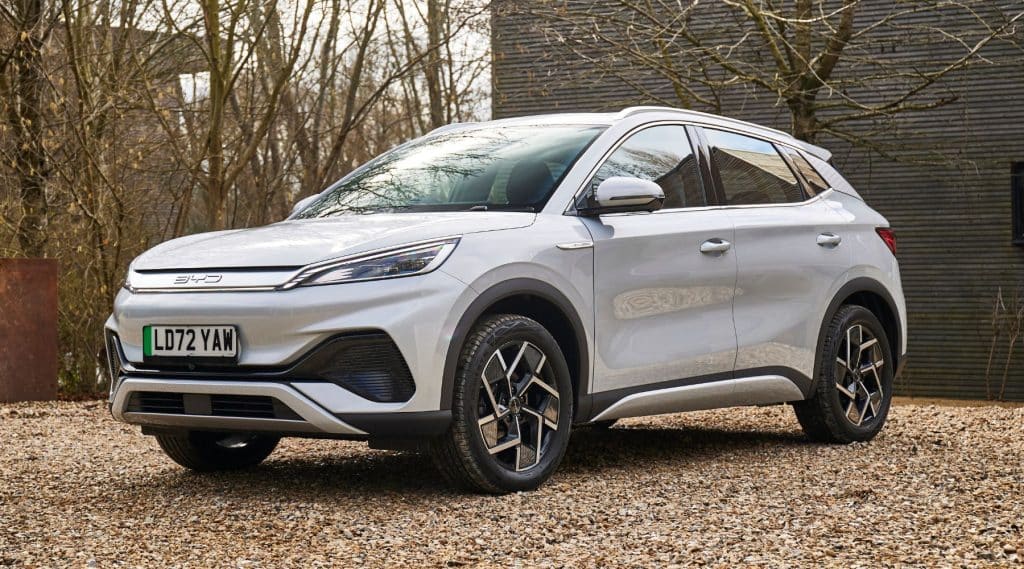
9. BYD Atto 3
- Minimum and maximum price: from $39,990 to $46,990
- Battery capacity: 49.9kWh to 60.5kWh
- Maximum power: 230kW/380Nm
- Range: up to 510km (Atto 3 Premium)
The Atto 3 has proven to be very popular in Australia as a mid-size electric SUV, with its competitive starting price landing it in the top ten best-selling EVs three years in the row (most recently sixth overall in 2025 with 3,861 sales). However, as of the end of June 2026, it's being outsold by the Sealion 7, Atto 2 and Atto 1 among BYD models.
You can choose between three trims: the base Essential (from $39,990), the new mid-spec Dynamic (from $41,990) and the Premium (from $46,990). The latter has upped its price by $2,000, but has boosted its combined range to 510km.
All variants come with a suite of safety and convenience features, including:
- 360° view monitor
- 12.8-inch (Essential) or 15.6-inch (Premium) intelligent rotating touch screen
- Intelligent voice control
The Atto 3 gives you plenty to think about if you’re shopping for an electrified SUV at an affordable price. However, with the smaller Atto 2 SUV entering the market $8,000 lighter and the uber-cheap Atto 1 making a splash at the sub-$20,000 price point, it'll be interesting to see whether it can stay afloat.
10. Jaecoo J5 EV

- Minimum and maximum price: from $35,990
- Battery capacity: 58.9kWh
- Maximum power: 155kW/288Nm
- DC fast charge time (30% to 80%, 130kW): approx. minimum 28 mins
- Range: up to 402km
Rounding out the top ten is the J5 EV from Jaecoo, another model that’s started to make its mark in Australia. The compact SUV is fourth overall for electric vehicle sales six months into 2026, even though it hadn’t reached our shores until early this year.
For an SUV, it’s on the lower end of the scale in terms of oomph, only packing up to 155kW of power and 288Nm of torque off its 58.9kWh battery. However, those looking for a smaller set of wheels will be attracted by its low base price of just $35,990, placing it in the top ten cheapest cars available in Australia right now.
The J5 EV comes with Advanced Driver Assistance (ADAS) features such as:
- Rear Cross Traffic Alert and Braking
- Lane Change Assist
- Speed Control Assist
Despite the cheap price, there are still attractive infotainment features for drivers, from its 13.2-inch LCD infotainment touch screen and eight-speaker sound system to Hello Jaecoo, the car’s intelligent voice command software. Jaecoo also highlights the J5 EV’s pet-friendly seats, which are designed to be scratch-resistant, to show its capabilities for families with fur babies, too.
Electric hatches
1. MG MG4
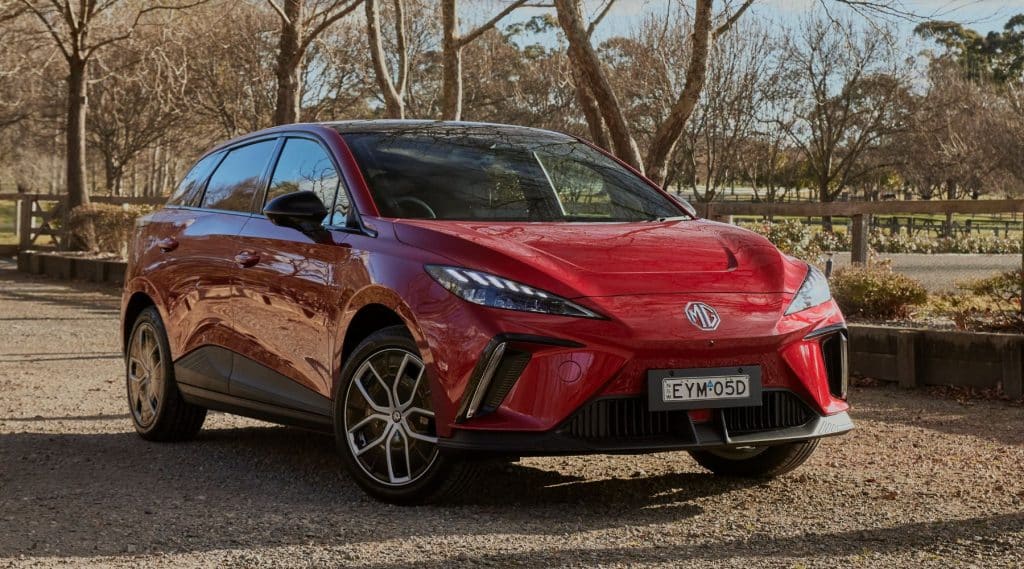
- Minimum and maximum price: from $36,990 to $55,990
- Battery capacity: 64kWh
- Maximum power: 320kW/600Nm
- DC ultra-fast charge time (10% to 80%, 150kW): approx. minimum 25 mins
- Range: up to 452km (MG4 Essence 64)
Formerly the cheapest EV available through MG, the MG4 is still among the most affordable models on the market at a starting price of $36,990. However, the Chinese manufacturer's former flagship EV has been undercut by the MG4 EV Urban, which sits at a base price $5,000 cheaper.
Its popularity in Australia has waned as the EV market has grown, having ended 2024 as the third best-selling EV (6,934) before sliding to ninth in 2025 (2,986, -56.9%) and sitting outside the top ten in H1 2026 (1,828, -19.4%).
The MG4 range has been trimmed down from five to two, having done away with 51kWh and 77kWh vehicles to focus solely on the significantly discounted Essence 64 RWD (from $36,990) and XPOWER AWD (from $55,990). Both models now come with 64kWh batteries.
Like the MGS5, all models are equipped with MG Pilot, with the full suite of inclusions available for both variants. Some of features available include:
- Unsteady Driving Warning
- Intelligent Headlamp Control
With tight handling and several additional features, including a 12.8-inch HD Infotainment Touchscreen, Apple CarPlay and Android Auto (both wired only), the MG4 packs plenty of punch for its price point.
2. Hyundai Inster

- Minimum and maximum price: from $39,000 to $45,000
- Battery capacity: 42kWh to 49kWh
- Maximum power: 84.5kW/147Nm
- DC fast charge time (10% to 80%, 120kW): approx. minimum 30 mins
- Range: up to 360km (Inster Extended Range and Cross)
Hyundai have dipped their toes in the water of tiny electric cars with the release of the Inster. Nominally a small or even micro-SUV, it fits more comfortably into the hatch category due to its power and (sheer lack of) size for the purposes of our list.
You can choose between the Inster Standard Range (from $39,000 with 42kWh battery), Extended Range (from $42,000 with 49kWh battery) and Cross (from $45,000 with 49kWh battery). The Extended Range and Cross are the two models listed as capable of achieving the 360km range.
As is standard across Hyundai’s stable of EVs, you can take advantage of SmartSense’s active safety features, which include:
- Forward Collision-Avoidance Assist (FCA 1.5) including Car/Powered two-wheeler/Pedestrian/Cyclist detection, Direct Oncoming Function, Lane-Change Oncoming/Side functions and Junction Turning functions
- Highway Driving Assist
- Surround View Monitor (SVM) with 3D Surround View function (Cross only)
With its battery capacity of up to 49kWh and power maxing out at just 84kW and 147Nm of torque, it’s safe to say you aren’t buying the Inster for its brute force on the roads. What it does offer is a clean, compact set of wheels designed for city living.
There’s no doubt that the Inster has plenty to offer prospective drivers. However, the question you’ll ultimately have to ask yourself is whether it’s worth the additional investment compared to some of the other budget hatches on this list.
3. All-Electric Mini Cooper
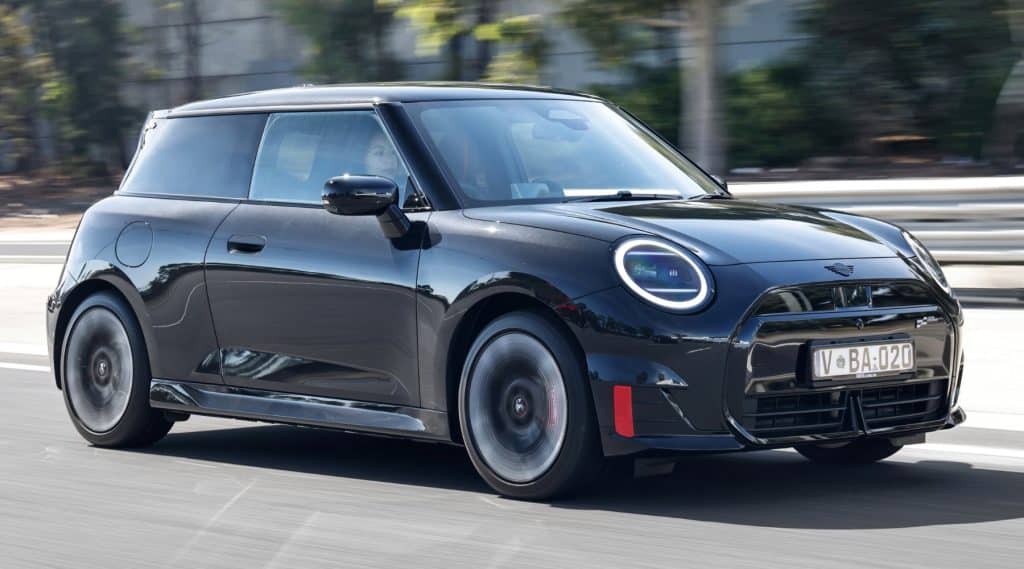
- Minimum and maximum price: from $58,990 to $63,990
- Battery capacity: 49.2kWh
- Maximum power: 190kW/350Nm
- DC fast charge time (10% to 80%, 95kW): approx. minimum 30 mins
- Range: up to 400km (Cooper SE)
When it comes to prestige names in the hatchback space, few carry as much weight as the Mini Cooper. The iconic British model now has a fully electric suite of variants, known as the All-Electric Mini Cooper range. Notably, the EV version of the Cooper is built on a skeleton co-created by BMW and GWM, rather than solely relying on BMW construction as the petrol models do.
The Base Cooper E has been scrapped, raising the entry point by $5,000 to a starting price of $58,990 for the former mid-spec SE. The high-performance JCW keeps its place atop the electric Cooper tree, starting from $63,990.
The Cooper is the smallest of the models we’ve discussed so far, having only four seats and three doors. However, as Minis are known to do, it aims to cram plenty of fun into a small package when it comes to the driving experience. The “Go Kart” driving mode, alongside six others you can choose from, and Panorama Glass Roof speak for themselves.
Some of the standard infotainment features across the range include Mini’s Augmented Reality Navigation, Intelligent Personal Assistant (IPA), Wireless Apple CarPlay and Android Auto and a Harmon/Kardon Surround Sound System (not included on the Cooper E). You can also take advantage of safety technologies like:
- Attentiveness Assistant
- Intelligent Emergency Call
- Vehicle Exit Warning
While it may not offer the same power as other EVs on the market, there’s no doubt that you’ll get a kick out of driving the All-Electric Mini Cooper. You’re paying a premium, but you’re getting a strong brand identity and fun experience to go along with it.
4. BYD Dolphin
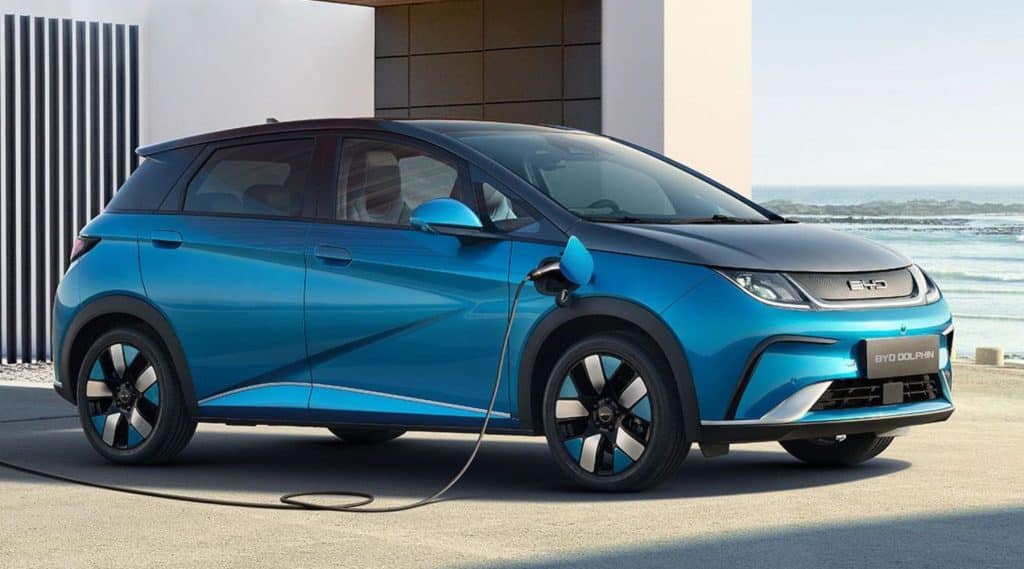
- Minimum and maximum price: from $29,990 to $36,990
- Battery capacity: 44.9kWh to 60.5kWh
- Maximum power: 150kW/310Nm
- Range: up to 427km (Dolphin Premium)
The Dolphin held the title of cheapest non-commercial electric vehicle in Australia until BYD one-upped itself with the basement-priced Atto 1. The Dolphin comes in at a cool starting price of just $29,990 for its base Essential model and $36,990 for the Premium variant.
It was this pricing that helped the Dolphin make a splash and land in the top ten best-selling EVs in Australia for the last two full years (eighth in 2025, 3,248). However, by the end of June 2026, it was actually the lowest-selling BYD EV, though it still sat 13th among all carmakers.
The Essential doesn’t come with very much power at all, with its 44.9kWh battery capable of outputs of only 70kW and 180Nm of torque. However, the Premium more than doubles this, with its 60.5kWh battery able to produce up to 150kW and 310Nm of torque, as well as an improved range of 427km compared to 340km.
Despite the basement price tag, the Dolphin still comes with a range of useful safety features, including:
- 360° view monitor
- Bluetooth key and BYD digital key
- Traffic Sign Recognition (TSR)
5. MG4 EV Urban

- Minimum and maximum price: from $31,990 to $34,990
- Battery capacity: 43kWh to 54kWh
- Maximum power: 118kW/250Nm
- DC fast charge time (10% to 80%, 82kW): approx. minimum 28 mins
- Range: up to 405km (MG4 EV Urban Essence 54)
The newest addition to the MG electric lineup is the MG4 EV Urban, which has entered the fray to mix it with the cheapest EVs currently on the market. At a starting price of $31,990 for the Essence 43, it sits behind only the BYD Atto 1, Geely EX2 and BYD Dolphin among the most affordable electric cars in Australia (though it currently sits equal with the BYD Atto 2 and GAC Aion UT).
As a budget electric hatchback, it’s safe to say you won’t be buying the MG4 EV Urban for its power; it can only reach up to 118kW and 250Nm of torque on the top-spec Essence 54. However, despite the small package, the Essence 54 can deliver a reasonable 405km of range.
Like the MG4 EV, you’ll have access to the full suite of MG Pilot ADAS technology, which includes:
- Driver Monitoring System
- Lane Change Assist
- Traffic Jam Assist
- Intelligent Speed Limit
Despite the basement price, you’ll still have plenty of handy features at your disposal, such as the 12.8-inch Infotainment Screen, wireless phone charger and 12 months of complimentary access to iSMART, MG’s connected app that allows you to locate your MG4 EV Urban, control its A/C remotely and monitor tyre pressure and engine health.
Electric sedans
1. Polestar 2

Test Driven: 15-19th December 2022 – by Adrian Edlington.
“I drove the top-spec 2023 Polestar 2 for 5 days both in the city and on a road trip around the Fleurieu Peninsula and loved every minute of it!
The handling, pick-up and performance were truly amazing. This thing accelerates so fast I’d have to warn passengers to have their heads against the headrest and look forward, lest they put their necks out! It was almost TOO quick. Travelling along winding roads in the powerful sedan left one passenger with a bout of car sickness, albeit while the driver was having a blast.
After a day or two of driving like a hoon, I was able to calm down a bit and rely on the adaptive cruise control – the best way to avoid a speeding ticket in both urban areas and on the open road.
My one and only criticism of the Polestar 2 is that the optional extras come in non-negotiable packs, so if you want the epic Harman Kardon 13-speaker sound system, you’ll need to fork out for the moon roof. Also, the back seats weren’t so comfy, so my passengers told me, though who cares? They would be fine for short trips, kids or baby seats.
Another plus is that the price seems to have come down since I first reviewed the Polestar2 in 2022. In my state of South Australia, the Long range Dual motor with Performance pack goes for $89,339.72.
- Minimum and maximum price: from $66,400 to $85,080
- Battery capacity: 70kWh to 82kWh
- Maximum power: 350kW/740Nm
- DC ultra-fast charge time (10% to 80%, 205kW): approx. minimum 28 mins
- Range: up to 659km (Polestar 2 Long Range Single Motor)
The Polestar 2 starts to move into luxury car territory, although at a starting price of $66,400 remains in the mix with the Model 3 and Ioniq 6. The Standard Range variant has been scrapped, as Polestar has chosen to focus on the Long Range Single Motor (from $66,400) and Long Range Dual Motor (from $71,400). Both have been brought down by $2,500. As a "liftback", it could fit into either the hatch or sedan category.
You’ll have a series of packs to choose from as well, with the Pilot Pack (now standard on all Polestar 2 variants), Plus Pack, Performance Pack, Pro Pack and Climate Pack all bringing a range of additional features to the party. However, with the top-level LRDM costing just under $14,000 more with the Plus and Performance Packs, it’s important to work out whether it’s worth the investment.
The handling on the Polestar 2 is one of its key attributes, alongside its streamlined European design. The RWD variant alone is capable of up to 220kW of power and 490Nm of torque, providing impressive acceleration. However, the AWD variants kicks it up a notch, reaching a peak of 350kW and 740Nm with the LRDM with Performance Pack.
Some of the standard features include:
- 12.3-inch driver display area and 11.2-inch centre display area
- Memory function with up to six driver profiles
- Oncoming Lane Mitigation
- Collision avoidance/mitigation with other vehicles, other vehicles at intersections, cyclists and pedestrians
- 13-speaker Harman Kardon Premium Sound system (available with Plus Pack)
If you have the budget, the Polestar 2 is sure to give you an entertaining yet comfortable ride.
2. Tesla Model 3
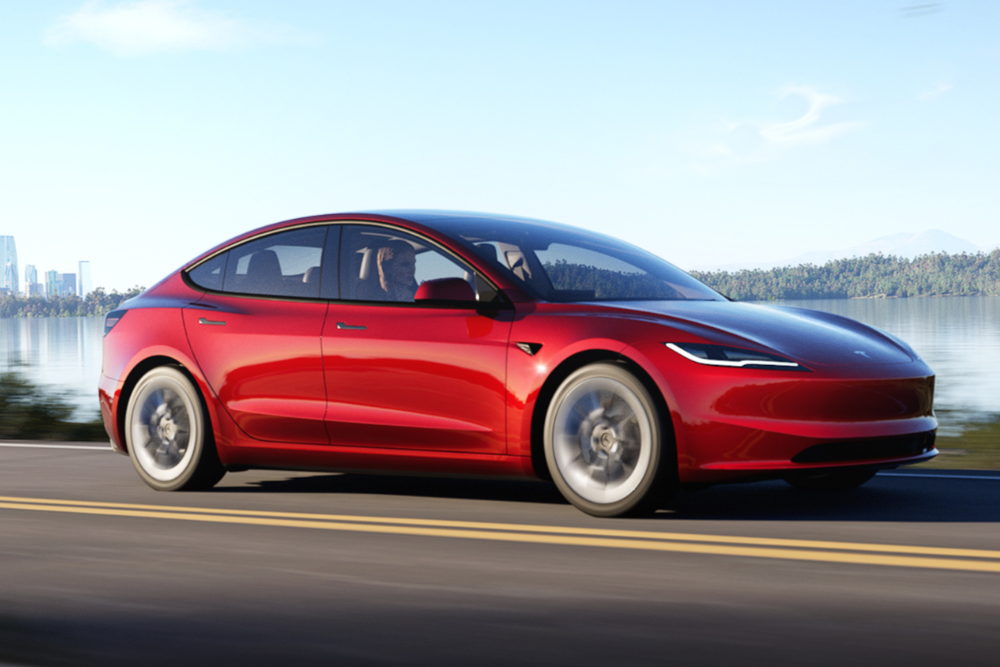
- Minimum and maximum price: from $54,900 to $80,900
- Range: up to 750km (Model 3 Long Range)
The second of Tesla’s vehicles currently available on the Australian market, the Model 3 finished behind only the Model Y and Sealion 7 in terms of sales in 2025. However, it took a pretty big hit to its sales, dropping from 17,094 in 2024 to just 6,617 last year. In the first half of 2026, its sales are down a further 14.1% as it occupies eighth spot overall among all EVs.
It finds itself on the cheaper end of the scale for vehicles of this make, with the base Rear-Wheel Drive model starting from $54,900, the Long Range AWD from $64,900 and the Performance model from $80,900. That's despite the fact that the Long Range AWD now claims to run for 750km on a single charge, making it an industry leader in that regard.
As is the case with the Model Y, figures such as power output, torque and charging times aren’t readily available, but you can rest assured the Model 3 delivers on speed. It also offers plenty in the way of technological innovation, from accessing, unlocking and turning on the A/C with your phone before entering the vehicle to a 15-inch centre touchscreen, 8-inch rear touchscreen and much more.
3. Kia EV4

- Minimum and maximum price: from $49,990 to $64,690
- Battery capacity: 58.3kWh to 81.4kWh
- Maximum power: 150kW/283Nm
- DC ultra-fast charge time (10% to 80%, 350kW): approx. minimum 29 mins
- Range: up to 612km (EV4 Earth and GT-Line)
Kia's first electric sedan, the newly minted EV4 arrives in Australia as a direct rival to the Tesla Model 3 and BYD Seal. Built on the same E-GMP platform as the EV6 and EV9 SUVs, albeit with 400-volt architecture rather than 800-volt, it comes in three variants: the Air (from $49,990), the Earth (from $59,190) and the GT-Line (from $64,690).
Looks are sure to divide opinion, but there's no doubting the EV4 is a bold statement visually. Its angular, futuristic exterior is offset by a comparatively understated and well-thought-out cabin. The centrepiece is a sweeping panoramic digital display combining the instrument cluster, climate controls and infotainment touchscreen into a single curved unit.
Some of the notable safety features available across the range include:
- Highway Driving Assist 2 with Lane Change Assist
- Blind Spot Collision Avoidance Assist with Rear Cross Traffic Collision Avoidance
- Haptic Steering Wheel Feedback
The EV4 is a polished and well-rounded debut for Kia in the electric sedan space. While it doesn't quite match the power and performance of the top-tier competitors, the combination of class-leading range, generous standard features and competitive pricing makes it a compelling option for Aussies looking to make the switch to electric motoring.
4. BYD Seal

- Minimum and maximum price: from $52,990 to $61,990
- Battery capacity: 82.56kWh
- Maximum power: 390kW/670Nm
- Range: up to 570km (Seal Premium)
BYD’s Seal is its first foray into the sedan segment. Having started life as the cheapest electric sedan, the recent axing of the base Dynamic has brought the Seal's starting price to above $50,000, with buyers getting a choice between the Premium (from $52,990) and Performance (from $61,990).
The Dynamic and Premium are both RWDs, with both packing a 82.56kWh battery. However, the Performance is an AWD, allowing it to reach up to 390kW of power and 670Nm of torque compared to the Premium (up to 230kW and 360Nm).
BYD states that the Premium is capable of reaching up to 650km on a single charge, but this measurement is based on the New European Driving Cycle (NEDC) system. To achieve a more accurate comparison between vehicles, the testing method we’re using is the industry-preferred World harmonised Light vehicle Testing Procedure (WLTP), which places it at a much lower (but still very impressive) 570km.
Packing several key safety features, such as Traffic Sign Recognition, Emergency Lane Keeping Assist, Head Up Display and an improved 15.6-inch intelligent Rotating touch screen display and 12-speaker DYNAUDIO sound system, this could be a good option if you’re looking to pay a bit less for your EV sedan.
5. BMW i4
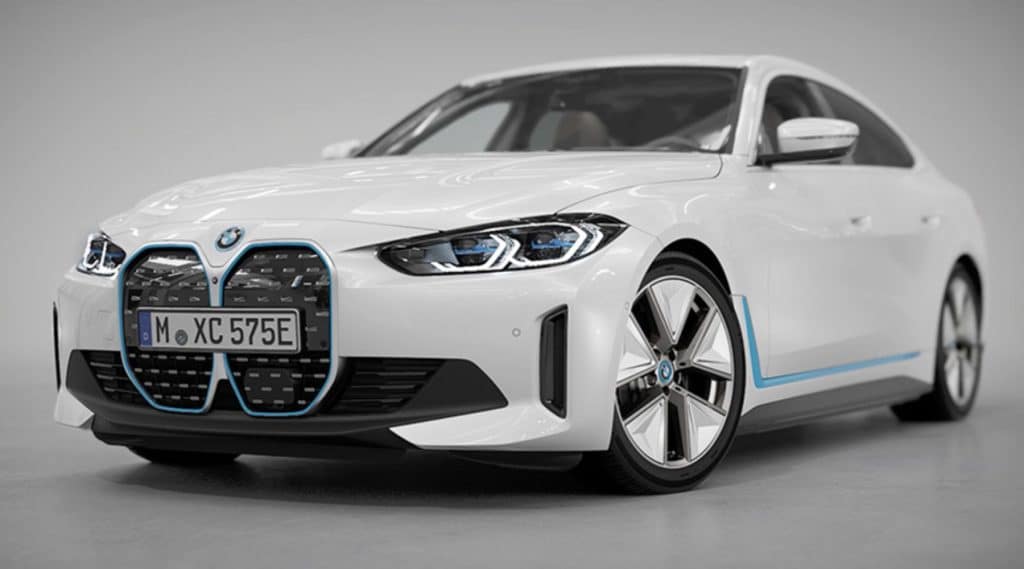
- Minimum and maximum price: from $88,900
- Battery capacity: 66.4kWh
- Maximum power: 210kW/400Nm
- DC ultra-fast charge time (10% to 80%, 180kW): approx. minimum 32 mins
- Range: up to 448km (i4 eDrive35)
The i4 has been streamlined down to a single model, the eDrive35, to bring the full line down to under $90,000, which is highly competitive for a luxury electric sedan with that kind of nearly unrivalled name recognition. The eDrive35 offers up to 210kW of power, 400Nm of torque and 448km of range, losing much of the power its previous mid- and top-spec variants packed.
The blue accents on the exterior are particularly striking, accentuating the aerodynamic design of the car. In terms of features, all models come with a BMW Live cockpit Professional display, which incorporates the 12.3-inch instrument cluster and 14.0-inch control display into a single unit, as well as a host of safety technologies like:
- BMW Head-Up Display
- Driving Assistant Professional
- Parking Assistant Plus (including Parking Assistant with Active Park Distance Control front & rear, Reversing Assistant, Surround View, Panorama View and 3D View
While the i4 makes a great case for a powerful luxury EV under $100,000, it’s worth noting that ANCAP rated the model four stars in 2022, giving it 71% for Vulnerable Road User Protection and 62% for Safety Assist. It'll hold this rating until 2028.
Electric utes
1. KGM Musso EV

- Minimum and maximum price: from $57,130 to $61,014
- Battery capacity: 80.6kWh
- Maximum power: 266kW/630Nm
- DC fast charge time (10% to 80%, 300kW): approx. minimum 36 mins
- Payload: up to 905kg (Musso EV 2WD)
- Braked towing capacity: up to 2,300kg (Musso EV AWD)
- Range: up to 419km (Musso EV 2WD)
The Musso EV is currently Australia's most popular electric ute, having gone on sale in December 2025 (though it's bound to face stern competition from the new HiLux BEV). What will immediately attract the attention of interested parties is its much more affordable starting price of just $57,130, almost $18,000 cheaper than the base HiLux.
It also offers more power than the eT60, maxing out at a combined system output of 266kW amd 630Nm of torque, as well as a reasonable range of 419km in the 2WD variant (the combined range on its AWD sits at 379km).
The Musso EV comes with a vast array of safety features as standard on all its variants, such as its 3D 360° Around View Monitor (AVM) and other common EV technologies. It'll be interesting to see how Aussies take to the Musso EV in the long term, as it lacks the name recognition of some of the other utes soon to reach our shores.
2. Toyota HiLux BEV

- Minimum and maximum price: from $74,990 to $82,990
- Battery capacity: 59.2kWh
- Maximum power: 144kW (max. torque of 205.5Nm through front motor and 268.6Nm through back, but combined figure unavailable)
- DC fast charge time (10% to 80%, 150kW): approx. minimum 30 mins
- Payload: up to 855kg (HiLux SR BEV Cab-Chassis)
- Braked towing capacity: up to 2,000kg (both variants)
The HiLux is the most recent electric ute to hit the market, having done so to much fanfare. After all, the HiLux’s ICE versions have long proven incredibly popular in Australia. Having started slowly in terms of sales since its introduction in 2026, the big question is whether the HiLux BEV lives up to the hype.
At its advanced price point, buyers will expect improved performance from the HiLux BEV. However, it fails to match the Musso EV on a number of key metrics: power, braked towing capacity, maximum payload and vehicle range.
The latter has proven a point of contention for potential buyers, as the already skinny 315km and 245km cited for the SR5 and SR, respectively, are calculated using the now-obsolete NEDC system. Translating this to the WLTP range calculation (as the other cars on this page have been) results in a range closer to 270km for the SR5 and under 200km for the SR.
Still, it’s not as if there’s nothing to like about the HiLux BEV. Embedded navigation and Road Sign Assist add convenience to the overall package, alongside the Toyota Safety Sense suite of features, 12.3-inch colour touchscreen display and voice command.
Potential future electric ute arrivals
LDV eTerron 9

The new and improved electric ute from LDV, the eTerron 9’s arrival in Australia has been awaited for some time. The dual-cab 4WD will improve on the eT60’s power with its 102kWh lithium-ion battery, adding an extra 100km in range and ramping up its towing capacity to 3,500kg. However, there's a growing feeling that the eTerron 9 may not make the journey across the Pacific Ocean.
Isuzu Ute D-Max EV
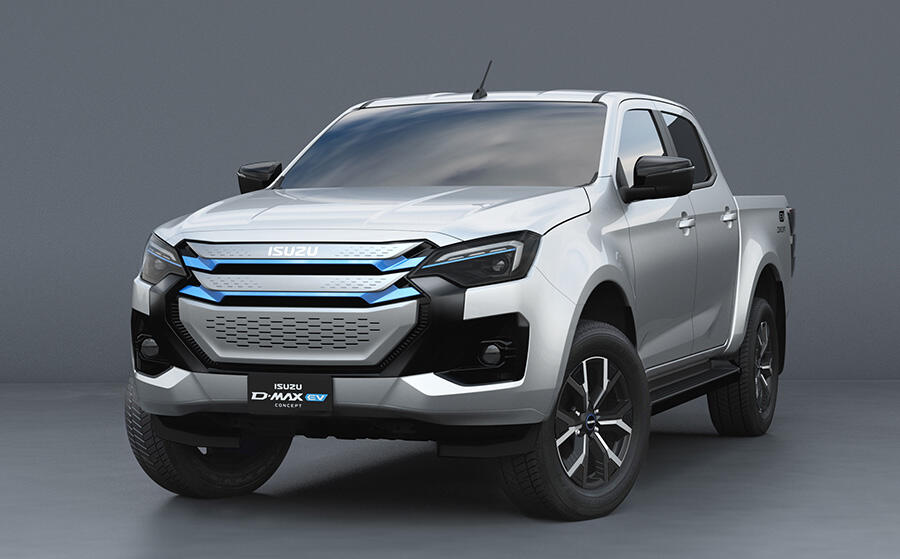
An all-electric version of the popular D-Max from Isuzu Ute was originally expected to be unveiled in Australia in 2026, though with dates yet to be confirmed, that seems increasingly unlikely. Although its specs haven’t been released, Isuzu Ute has claimed it’ll be a 4WD packing 140kW of power and 325Nm of torque, as well as a payload of up to 1,000kg and towing capacity of 3,500kg.
Kia Tasman EV
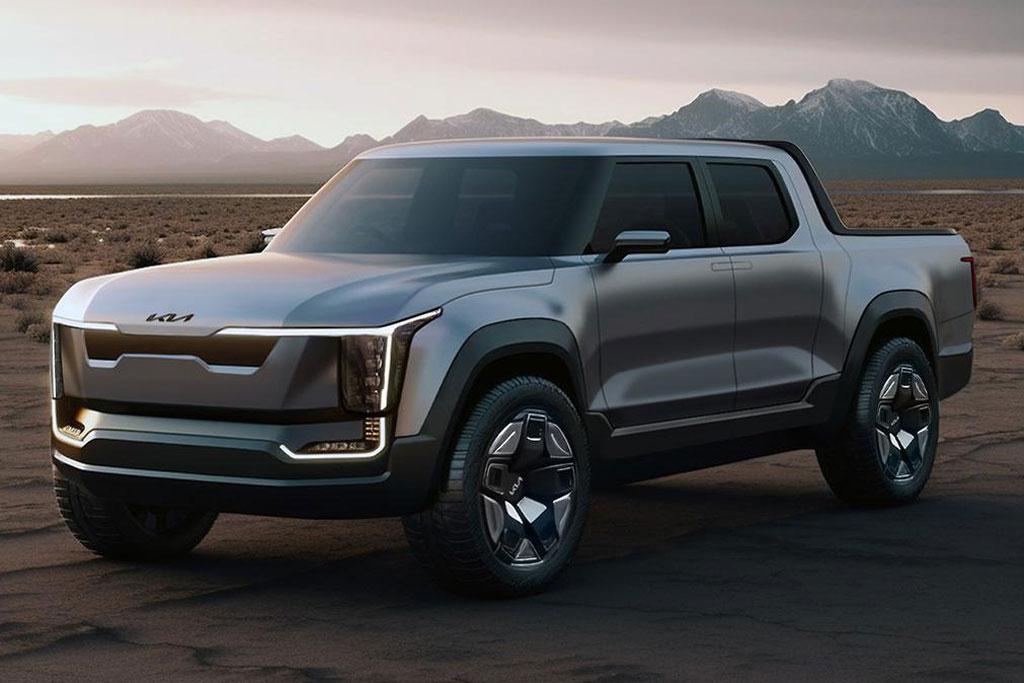
Kia were working on an electric version of the newly unveiled Tasman ute, which was set for release as soon as 2026. However, with the Tasman having underperformed to date,
JAC T9 EV
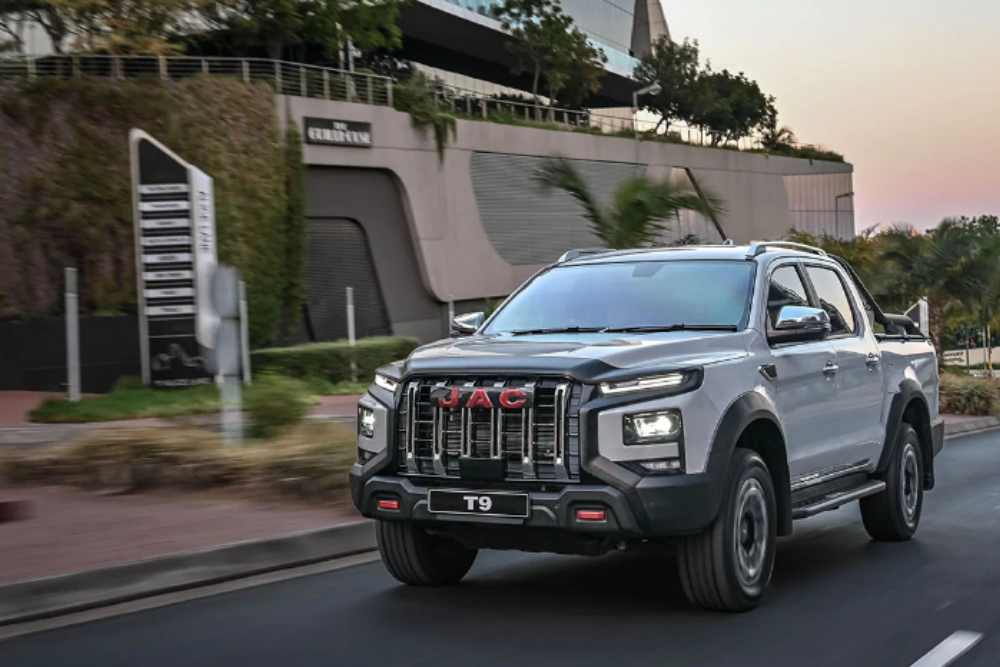
Having released the T9 ute in Australia in 2024, Chinese manufacturer JAC has yet to confirm whether an electric version will reach our shores. However, we know it’ll come with an 88kWh battery and superior power output of 210kW and 516Nm of torque.
Luxury electric vehicles
1. Audi Q6 e-tron

- Minimum and maximum price: from $99,818
- Battery capacity: 83kWh
- Maximum power: 215kW (with launch control engaged)/450Nm
- DC ultra-fast charge time (10% to 80%, 225kW): approx. minimum 21 mins
The Q6 e-tron from Audi is among the most popular EVs in Australia produced by a luxury car manufacturer, with the BMW iX1, iX2 and i4 and the Mercedes-Benz EQA among the only models in the segment that have outsold it in H1 2026. That’s despite tipping the scales at almost $100,000, too.
Although not packing quite the punch as some of Audi’s other electric models (see the e-tron GT for some oomph), it can still deliver a bit of zip with up to 215kW of power and 450Nm of torque. It comes with a range of safety features, including:
- Active front assist
- Lane departure warning with emergency assist
- 360-degree cameras including kerb view function
- Park assist plus
- Adaptive cruise assist with stop and go function and lane centring function
Add to these a three-year complimentary subscription to Audi connect plus, a virtual cockpit with a 11.9-inch colour display and the slick German design shining through inside and out, you can drive in luxury.
Back to luxury electric vehicles
2. Genesis Electrified G80
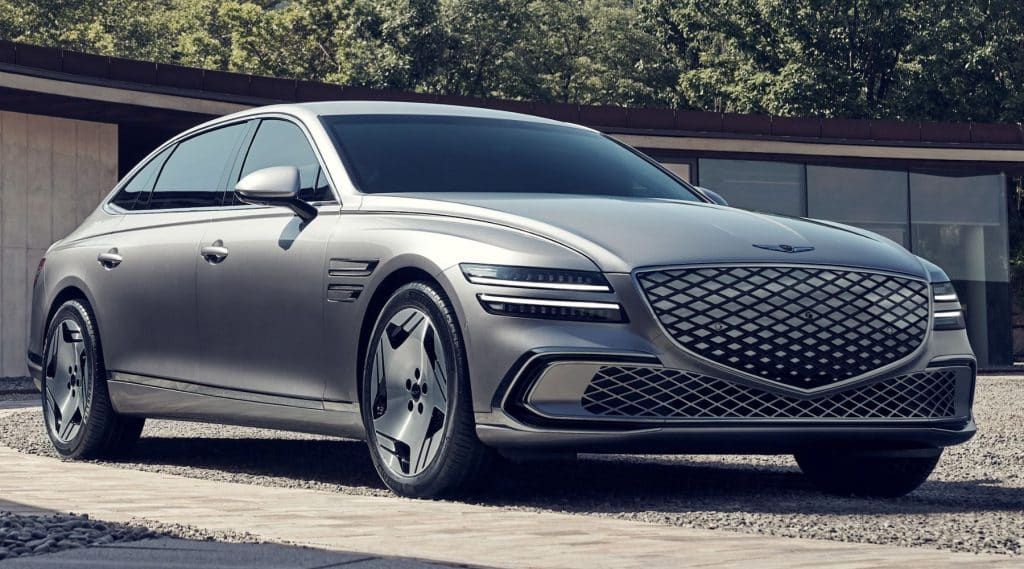
Test Driven: 13-20th February 2023 – by Adrian Edlington.
“The Genesis G80 electric is a luxurious tank of a car that feels better suited to a Hong Kong action film than the streets of Adelaide.
I’m really not sure who the target market in Australia might be, given the price point and dimensions. While the front seats are great, being a passenger in the rear is not enjoyable for anyone 5′ 10″ and over, owing to the under-floor battery raising the foot well floor. This makes it less appealing in my opinion as a chauffeured fleet vehicle.
The G80 is beautiful, however, and turns heads. It’s a lot of fun to drive and handles really well for a car this size. I liked how Genesis included a combo of physical buttons and controls alongside the touch-screen ones. These are more intuitive to use as you get a feel for where they are and don’t need to take your eyes off the road as with a touch-screen.
The G80 electric is a conversion from the big-engined fossil fuel models, so seems to waste a lot of space in the front when compared to an EV built from the ground up, such as the GV60.
I can see this model being very popular in Japan and throughout Asia more broadly. You get a big luxury sedan for a fraction of the cost of major competitors. Australian sales definitely won’t affect the success of this vehicle, that’s for sure.”
- Minimum and maximum price: from $155,000
- Battery capacity: 94.5kWh
- Maximum power: 272kW/700Nm
- DC ultra-fast charge time (10% to 80%, 350kW): approx. minimum 25 mins
- Range: up to 570km
The Electrified G80 Signature is the only fully electric model from Genesis’ G80 line of luxury sedans. Unlike the Polestar 2, another luxury electric sedan (albeit much cheaper), the Electrified G80 comes in only one trim level, the Signature, and with all possible extras already included, rather than offering optional packs for an extra outlay.
Its maximum 272kW power output and 700Nm torque ensure you’ll get a bit of zip on the road, while its improved range of up to 570km is highly competitive, though slightly lower than some of the other sedans mentioned on this page. It also packs in a variety of convenience and safety features for drivers, including:
- Capacitive touch front door handles
- Surround View Monitor (SVM) with 3D Surround View function
- Intelligent Speed Limit Assist
- Blind-Spot Collision Avoidance Assist – Rear/Side (BCA – R/S)
- 14.5-inch capacitive HD touch screen display
- Bang & Olufsen 17-speaker sound system
There’s no doubt the Electrified G80’s opulent interior, generous range and competitive price compared to other players in the luxury market will appeal to plenty of buyers.
Back to luxury electric vehicles
3. Polestar 3
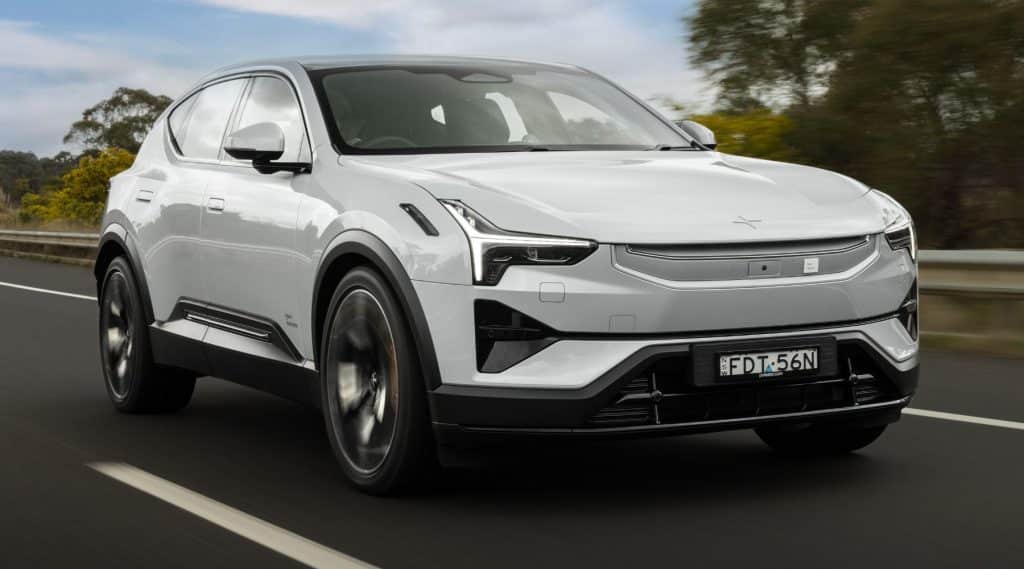
- Minimum and maximum price: from $121,920 to $159,620
- Battery capacity: 92kWh to 106kWh
- Maximum power: 380kW/910Nm
- DC ultra-fast charge time (10% to 80%, 350kW): approx. minimum 22 mins
- Range: up to 647km (Polestar 3 Dual Motor)
The most expensive model currently on offer from Polestar in Australia, the Polestar 3 combines luxury with powerful performance. It’s expanded its range of variants to three for the 2027 model year, boasting the Rear Motor, Dual Motor and Performance models.
The Dual Motor brings with it a very handy 647km in claimed range, which is notably lower than the 706km that previous iterations of the Polestar 3 were capable of.
Like the Polestar 2, the price will increase if you choose to add an optional pack or packs. It’s worth noting that a Dual Motor model with one or more of these packs could set you back an additional $15,000 or more.
The display is slightly different to the Polestar 2’s, with a 9-inch driver display and 14.5-inch centre display area. It also boasts a rearview camera with automatic cleaning function, 12 ultrasonic sensors and a range of other safety features as standard, including:
- Blind Spot Information with steer assist
- Corner Traction Control (through torque vectoring)
- Road Sign Information
- Trailer Stability Assist
- Regenerative Stability Control
- Driver Steering Recommendation
It goes without saying that you expect a rewarding driving experience if you’re willing to fork out over $100,000 for an EV. The Polestar 3 is well-placed to deliver just that.
Back to luxury electric vehicles
4. Mercedes-Benz EQE 350 SUV
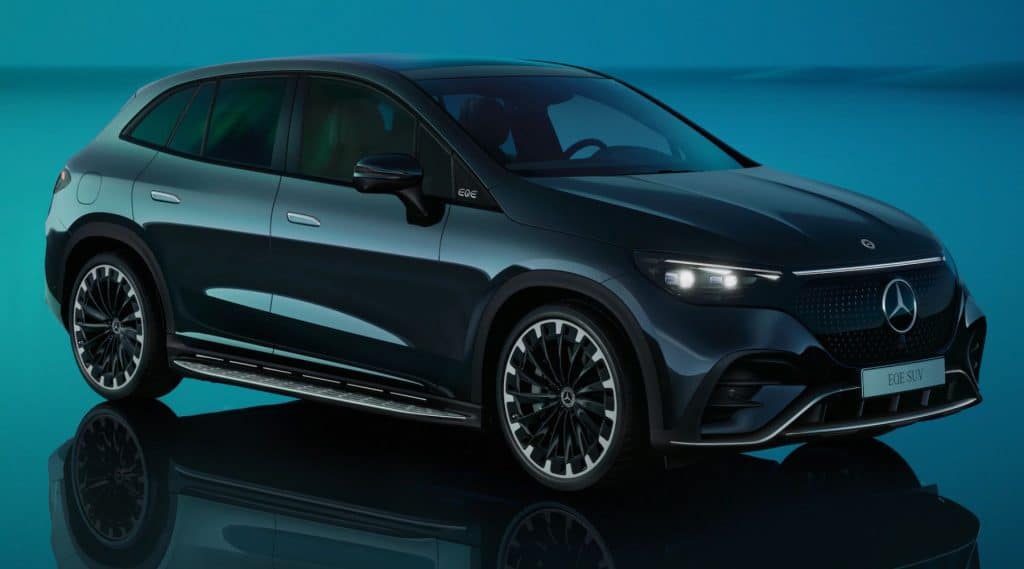
- Minimum and maximum price: from $146,700
- Battery capacity: 90.6kWh
- DC ultra-fast charge time (10% to 80%, 350kW): approx. minimum 32 mins
Another name synonymous with prestige and luxury, Mercedes-Benz has a range of electric vehicles available for purchase in Australia. The EQE SUV was the most popular of these in Australia in 2025 (961), ahead of the EQA (913) and EQB (861). However, the EQE is set to be unceremoniously dumped by Mercedes-Benz this year, which has created opportunities for Aussies to buy them at heavily discounted prices.
The luxury SUV is an all-wheel drive that offers performance and precision through its 90.6kWh capacity battery. Like Tesla, specifics on power, torque and range are hard to come by through official Mercedes-Benz channels, but they do advertise several advanced safety features:
- Active Lane Keeping Assist
- Active Distance Assist DISTRONIC
- PRE-SAFE Impulse Side
- GUARD 360° vehicle protection
- Traffic Sign Assist
Couple these with some of the comfort and convenience additions like Zero Layer OLED central display, Burmester 3D surround sound system, Parking Package with 360° camera, high-quality trim and upholstery and you have yourself a ride fit for a king.
Back to luxury electric vehicles
5. Porsche Taycan
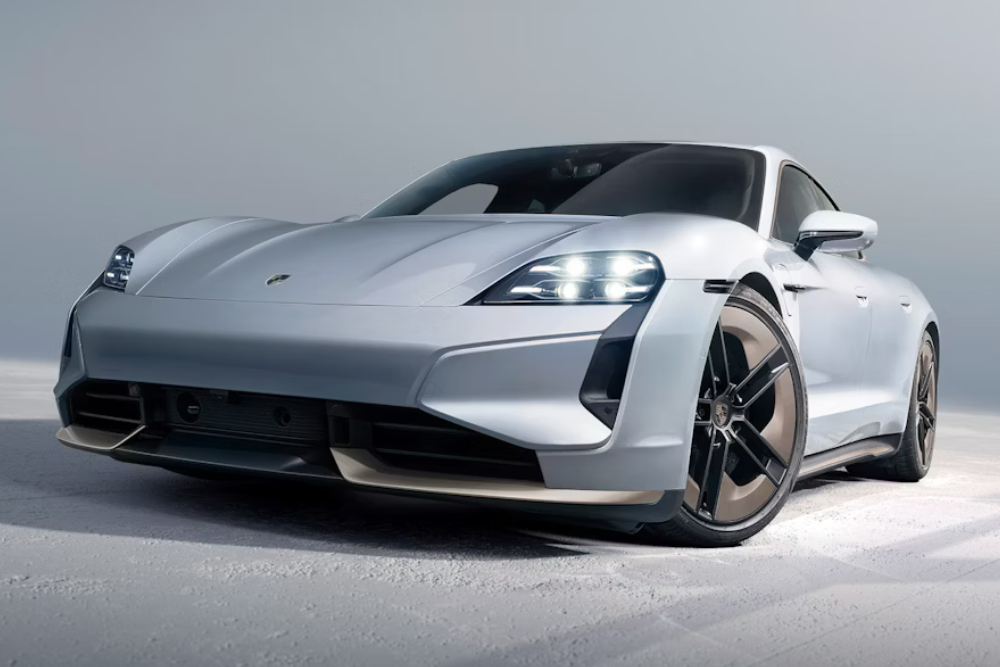
- Minimum and maximum price: from $181,200 to $419,000
- Battery capacity: 82.3kWh to 97.0kWh
- Maximum power: 760kW/1,240Nm (Overboost Power with Launch Control)
- DC ultra-fast charge time (10% to 80%, 320kW): approx. minimum 18 mins
- Range: up to 651km (Taycan with Performance Battery Plus)
The first all-electric car from German manufacturer Porsche is, true to form, a powerful and eye-catching one. It was among the top-selling luxury EVs in Australia in 2023 at over 500 models, but fell away to just 282 in 2024.
There are a massive 11 variants of the Taycan in their 2025 lineup, which are:
- Taycan: from $181,200
- Taycan 4: from $191,200
- Taycan Black Edition: from $203,200
- Taycan 4 Cross Turismo: from $204,100
- Taycan 4 Black Edition: from $213,300
- Taycan 4S: from $222,100
- Taycan 4S Black Edition: from $229,700
- Taycan 4S Cross Turismo: from $229,800
- Taycan GTS: from $264,500
- Taycan Turbo: from $307,500
- Taycan Turbo Cross Turismo: from $321,000
- Taycan Turbo S: from $374,200
- Taycan Turbo GT: from $419,000
- Taycan Turbo GT with Weissach Package: from $417,600
This thing is fast; for context, the slowest and least powerful model, the Taycan base, packs 300kW of power and can go from 0 to 100km/h in 4.8 seconds. In contrast, the Turbo GT with Weissach Package is capable of reaching an obscene 760kW and 1,240Nm and hitting 100km/h in just 2.2 seconds. This performance vehicle is the fastest production model Australia has seen and is sure to come under consideration for those hunting in the $200,000+ EV market.
Back to luxury electric vehicles
Electric vans
1. Ford E-Transit
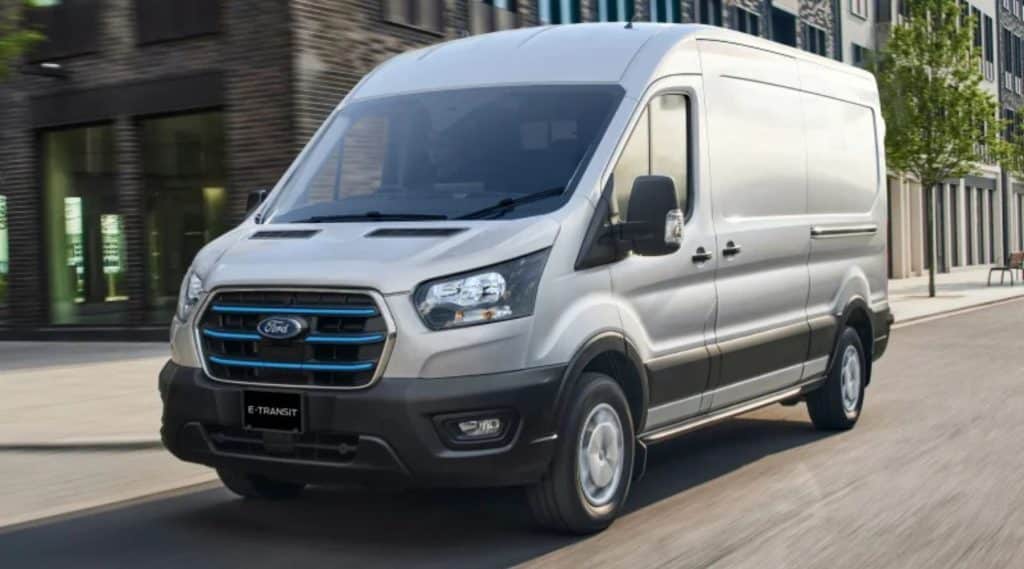
- Minimum and maximum price: from $89,990
- Battery capacity: 68kWh
- Maximum power: 198kW/430Nm
- DC fast charge time (15% to 80%, 115kW): approx. minimum 34 mins
- Payload: up to 1,611kg (E-Transit Mid-Roof)
- Load volume: up to 12.4m3 (E-Transit High-Roof)
- Wheelbase: LWB (3,750mm)
- Range: up to 307km
Formerly the costliest van of the five, the E-Transit from American carmaker Ford has dropped in price by $15,000 over the past few years to now set you back at least $89,990. It comes in only one trim, with the option for either a lower Mid-Roof or a High-Roof. It’s larger than any of the other vans listed by some distance, with a wheelbase clocking in at 3750mm and a total overall height of up to 2790mm.
As you’d expect, the payload and load volume reflect this increased size, with up to 1,611kg able to be carried by the E-Transit (Mid-Roof) and a total load volume of up to 12.4m3 (E-Transit High-Roof). With its 68kWh battery, it’s also capable of a maximum power output of 198kW and torque of 430Nm, as well as an impressive 307km range.
The following safety technologies are included as standard:
- Blind Spot Monitoring System (BLIS)
- Load Adaptive Control
- Remote Keyless Entry with two fobs
- Lane Keeping Aid with Lane Departure Warning
- Dynamic Stability Control (DSC) incorporating ABS
On top of this, drivers can make use of a 12-inch colour multi-function touch screen display, SYNC4 Connectivity System with Applink, FordPass Connect with Embedded Modem, satellite navigation and more. If you or your business is in a position to fork out for the E-Transit, it could offer the space and convenience you’re looking for.
2. Peugeot e-Partner

- Minimum and maximum price: from $61,990
- Battery capacity: 50kWh
- Maximum power: 100kW/260Nm
- DC fast charge time (0% to 80%, 100kW): approx. minimum 30 mins
- Payload: up to 753kg
- Load volume: 3.9m3
- Wheelbase: LWB (2,975mm)
- Range: up to 258km
If you’re shopping for an EV in the commercial van space, there are several options to choose from. One of the cheapest electric vans in Australia right now is the Peugeot e-Partner, which is a variant of the Partner Van range that comes with a starting price of $61,990 (+$2,000 vs 2025).
On the smaller end of the electric van market, the e-Partner comes with a payload of up to 753kg and 3.9m3 of loading volume on the back of its 50kWh battery, which is capable of producing up to 100kW of power. It contains all the safety features offered across the Partner range, plus some electric-exclusive ones, including:
- Hill Start Assist
- Advanced Driver Attention Alert (DAA3)
- Active Lane Keep Assist
- Autonomous Emergency Braking (AEB)
- Acoustic Vehicle Alerting System (AVAS), which produces external sound when travelling at low speed for pedestrian safety
- 180° colour reversing camera
You can also enjoy an 8-inch capacitive central touchscreen, 3D Satellite Navigation, DAB radio, Apple CarPlay, Android Auto, voice recognition and more.
3. Mercedes-Benz eVito
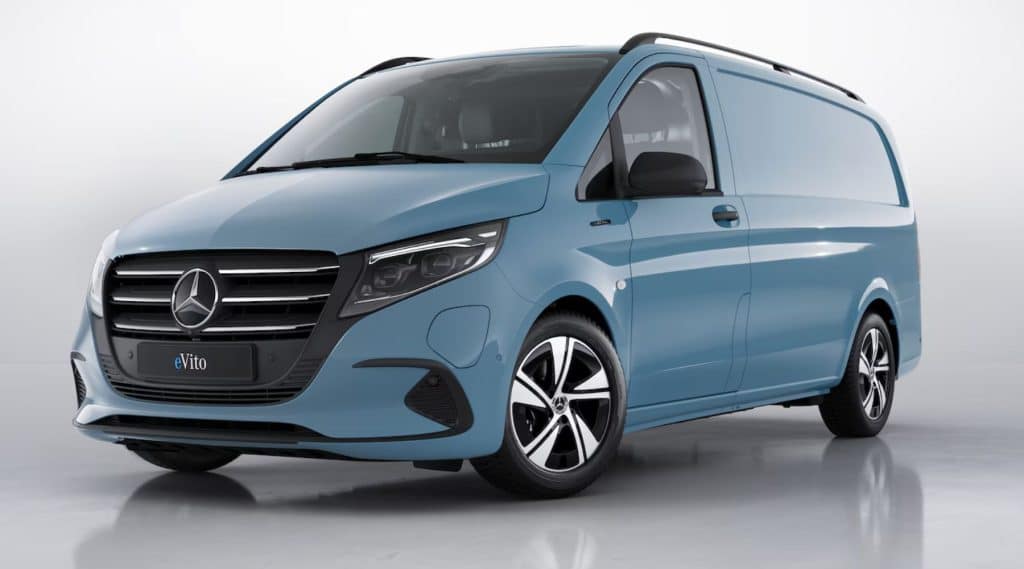
- Minimum and maximum price: from $98,951
- Battery capacity: 60kWh
- Maximum power: 85kW/360Nm
- DC fast charge time (10% to 80%): approx. minimum 35 mins
- Load volume: 6.6m3
- Wheelbase: MWB (3,200mm)
- Range: up to 283km (NEDC testing)
The most expensive van on this list, the eVito from Mercedes-Benz finds itself in the middle of the five vans here in terms of size, with its single medium wheelbase (MWB) trim giving it a load volume of 6.6m3. However, Mercedes-Benz doesn’t disclose the maximum payload for the eVito publicly.
Mercedes-Benz’s listed range for the eVito is 283km, but this is based on the NEDC form of testing, with the WLTP-standard range not cited. However, the German manufacturer does claim that the van can be fully charged from 10% to 80% in just 35 minutes with a fast DC charger.
In terms of safety, it comes with a suite of assistance technologies, such as:
- Active Distance Assist DISTRONIC
- Active Lane Keeping Assist
- Blind Spot Assist
- Active Brake Assist
- Lane Keeping Assist
- Traffic Sign Assist
At an entry price of $98,951, it won’t be affordable for every small or medium business, but the eVito brings a touch of luxury to your commercial van, both in terms of its features and its modern, premium interior.
4. Renault Kangoo E-Tech

- Minimum and maximum price: from $61,990 to $63,990
- Battery capacity: 45kWh
- Maximum power: 90kW/245Nm
- DC fast charge time (0% to 100%, 80kW): approx. minimum 85 mins
- Payload: up to 668kg (Kangoo E-Tech LWB)
- Load volume: up to 4.2m3 (Kangoo E-Tech LWB)
- Wheelbase: SWB (2,716mm) and LWB (3,100mm)
- Range: up to 286km (all variants)
Renault’s Kangoo E-Tech is another competitor in the cheaper small van market alongside the e-Partner. At a starting price of $61,990 for the SWB variant and $63,990 for the LWB, it sits at a similar (but slightly higher) price compared to its Peugeot counterpart.
Its battery is slightly lower-power at 45kWh, allowing it to reach up to 90kW (10kW lower), but its range is listed at 286km, which is 28km better than the e-Partner. It also comes with a lower maximum payload of 668kg but higher maximum load volume of 4.2m3.
The Kangoo E-Tech comes with an Easy Link 8-inch capacitive touchscreen multimedia system and Apple CarPlay & Android Auto smartphone replication, as well as the following safety features:
- Rear parking sensors
- Reversing camera
- Advanced Emergency Braking System
- Lane Keep Assist and Lane Departure Warning
- Low tyre pressure warning
However, there are several packs that can be added to your Kangoo E-Tech for an extra cost. This means features such as adaptive cruise control, Blind Spot Intervention, front and side parking sensors and wireless smartphone charging are effectively locked behind a paywall.
5. LDV eDeliver 7
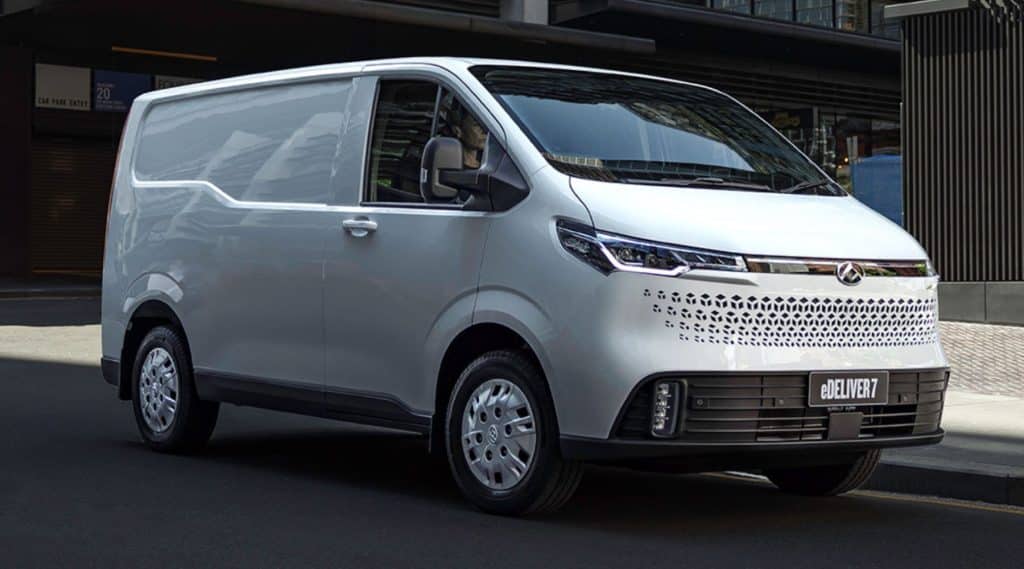
- Minimum and maximum price: from $67,358 to $73,674
- Battery capacity: 77kWh to 88kWh
- Maximum power: 150kW/330Nm
- DC fast charge time (20% to 80%, 90kW): approx. minimum 43 mins
- Payload: up to 1,350kg (eDeliver 7 SWB Low Roof)
- Load volume: up to 8.7m3 (eDeliver 7 LWB High Roof)
- Wheelbase: SWB (3,000mm) and LWB (3,366mm)
- Range: up to 328km (eDeliver 7 LWB Low Roof)
The eDeliver 7 from, Chinese manufacturer LDV, has moved up a rung in terms of price to a cost over $7,000 more than the e-Partner. However, the one-tonner comes in four trim levels, incorporating both SWB and LWB models and short and high roofs, as well as two different batteries: a 77kWh and 88kWh one. This means you’re getting more “oomph” on the road, not to mention better range at up to 362km, behind the wheel of an eDeliver 7.
The option to choose between different sizes and heights allows buyers to customise their vehicle to their liking, with the SWB Low Roof starting from a cargo volume of 5.9m3 and the top trim LWB High Roof increasing this to 8.7m3. This is thanks in large part to the 366mm increase in cargo area length and 400mm increase in height.
Some of the safety and convenience features of the eDeliver 7 include (on all trims):
- Emergency Lane Keep Assist (ELKA)
- Speed Limit Sign Identification
- Intelligent Headlight Control
- Fatigue Reminder
- Reverse Camera
- 12.3-inch Touch Screen Infotainment Display with DAB Radio & Bluetooth
- Keyless Entry and Start with Proximity Smart Key
There’s no doubt the eDeliver 7 makes an impressive case as a mid-sized electric van at a competitive starting price.
Other EVs coming soon
Mazda CX-6e

The first electric SUV from Mazda is set to hit the Australian market in Q3 2026 with the CX-6e. It'll be competing with popular models like the Model Y and Sealion 7, with a competitive base price of $53,990.
GWM Ora 5 Hatch

The GWM Ora is no more, having been replaced by the new Ora 5 to rival the very cheapest cars on the market today. Unlike the Ora, the Ora 5 comes in both hatch and compact SUV versions. The base Ora 5 Lux hatch starts at just $30,490, a $4,000 discount on the equivalent Ora model, while the entry level Ora 5 Lux SUV comes in at a base price of $32,490.
The Ora 5 SUV is currently on sale in showrooms around the country, while the hatch has been confirmed for release in Australia and is expected to land before the end of 2026.
BMW iX3 40

The iX3 range now comes with a base price below $90,000, with the new iX3 40 starting at $89,990. It's expected to hit our shores in Q4 2026, allowing those in the market for a novated lease to grab a luxury car with a full FBT exemption before April 2027.
Toyota C-HR EV

Australia's favourite carmaker is expanding its electric range once again, with the electric C-HR compact SUV expected to hit our roads in the first half of 2027. The C-HR EV is expected to hit the market at a sub-$60,000 base price, making it the cheapest Toyota EV yet.
Land Rover Range Rover Electric
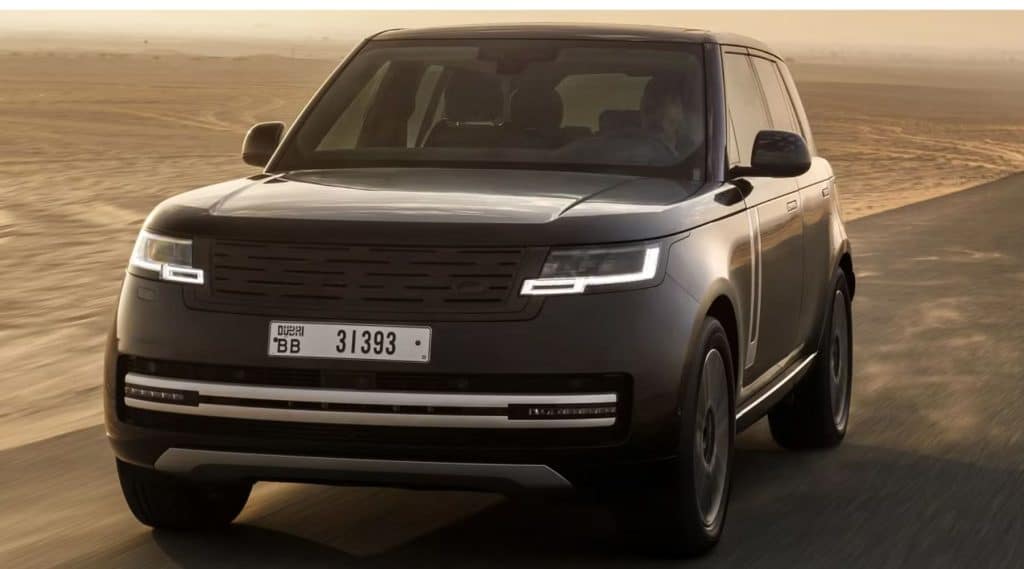
The first fully electrified Land Rover model, the Range Rover Electric, has officially opened for orders ahead of a 2027 Australian debut. The price isn't for the faint of heart, with an entry point of $317,718 up to a top-spec $417,418, and the range has been disclosed at up to 600km on the NEDC system.
Polestar 5

A continuation of Polestar’s growing line of luxury EVs, the Polestar 5 sedan was spotted testing in Australia in H1 2025 ahead of its global launch. Orders are expected to open in Q3 2026, with deliveries scheduled for the end of 2026 and start of 2027.
smart #5
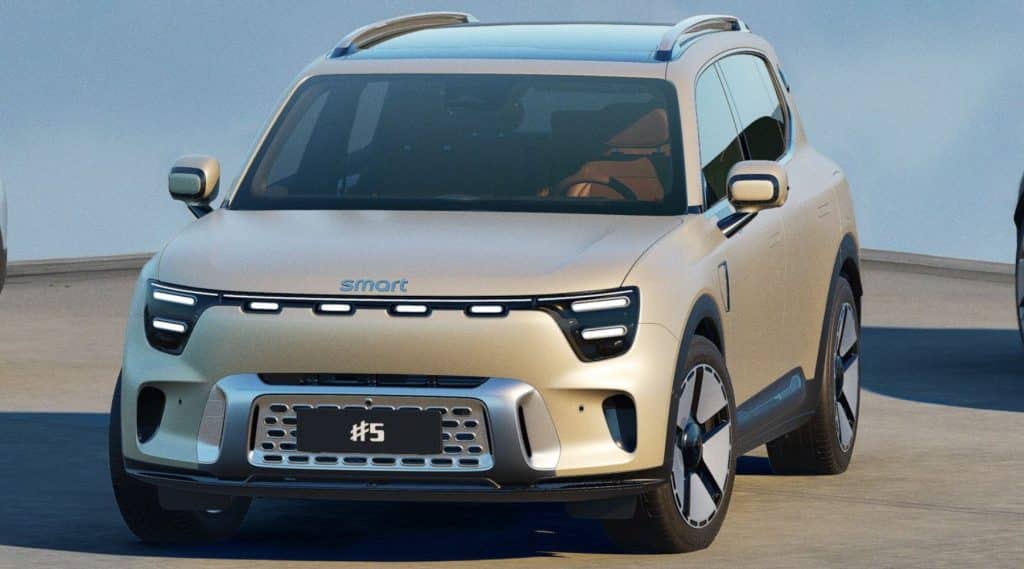
smart, owned jointly by Mercedes-Benz and Geely, has unveiled the #5 mid-size SUV, which is set to go on sale in Q4 2026. It marks part of their return to our shores, having first appeared in the early 2000s before disappearing after just over a decade. While they were known at that time for their very small two-seater models, they’ve now branched out into SUVs like the #5.
Best-selling PHEVs in Australia: H1 2026
| Rank | Vehicle | H1 2026 sales |
|---|---|---|
| 1 | BYD Shark 6 | 9,493 |
| 2 | BYD Sealion 8 | 5,380 |
| 3 | BYD Sealion 6 | 5,312 |
| 4 | Geely Starray EM-i | 4,214 |
| 5 | Chery Tiggo 7 | 3,329 |
| 6 | GWM Haval H6 | 2,784 |
| 7 | BYD Sealion 5 | 2,709 |
| 8 | Mitsubishi Outlander | 1,932 |
| 9 | Chery Tiggo 8 | 1,513 |
| 10 | Denza B5 | 1,445 |
| Source: Federal Chamber of Automotive Industries and Electric Vehicle Council | ||
- 2025 BYD Atto 1 and 2025 BYD Atto 2 priced - carsales
- 2025 MG ES5 revealed as ZS EV successor – UPDATED - WhichCar?
- 2025 Volvo EX40 price and specs: Renamed XC40 Recharge detailed for Australia - Drive
- 2026 MG S5 EV entry price rises $3,000 as Excite variants axed - The Beep
- BYD Seal Dynamic axed to make way for Seal 6 hybrid - Drive
- BMW i4 - ANCAP Safety
- Ford F-150 Lightning - AusEV
- Ford scraps flagship F-150 Lightning electric ute in major hybrid pivot - news.com.au
- SPY PICS: Polestar 5 spotted testing in Oz months before public debut - carsales