



Whether you’re trying to start a family or already have a few ankle-biters running around the place, one of the first things you’ll need to consider as a parent is how you’ll be getting from A to B. Are you in the market for a standard five-seater with plenty of space, a people mover to ferry your kids and their friends around or a budget model?
We’ve broken down the best and cheapest models on offer in Australia in 2026 to help you decide which car is best for your family. Although we don't have a dedicated best SUV section (given that they dominate basically all categories), we've crowned our favourite-sized SUVs throughout the piece, too.
Table of contents
- Best cheap family cars under $50,000
- Best seven-seat family cars
- Best electric family cars
- Best hybrid/PHEV family cars
- Best family cars for towing
- Best family hatches
- Best luxury family cars
Best cheap family cars under $50,000
1. Toyota RAV4 – Best medium family SUV 👑

- Price: from $45,990 (base model starting price) to $66,430 (top spec starting price)
- Category: medium SUV
- Drivetrain: hybrid/PHEV
- Capacity: 5 seats
- Boot space (VDA, all seats up): up to 705L
- ISOFIX child restraint points: 2 (outer rear seats)
- ANCAP safety rating: unrated
- 2025 VFACTS sales: 51,947 (2nd overall)
The most popular family car in Australia is also among the finest available on the market. The hybrid RAV4 from Japanese manufacturing giant Toyota was its best-selling model on Australian shores in 2025 and was only beaten out by the Ford Ranger among all new vehicles. Among new vehicles financed through Savvy, it was the ninth-most popular model in the 2025-26 financial year.
Having long been Australia's best-known hybrid, Toyota has extended the RAV4 range to include plug-in hybrid (PHEV) variants. This gives Aussie families shopping for a RAV4 an option to reduce their carbon footprint even further, offering up to 154km in all-electric range (albeit measured by the inferior NEDC system).
The RAV4's boot space has expanded from a maximum of 580L to 705L. All models are equipped with Toyota Safety Sense, which bundles technologies such as Lane Departure Alert, Lane Trace Assist and Pre-Collision Safety system with pedestrian and daytime cyclist detection and Intersection Turn Assist.
On top of that, you’ll enjoy a range of convenience features, from its 10.5-inch or 12.9-inch colour touchscreen display to Wireless Apple CarPlay and Android Auto, a nine-speaker JBL sound system (Cruiser and GR Sport only), wireless phone charging and more. It’s clear to see why Australians love the RAV4, especially with a starting price below $50,000. Plus, it’s one of the best cars in Australia for retaining its value as it gets older.
Back to the best cheap family cars
2. Hyundai Kona – Best compact family SUV 👑

- Price: from $32,950 to $48,950
- Category: compact SUV
- Drivetrain: petrol/hybrid
- Capacity: 5 seats
- Boot space: up to 407L
- ISOFIX child restraint points: 2 (outer rear seats)
- ANCAP safety rating: 4 stars
- 2025 VFACTS sales: 22,769 (7th overall)
The Kona has long been a favourite among families looking for a versatile compact SUV that can tackle city living or long journeys out in the country. Hyundai’s most popular Australian model comes in both petrol (from $32,950) and hybrid (from $36,950) drivetrains. This entry doesn't include the Kona's electric model range, which starts from $53,000.
With a modest 407L available in the boot, that space expands to 1,241L when you fold the rear seats down (which could come in handy for a weekend away without the kids). Additionally, Hyundai’s Bluelink connected car service, which comes as standard, allows you to check your Kona’s fuel level and tyre pressure and control its air conditioning via an app.
The one big stone that the Kona carries around its neck, though, is its 4-star ANCAP safety rating. Although child occupant protection was its highest rating among the assessed areas at 84%, its vulnerable road user protection (64%) and safety assist (62%) were found lacking. That wasn’t enough to dissuade almost 23,000 Aussies who bought brand-new Konas last year and over 13,000 who've done so in the first half of 2026, though.
Back to the best cheap family cars
3. Chery Tiggo 4

- Price: from $21,990 to $30,990
- Category: compact SUV
- Drivetrain: petrol/hybrid
- Capacity: 5 seats
- Boot space: up to 470L
- ISOFIX child restraint points: 2
- ANCAP safety rating: 5 stars
- 2025 VFACTS sales: 20,149 (11th overall)
The Tiggo 4 (previously known as the Tiggo 4 Pro) certainly made a splash last year, with the compact SUV finishing just outside the top ten among new models. It's gone from strength to strength since then, though; in 2025-26, it was the most popular new car financed through Savvy, while the first half of 2026 has seen it overtake the Kona in national new vehicle sales.
The first thing that draws the eye is the price point. The petrol Ultimate and Urban variants start from just $21,990 and $24,990, respectively, while the hybrid versions of each come in at base prices of $27,990 and $30,990 (with the latter coming down by $2,000). That places it among the cheapest options in the SUV segment, and the cheapest on this list, which is certain to turn heads.
As a smaller family car, the boot space isn’t plentiful at a maximum of 470L, but its Advanced Driver Assistance Systems (ADAS) and other safety features are enough to earn it a 5-star rating from ANCAP. With features like Intelligent Voice Command and dual 10.25-inch displays, the Tiggo 4 makes a strong case as a budget option in the family car market.
Back to the best cheap family cars
4. Mazda CX-5

- Price: from $39,990 to $56,150
- Category: medium SUV
- Drivetrain: petrol
- Capacity: 5 seats
- Boot space: up to 466L
- ISOFIX child restraint points: 2 (outer rear seats)
- ANCAP safety rating: 5 stars
- 2025 VFACTS sales: 22,742 (8th overall)
The CX-5 is Mazda’s best-selling model and was the eighth-most popular new car sold in Australia last year, finishing in the top five for all SUVs. Alongside the name recognition it has on our shores, the medium-sized car starts at a competitive $39,990 for the base G25 Pure model (the former entry-level G20 Maxx RWD was scrapped from the lineup in 2026). It's also very popular in the used car sales market.
With a fuel consumption of 6.9L/100km (base model), the CX-5 offers very reasonable efficiency for a car of its size. Mazda’s Advanced i-Activsense safety technologies also help you maximise your comfort and peace of mind, such as Mazda Radar Cruise Control and Smart Brake Support.
In terms of comfort and technology, all models have at least an eight-speaker sound system and 12.9-inch infotainment screen, while every spec above the base includes wireless phone charging and wireless Apple CarPlay and Android Auto. With its sleek, modern exterior and raft of safety features available, many Australian families are liking what they see in Mazda’s flagship SUV.
Back to the best cheap family cars
5. GWM Haval Jolion

- Price: from $25,790 to $38,490
- Category: compact SUV
- Drivetrain: petrol/hybrid
- Capacity: 5 seats
- Boot space: up to 337L
- ISOFIX child restraint points: 2 (outer rear seats)
- ANCAP safety rating: 5 stars
- 2025 VFACTS sales: 19,413 (14th overall)
The Haval Jolion is another member of the growing contingent of Chinese SUVs making their mark in Australia. Although not quite racking up the numbers of some of the other cars in this list, the Jolion has moved into the top ten list for new cars sold in H1 2026. It's also proven exceedingly popular with Savvy customers, being outsold only by the Tiggo 4 among all new models in 2025-26.
Of course, as a compact car, you aren’t going to be drowning in cabin and storage space, with 337L of boot storage on the Premium and Lux variants (up to a maximum of 1,133L with seats folded down). However, at a starting price of just $25,790, it’s among the cheapest SUVs available on the market.
You’ll be able to choose between a petrol or hybrid Jolion (from $31,790), the latter of which cuts the fuel economy from 6.7L/100km to 4.8L/100km. In terms of safety, features such as Intelligent Dodge, Lane Centre Keeping and Driver Drowsiness Detection are all included as standard, while Vanta models also come with Auto Parking Assist. There’s no doubt the Jolion makes a strong case as an option for families on a budget.
Back to the best cheap family cars
6. MG ZS

- Price: from $23,990 to $33,990
- Category: compact SUV
- Drivetrain: petrol/hybrid
- Capacity: 5 seats
- Boot space: up to 443L
- ISOFIX child restraint points: 2 (outer rear seats)
- ANCAP safety rating: 5 stars
- 2025 VFACTS sales: 20,000 (13th overall)
Although MG slipped behind GWM and BYD in terms of overall new car sales in Australia last year, it still found itself inside the top ten best-sellers across the country. The ZS was a big part of that, racking up 20,000 units sold in 2025. It's finding increasing competition in the segment tougher to manage in 2026, though, only just sitting inside the top 20 at the halfway point of the year.
One thing the ZS does have over many of its small SUV counterparts is boot space, with a minimum 443L available in the back and up to 1,457L with the rear seats folded. Additionally, like its close competitor in the Jolion, the ZS comes in both petrol and hybrid variants (from $30,990).
All ZS models come with 12 months of complimentary access to iSMART, which functions similarly to Hyundai’s Bluelink in that it enables you to monitor whether your car is locked, doors and windows are closed and keep an eye on the status of your car’s fuel and tyres.
Its Adaptive Cruise Control and Intelligent Cruise Assist, Intelligent Speed Limit Assist, Unsteady Driver Warning and Electric Parking Brake are just some of the safety features that make the ZS appealing as a cheap family car.
Back to the best cheap family cars
7. Mitsubishi Outlander

- Price: from $39,990 to $58,740
- Category: medium SUV
- Drivetrain: petrol
- Capacity: 5 to 7 seats
- Boot space: up to 485L
- ISOFIX child restraint points: 2 (outer rear seats)
- ANCAP safety rating: 5 stars
- 2025 VFACTS sales: 22,459 (9th overall)
The Outlander remains an Australian favourite, having consistently appeared in the best-sellers’ list across the last few years. It’s a versatile SUV that can mould itself to a range of different needs, from a regular mid-sized car to a seven-seater and from petrol to PHEV (the latter starting from $57,290, so we won’t focus on them here).
Another selling point for Mitsubishi models is their ten-year warranty, as well as a decade of capped-price servicing and roadside assistance, through its Mitsubishi Diamond Advantage program. They’re the first in Australia to offer all three, with MG and Nissan having since joined them in offering ten-year warranties.
Of the cars we’ve discussed so far, the Outlander has the best off-road pedigree, with five Terrain Drive Modes on RWD variants and six for AWDs. Couple that with a 12.3-inch Full Colour Digital Driver Display, safety features like Multi Around Monitor, auto-dimming rear-view mirror and a no-nonsense design and it can be a real asset to families of all shapes and sizes.
Back to the best cheap family cars
Best seven-seat family cars
- Ford Everest
- Kia Carnival
- Mitsubishi Outlander
- Hyundai Santa Fe
- Chery Tiggo 8
- Toyota LandCruiser Prado
- Isuzu Ute MU-X
1. Ford Everest – Best large family SUV 👑

- Price: from $58,990 to $82,917
- Category: large SUV
- Drivetrain: diesel
- Capacity: 7 seats
- Boot space: up to 259L
- ISOFIX child restraint points: 2 (outer second row seats)
- ANCAP safety rating: 5 stars
- 2025 VFACTS sales: 26,161 (5th overall)
The Everest is another all-terrain 4WD performer and, like the Outlander, has proven to be extremely popular with Aussie families in the last couple of years. In 2025, it was the fifth best-selling model and second among SUVs, having been sixth and third in these metrics, respectively, in 2024. Overtaking the Outlander is nothing to sneeze at, especially given the disparity in starting prices (though the RWD version no longer exists).
All models come with seven seats as standard except for the Active variants, which you’ll need to pay for as an optional addition. Ford has also made its six selectable driving modes (Normal, Eco, Tow/Haul, Slippery, Mud/Ruts and Sand) available on all versions of the Everest, with the Tremor adding a seventh in the form of its Rock Crawl mode.
The Everest’s Intelligent Adaptive Cruise Control with Stop & Go, Traffic Sign Recognition and Lane Centring can come in handy on long road trips, alongside driver assistance technologies like Evasive Steer Assist, Blind Spot Monitoring with Trailer Coverage and rear and front parking sensors. You’ll enjoy all of that, plus other convenience features such as Ford’s SYNC 4A with Voice-Activated Controls and an eight-speaker sound system (12 on the top-spec Platinum).
Back to the best seven-seaters
2. Kia Carnival

- Price: from $54,560 to $76,840
- Category: people mover
- Drivetrain: diesel/hybrid
- Capacity: 8 seats
- Boot space: up to 627L
- ISOFIX child restraint points: 5 (all second row seats, outer third row seats)
- ANCAP safety rating: 5 stars
- 2025 VFACTS sales: 10,948
The Carnival is Australia’s premier people mover, accounting for 73.4% of all the new vehicles sold in that segment in 2025. Kia itself has hailed the Carnival as a Grand Utility Vehicle, or GUV, owing to its SUV-inspired design. Having previously offered petrol, diesel and hybrid versions of the model, Kia has trimmed the line back to six variants: the S, Sport+ and GT-Line in both diesel and hybrid powertrains.
It sets itself apart from the rest of the pack as a luxurious eight-seater, making it ideal for larger households or those on school sport lift duty. Crucially, the Carnival comes with five ISOFIX points, allowing you to easily fit kids’ seats in the second and third rows at the same time.
You’ll also be able to enjoy ample boot space, with the Carnival boasting an impressive 627L with all seats up. By folding the third row of seats and converting it to a five-seat car, you’ll open up a mammoth 2,827L of space for suitcases, sporting equipment and more. Whether you’re after a diesel or hybrid model (from $56,310), the Carnival delivers a mid-priced vehicle in a luxury package.
Back to the best seven-seaters
3. Mitsubishi Outlander

- Price: from $42,540 to $71,790
- Category: medium SUV
- Drivetrain: petrol/PHEV
- Capacity: 7 seats
- Boot space: up to 478L
- ISOFIX child restraint points: 2 (outer second row seats)
- ANCAP safety rating: 5 stars
- 2025 VFACTS sales: 22,459 (9th overall)
We’ve spoken about the Outlander already, but as a seven-seater, it’s among the best options available to Aussie families. It slides in at a highly competitive starting price of $42,540, the lowest we’re looking at on this list. The rugged reliability of the Outlander is certainly turning heads in the larger family SUV space.
Back to the best seven-seaters
4. Hyundai Santa Fe

- Price: from $54,400 to $77,150
- Category: large SUV
- Drivetrain: petrol/hybrid
- Capacity: 7 seats
- Boot space: up to 642L
- ISOFIX child restraint points: 4 (outer second and third row seats)
- ANCAP safety rating: 5 stars
- 2025 VFACTS sales: 6,264
The Santa Fe from Hyundai is another major player in the seven-seat space, with both petrol and hybrid (from $57,650) models available to larger Aussie families. It was the seventh-most popular large SUV sold last year, racking up its biggest haul since 2018.
All Santa Fe variants come equipped with Hyundai SmartSense, with the Elite and Calligraphy models also packing Highway Driving Assist, which includes Distance control, Lane Following Control, and Lane Change Assist Control, and Navigation-based Smart Cruise Control. Like the Carnival, it also comes with ISOFIX points in both the second and third rows.
Another nifty feature of the two top-spec models is the Passenger Talk function, where the driver’s voice is projected through the rear speakers. This can come in handy if you’re telling your kids to quit wrestling in the back row. However, it’s worth noting that the current Santa Fe spec is coming to the end of its life cycle, with the much-anticipated update to the current 2024 model expected to be unveiled late this year or early in 2027.
Back to the best seven-seaters
5. Chery Tiggo 8

- Price: from $36,990 to $41,990
- Category: large SUV
- Drivetrain: petrol
- Capacity: 7 seats
- Boot space: up to 117L
- ISOFIX child restraint points: 2 (outer second row seats)
- ANCAP safety rating: 5 stars
- 2025 VFACTS sales: 3,571
The cheapest seven-seater on the market, the Tiggo 8 (formerly the Tiggo 8 Pro Max) comes in at an even cheaper base price of just $36,990. That places it in pole position for families shopping in the budget large SUV/people mover market, in which it’s largely competing with the lower-spec versions of the Outlander and the LDV D90.
It comes with a range of safety technologies as standard across both the Urban and Ultimate variants, such as a 360° Around View Monitor, Lane Departure Prevention and Lane Change Assist. Couple those with a sleek design, synthetic leather upholstery and an eight-speaker Sony sound system (ten speakers in the Ultimate variant) and there’s a lot to like in an affordable package.
It’s worth noting that at a base cargo space of just 117L, there isn’t a heck of a lot of storage on offer. Folding down the back row of seats increases this to 739L, which is a small amount more than the Carnival without its seats folded.
Back to the best seven-seaters
6. Toyota LandCruiser Prado

- Price: from $80,655 to $101,365
- Category: large SUV
- Drivetrain: diesel
- Capacity: 7 seats
- Boot space: up to 182L
- ISOFIX child restraint points: 2 (outer second row seats)
- ANCAP safety rating: 5 stars
- 2025 VFACTS sales: 26,106 (6th overall)
The LandCruiser Prado enjoyed a resurgence last year, experiencing a 166.3% spike in sales to shoot up the charts and finish just 55 units short of the Everest. When your manufacturer is as dominant as Toyota has been for decades in Australia, being the third-most popular model in their vast stable of vehicles is certainly saying something.
A large family SUV designed for both the daily commute and great outdoor adventure, its 2.8L turbo diesel engine delivers the oomph in the form of its maximum 500Nm of torque. There are both five and seven-seat variants of the LandCruiser Prado available, so you’ll need to choose between the seven-seat version of the GXL, the VX or the Kakadu.
Toyota Safety Sense is present on this model, too, alongside off-road capabilities like Active Traction Control, Crawl Control and Downhill Assist Control and multimedia features like the 12.3-inch colour touchscreen and 14-speaker JBL audio system (VX and Kakadu only). However, the car only comes with a measly 182L of boot space with all seats up (906L with the third row folded).
There's no doubt that the LandCruiser Prado will appeal to plenty of families, but at a base price above $80,000, it won't come cheap.
Back to the best seven-seaters
7. Isuzu Ute MU-X

- Price: from $49,900 to $77,100
- Category: large SUV
- Drivetrain: diesel
- Capacity: 7 seats
- Boot space: up to 311L
- ISOFIX child restraint points: 2 (outer second row seats)
- ANCAP safety rating: 5 stars
- 2025 VFACTS sales: 15,458 (20th overall)
The MU-X is one of two models on offer in the Australian market from Isuzu Ute, alongside the D-Max ute. Although not quite as popular as its bigger sibling, the MU-X still finished inside the top 20 for models in Australia and was the best-selling pure seven-seater (the Everest, Prado and Outlander all have five-seat versions).
Isuzu Ute vehicles come with a reputation for conquering all conditions, from rugged terrain to the suburbs and everything in between. Indeed, the MU-X even has a Rough Terrain Mode button for off-roading, backed by the choice between 2.2L and 3.0L turbo diesel engines (both are only available on all 4×4 variants).
Features such as the 9-inch multimedia touchscreen, eight-speaker sound system and dual zone climate control air conditioning (8-inch display, four-speaker sound system and manual air conditioning on LS-M variants) are all good without being show-stopping. For weekend warriors who want a vehicle with a bit of grunt, though, this could be your ticket.
Back to the best seven-seaters
Best electric family cars
- Tesla Model Y
- BYD Sealion 7
- Zeekr 7X
- Geely EX5
- MG MGS5 EV
- Kia EV6
- Chery E5
- Toyota bZ4X
- BYD Atto 3 Evo
- Jaecoo J5 EV
If you're considering an electric car for the family, the good news is that EVs usually have discounted finance rates, which will save you money on your vehicle repayments.
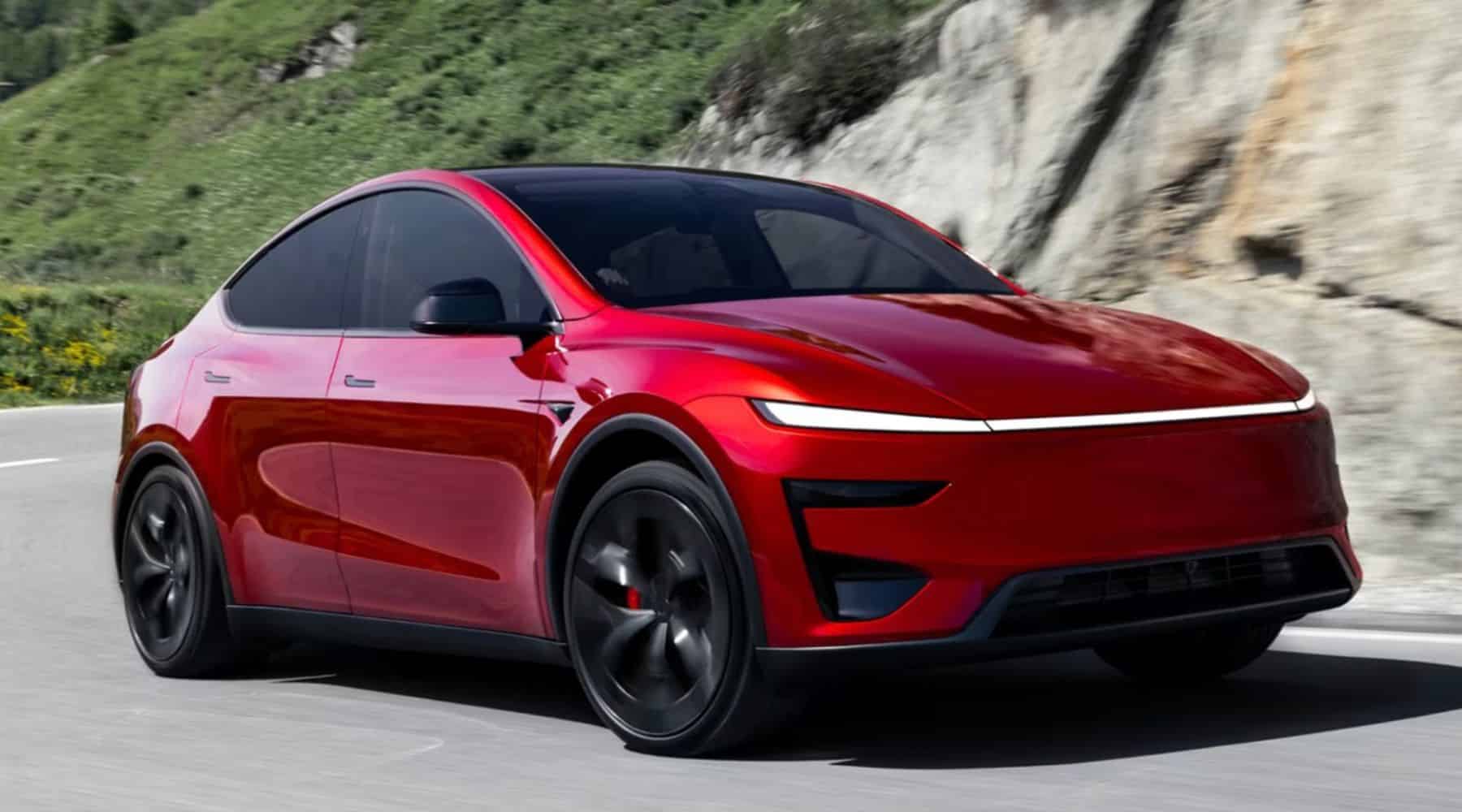
1. Tesla Model Y
- Price: from $58,900 to $89,400
- Category: medium SUV
- Range (WLTP Combined Cycle): 681km (Model Y L Premium)
- Capacity: 5 to 6 seats
- Boot space: up to 949L rear, 114L front
- ISOFIX child restraint points: 2 (outer rear seats)
- ANCAP safety rating: 5 stars
- 2025 VFACTS sales: 22,239 (10th overall)
Tesla’s Model Y is, far and away, the most popular EV in Australia and our pick for best electric car. It finished in the top ten for sales among all vehicles in 2025 and is battling it out for the top spot in 2026, trailing only the Ford Ranger and Toyota HiLux and breathing down their necks as the end of the year draws closer.
The first thing that might draw your eye as a parent (aside from the distinctive, futuristic design) is the huge amount of storage space on offer. With a monstrous 949L to work with in the back and an additional 114L in the “frunk” (front trunk) owing to its lack of engine, there are few mid-sized SUVs of any drivetrain packing that amount of room.
The 681km per charge that the L Premium offers will no doubt be attractive to weekend warriors with a touch of range anxiety. The new mid-spec variant also comes with the option of six seats in a 2-2-2 formation for larger families.
Of course, Tesla is perhaps best known for its industry-leading tech, such as its supervised self-driving capabilities, that you won’t get with any other vehicles. However, the lack of Apple CarPlay or Android Auto could prove a bit of a turn-off for those who value phone integration on the dashboard display.
Back to the best electric cars
2. BYD Sealion 7

- Price: from $54,990 to $63,990
- Category: medium SUV
- Battery capacity: 82.56kWh
- Range: 482km (Sealion 7 Premium)
- Capacity: 5 seats
- Boot space: up to 500L rear, 58L front
- ISOFIX child restraint points: 2 (outer rear seats)
- ANCAP safety rating: 5 stars
- 2025 VFACTS sales: 13,410
The Sealion 7 has made quite the impact on the Australian market since its introduction in 2025. It was the second-highest-selling EV last year and remains in that position at the halfway mark of this year, sitting in eighth place among all models across that six-month period.
China’s answer to the Model Y occupies the mid-priced bracket, bridging the gap between budget and luxury electric models, but packs plenty of attractive features into its sleek package. Alongside a bevy of safety technologies, the Sealion 7 comes equipped with Frequency Selective Damping shock absorbers, allowing it to take corners with ease while hugging the road.
Its comfort tech is also something to behold, with a 15.6-inch rotating touchscreen display, 12-speaker DYNAUDIO sound system, voice assistant and a panoramic glass roof. It even comes with a handy 558L of total cargo space. If you’re looking for a (slightly) cheaper alternative to Tesla, you could certainly do a lot worse than the Sealion 7.
Back to the best electric cars
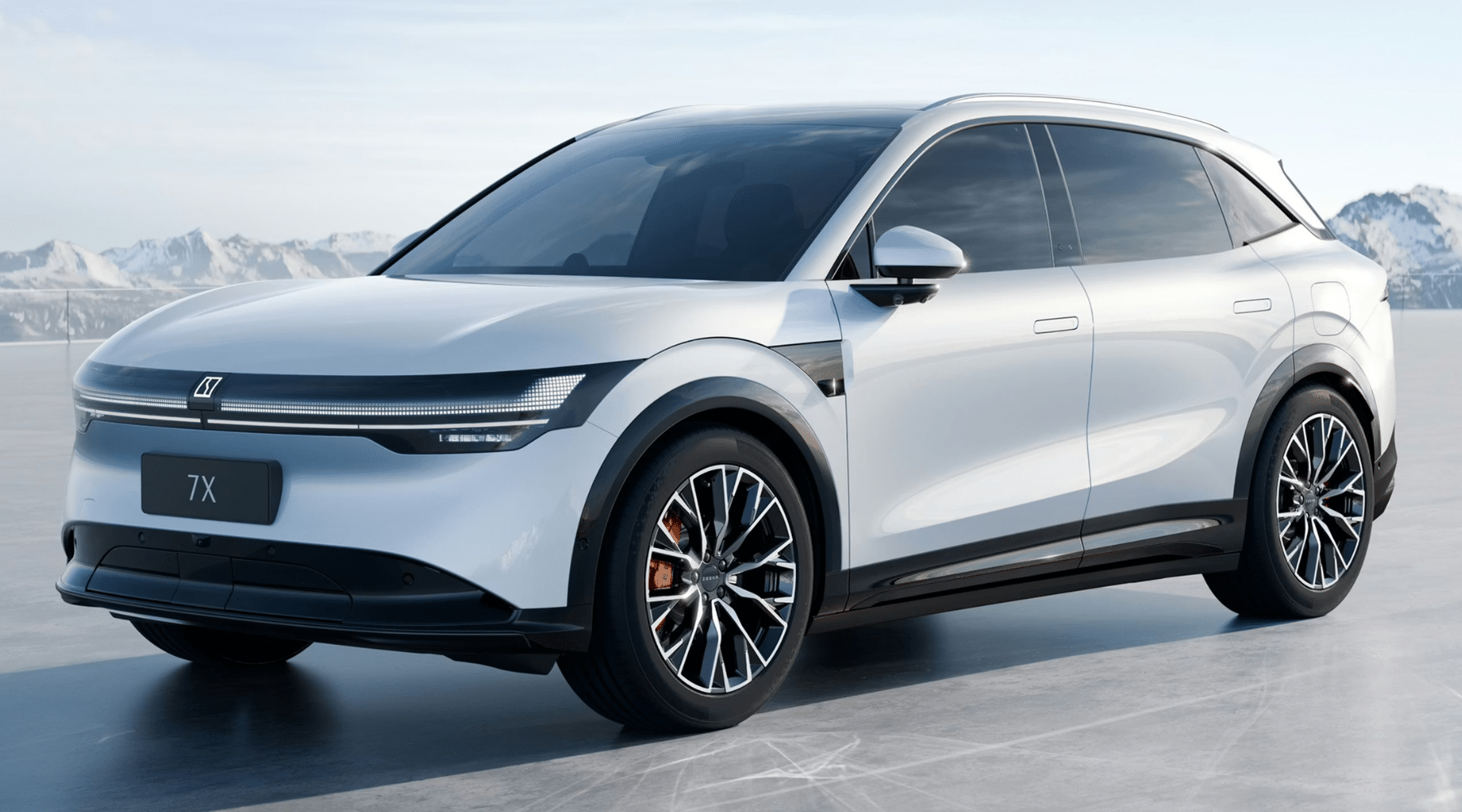
3. Zeekr 7X
- Price: from $57,900 to $72,900
- Category: medium SUV
- Battery capacity: 75kWh to 100kWh
- Range: 615km (7X Long Range RWD)
- Capacity: 5 seats
- Boot space: up to 539L rear, 62L front
- ISOFIX child restraint points: 2 (outer rear seats)
- ANCAP safety rating: 5 stars
- 2025 VFACTS sales: 1,206
Like the EX5, the 7X is a Chinese-made medium SUV that has hit the ground running on Australian shores. After shifting just over 1,200 in the last quarter of last year, it found itself in the top five most popular new EVs in H1 2026, just behind the Jaecoo J5 and ahead of BYD’s Atto 2.
Priced and built in direct competition with the Model Y, the 7X boasts an impressive range of up to 615km on the Long Range RWD variant to place it ahead of most other EVs on this list outside of, you guessed it, the Model Y. An edge it does have over the competition, though, is its rapid charging capabilities, with the base RWD capable of reloading from 10% to 80% in just 13 minutes (the Long Range RWD and Performance AWD can do it in 16).
The 7X comes with a 360° Active Safety system, which includes a range of advanced driver assistance features. One notable feature is the Occupant Monitoring System, which pulls a feed of the rear seats on the central dash screen from a camera placed in the back. This allows parents to keep an eye on their children while driving without having to turn their head away from the road.
On top of its safety features, drivers can enjoy the 16-inch 3.5K Mini-LED Central Screen and 13.02-inch High-Definition Cockpit Cluster. With a sleek interior and futuristic design, the 7X will no doubt have Aussies shopping in this price range asking themselves whether to go for this or the Model Y.
Back to the best electric cars
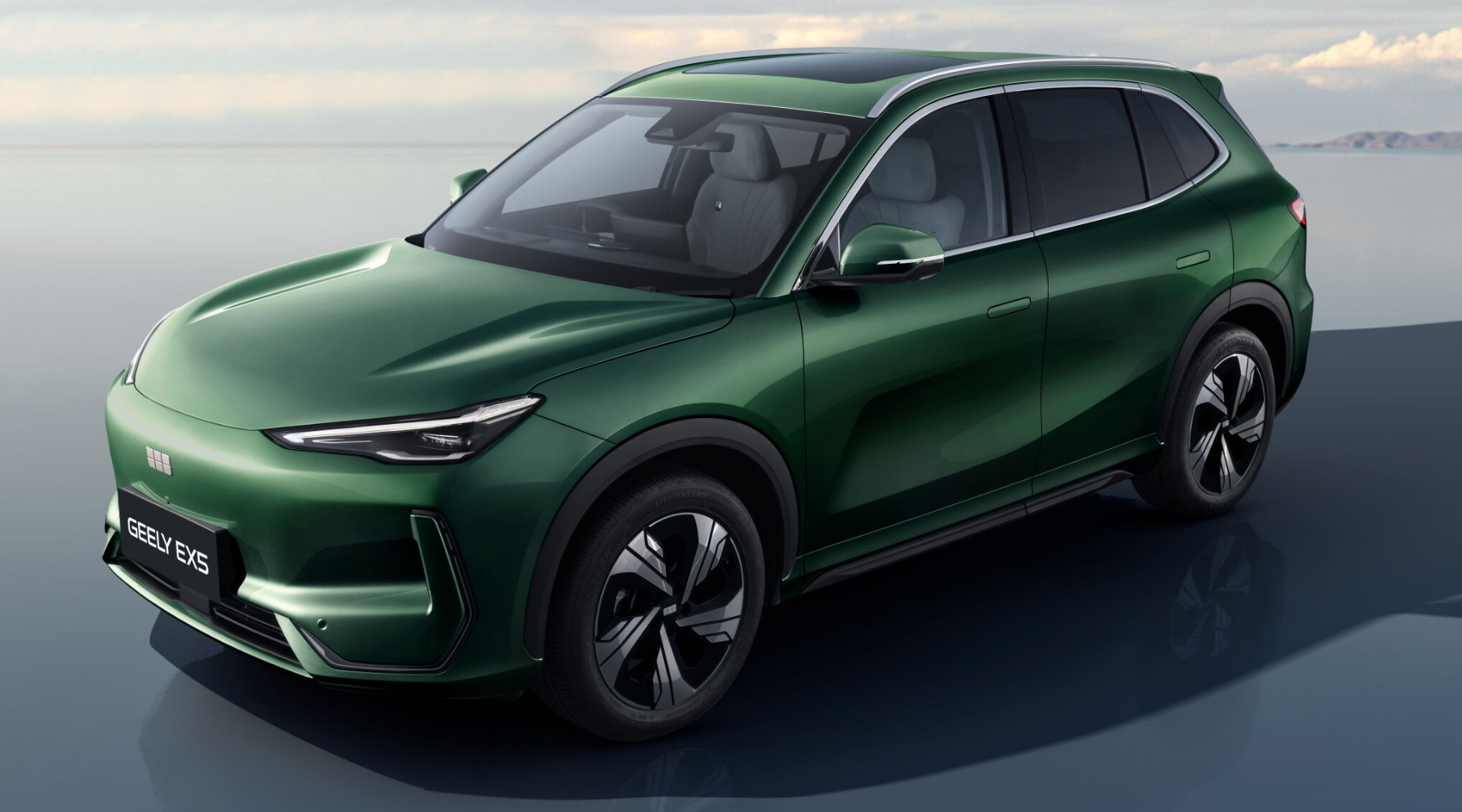
4. Geely EX5
- Price: from $41,990 to $45,990
- Category: medium SUV
- Battery capacity: 68.39kWh
- Range: 475km (EX5 Complete Extended Range)
- Capacity: 5 seats
- Boot space: up to 461L rear
- ISOFIX child restraint points: 2 (outer rear seats)
- ANCAP safety rating: 5 stars
- 2025 VFACTS sales: 3,944
Another new player on the Australian market is the EX5 from Chinese manufacturer Geely. Having only reached our shores in 2025, the EX5 has proven popular in Australia to date, having been the third best-selling EV nationally in the first half of the year and increasing its sales by 266% compared to the year prior.
The mid-sized SUV comes in at a very competitive starting price of $41,990 for the base Complete Extended Range, with the standard range versions of both the Complete and Inspire having been removed from the lineup. This brings the driving range up to a maximum of 475km, which is well short of the Model Y but on par with the Sealion 7.
Both models come with a full suite of active safety features, including Front and Rear Collision Mitigation Support, Evasive Manoeuvre Assist and Adaptive and Intelligent Cruise Control. Infotainment includes a 15.4-inch HD multimedia touchscreen display, 16-speaker sound system (Inspire only) and access to Geely Connected services, which includes Voice Assistant, 4G network connection and Live Traffic for satellite navigation.
Although the quality may not quite be at the level of some of its medium SUV competition, what it does deliver on a cheaper price tag will be hard for plenty of families to look past.
Back to the best electric cars
5. MG MGS5 EV

- Price: from $42,990 to $47,990
- Category: compact SUV
- Battery capacity: 49kWh to 62kWh
- Range: 450km (MGS5 EV Essence 62)
- Capacity: 5 seats
- Boot space: up to 453L
- ISOFIX child restraint points: 2 (outer rear seats)
- ANCAP safety rating: 5 stars
- 2025 VFACTS sales: 1,857
The MGS5 EV has replaced the now-discontinued ZS EV from MG as a compact electric SUV, although it hasn’t set the world alight yet in terms of sales after its first year on the market. Despite bumping the previous entry-level Excite variants off the roster, the now-base-level Essence 49 is still in the more affordable price bracket at $42,990.
Although the MGS5 EV is positioned more in the budget category, the cabin still comes with creature comforts. From a 12.8-inch infotainment touchscreen with Apple CarPlay and Android Auto to safety features like Lane Keep and Lane Change Assist, Rear and Forward Collision Warning and a 360° Camera, it still gives you enough to work with as an owner. The 453L of boot space, while lower than some of the other EVs here, is very reasonable for a car of its size.
There’s no doubting that plenty of families looking to catch (or who’ve already caught) the EV bug will consider a car in this price range, but the true question will be whether it’s worth paying the extra $10,000 to $15,000 to take the next step up to a Model Y or Sealion 7.
Back to the best electric cars
6. Kia EV9

- Price: from $97,000 to $129,250
- Category: upper large SUV
- Battery capacity: 76.1kWh to 99.8kWh
- Range: 512km (EV9 Earth AWD)
- Capacity: 7 seats
- Boot space: up to 333L rear, up to 90L front
- ISOFIX child restraint points: 4 (outer second and third row seats)
- ANCAP safety rating: 5 stars
- 2025 VFACTS sales: 269
Let’s take a look now at the only seven-seater in our EV list, the EV9 from Kia. What jumps out is its price, with its $97,000 base placing it well above any of the cars we’ve spoken about so far. That reaches an eye-watering $129,250 for the top-spec GT-Line, firmly pushing it in the luxury car category.
What you’re getting for your outlay is a pretty high-tech machine, though. Features like its augmented reality head-up display, digital rear view and wing mirrors and even a fingerprint module that allows you to start your car and load personalised settings without your keys. Drivers will also enjoy a complete panoramic display spanning 75cm across the dashboard.
There’s also plenty of safety features, like Highway Drive Assist 2 with Lane Change Assist, Driver Attention Warning System and Blind Spot Collision Warning and four ISOFIX points, rather than two. You’re certainly paying a pretty penny for the EV9, but for the limited options currently available in Australia, you’ll be enjoying supreme comfort for your coin.
Back to the best electric cars
7. Chery E5

- Price: from $36,990 to $40,990
- Category: compact SUV
- Battery capacity: 58.9kWh
- Range: 430km
- Capacity: 5 seats
- Boot space: up to 300L rear, 19L front
- ISOFIX child restraint points: 2 (outer rear seats)
- ANCAP safety rating: 5 stars
- 2025 VFACTS sales: 868
The cheapest electric family car we’re looking at here, and the second-cheapest electric SUV on the market right now (behind the Atto 2), the E5 is certainly one for the budget and environmentally conscious buyer. Although it only racked up 868 new car registrations across 2025, it's already surpassed that total halfway through 2026 (987).
What you get for the minimal outlay is a fairly slick-looking cabin setup, albeit not offering quite as much as some of the other models we’ve discussed here. Still, the Dual 12.3″ LCD Instrument Cluster and Infotainment Touchscreen and eight-speaker Sony sound system (on Ultimate variants only) do help you feel like you’re in a more expensive vehicle, alongside Chery’s Intelligent Voice Command.
There isn’t bucketloads of space, with 319L between the trunk and frunk, while it sports pretty much all the safety features one would expect from an EV in this price range, including Lane Departure Prevention, Speed Limit Information Function and Rear Cross Traffic Braking. There’s no doubt that there are nicer models out there, but it’s hard to come by a cheaper electrified SUV than this one.
Back to the best electric cars
8. Toyota bZ4X

- Price: from $55,990 to $69,340
- Category: medium SUV
- Battery capacity: 74.7kWh
- Range: 591km (bZ4X RWD)
- Capacity: 5 seats
- Boot space: up to 452L
- ISOFIX child restraint points: 2 (outer rear seats)
- ANCAP safety rating: 5 stars
- 2025 VFACTS sales: 1,041
The first all-electric offering from Toyota, the bZ4X entered the growing medium electrified SUV fray in 2024 but hasn’t quite been as successful as the Japanese manufacturing giant would’ve hoped. Just because its sales numbers haven’t been as strong as some of its competitors doesn’t mean it should be discounted entirely.
For starters, the 591km range offered on the new and improved bZ4X, which is available on the RWD version of the car, is on the higher end for electric vehicles and represents a boost of over 150km compared to its previous iteration. Its 14-inch multimedia system with embedded navigation, smart entry and smart start and nine-speaker JBL sound system (AWD only) also make life behind the wheel more enjoyable for drivers.
Toyota Safety Sense is included as standard, too, alongside a Panoramic View Monitor, while you’ll also get complimentary access to Toyota Connected Essentials, which includes things like SOS Emergency Call, Automatic Collision Notification and Charge Station Search. There’s a lot to like about the new bZ4X, and you might even be able to score a runout deal on the older model.
Back to the best electric cars
9. BYD Atto 3 Evo

- Price: from $41,990 to $46,990
- Category: medium SUV
- Battery capacity: 60.48kWh to 74.88kWh
- Range: 510km (Atto 3 Evo Dynamic)
- Capacity: 5 seats
- Boot space: up to 490L rear, 101L front (Atto 3 Evo Premium)
- ISOFIX child restraint points: 2 (outer rear seats)
- ANCAP safety rating: 5 stars
- 2025 VFACTS sales: 3,861
The Atto 3 has recently been revamped, with the new and improved Atto 3 Evo starting deliveries in late 2026. Having had a relatively strong start to life in the mid-sized SUV segment, sales of the Atto 3 fell away with the introduction of the Sealion 7, which has proven a dominant force in the electric SUV space.
Still, there’s a bit to like about the Atto 3 if you’re shopping in the EV market for your family and are on a tighter budget. All models come with a 360° camera, Rear Cross Traffic Brake, Adaptive and Intelligent Cruise Control and more. Both variants come with a 15.6-inch intelligent touchscreen, as well as an eight-speaker sound system and a 2GB per month data plan for two years.
With a very respectable 591L of total storage in the top-spec Premium, there’s enough space to pack up for a trip with the kids. While it previously lacked the range to make those trips happen comfortably, the new 510km capacity can assuage some range anxiety. Overall, it’s not quite at the level of some of the others, but you’re getting a reasonable deal for a fully electric ride.
Back to the best electric cars
10. Jaecoo J5 EV

- Price: from $35,990
- Category: compact SUV
- Battery capacity: 58.9kWh
- Range: 402km
- Capacity: 5 seats
- Boot space: up to 480L rear
- ISOFIX child restraint points: 2 (outer rear seats)
- ANCAP safety rating: unrated
- 2025 VFACTS sales: N/A
The newest addition to this list, the J5 only reached our roads early this year yet finds itself among the best-selling EVs up to the end of June (5,930 units, fourth overall). It’s also the cheapest of the EVs on this list, coming in at a base price of just $35,990, which is enough to place it among the ten cheapest electric cars available in Australia (as of September 2026).
The J5’s Advanced Driver Assistance Systems (ADAS) include a range of common safety technologies, including Emergency Lane Keeping, Traffic Jam Assist, Speed Control Assist and Driver Monitoring System. In terms of its range, the 402km it’s capable of is the lowest among the EVs on this list, but that doesn’t necessarily mean it won’t be suitable for suburban, city-based families.
One of the features Jaecoo is keen to point out is its TÜV SÜD-certified pet-friendly seats, which are designed to protect against claw marks, fur buildup and other messes your four-legged friends are capable of making in the back seat. Whether you’re a parent of fur babies or regular babies, the J5 comes packed with features that’ll appeal to families who don’t want to pay big bucks for a new EV.
Back to the best electric cars
Best hybrid/PHEV family cars
- Toyota RAV4
- Toyota Corolla Sedan
- Hyundai Santa Fe
- Hyundai Kona
- Chery Tiggo 8 Super Hybrid
- Lexus NX
- MG ZS Hybrid+
- BYD Sealion 6
- Toyota Kluger
- Haval H6 Hybrid
1. Toyota RAV4

- Price: from $45,990 to $66,430
- Category: medium SUV
- Drivetrain: hybrid/PHEV
- Capacity: 5 seats
- Boot space: up to 705L
- ISOFIX child restraint points: 2 (outer rear seats)
- ANCAP safety rating: unrated
- 2025 VFACTS sales: 51,869 (2nd overall)
It’s safe to say that the hybrid RAV4 has taken to the Aussie market like a duck to water. Having released its first hybrid RAV4 in Australia back in May 2019, the SUV has gone from strength to strength. As of mid-2026, the range has expanded to also include a PHEV option for those looking to cut back on petrol usage even further.
Back to the best hybrids and PHEVs
2. Toyota Corolla Sedan

- Price: from $32,585 to $35,185
- Category: sedan
- Drivetrain: hybrid
- Capacity: 5 seats
- Boot space: up to 470L
- ISOFIX child restraint points: 2 (outer rear seats)
- ANCAP safety rating: unrated
- 2025 VFACTS sales: 18,522 (16th overall, incl. hatch variants)
Although they still have work to do when it comes to EVs, you’d be hard-pressed to find a manufacturer performing better on the hybrid front than Toyota. The Corolla is another example of this, with both hatch and sedan variants giving families plenty to choose from. We’re going to focus on the sedan in this section, though.
There’s a lot to like about the Corolla for its price range. Its sleek yet sensible exterior will appeal to those who want to avoid a flashy vehicle, while the cabin offers plenty of room for you and your kids to move around. Its 8-inch touchscreen, though smaller than most of the SUVs on this list, allows for easy multimedia controls and satellite navigation.
All of that with a fuel economy of just 3.9L/100km, which is very competitive compared to some of the other models we’ve spoken about. A special mention must go to the Corolla Cross, which has also proven to be extremely popular in Australia. As for the Corolla, though, it’s a no-nonsense hybrid that comes in at an affordable price, albeit missing an ANCAP safety rating since January 2025.
Back to the best hybrids and PHEVs
3. Hyundai Santa Fe

- Price: from $54,400 to $77,150
- Category: large SUV
- Drivetrain: hybrid
- Capacity: 6 to 7 seats
- Boot space: up to 642L
- ISOFIX child restraint points: 4 (outer second and third row seats)
- ANCAP safety rating: 5 stars
- 2025 VFACTS sales: 5,125
One of the best seven-seaters is also one of the best hybrid cars available on the market for Australian families. With six-seat options also available, the Santa Fe is a versatile choice for buyers looking for supreme comfort and superior fuel economy to petrol models, all while remaining at a reasonable price point.
Back to the best hybrids and PHEVs
4. Hyundai Kona

- Price: from $36,950 to $48,950
- Category: compact SUV
- Drivetrain: hybrid
- Capacity: 5 seats
- Boot space: up to 407L
- ISOFIX child restraint points: 2 (outer rear seats)
- ANCAP safety rating: 4 stars
- 2025 VFACTS sales: 10,407
Another competitively priced hybrid SUV, the Kona is clearly a favourite among Aussie buyers. Its distinctive futuristic style is sure to turn heads while boasting an impressive 3.9L/100km fuel economy. As we spoke about earlier, though, being given four stars by ANCAP docks it a few points for many families.
Back to the best hybrids and PHEVs
5. Chery Tiggo 8 Super Hybrid

- Price: from $42,990 to $46,990
- Category: large SUV
- Drivetrain: PHEV
- Capacity: 7 seats
- Boot space: up to 117L
- ISOFIX child restraint points: 2 (outer second row seats)
- ANCAP safety rating: 5 stars
- 2025 VFACTS sales: 1,065
The Tiggo 8 Super Hybrid could very well be a ground-breaking addition to the electrified large SUV market. As a PHEV, its claimed fuel economy is just 1.3L/100km, with an all-electric range of 95km (NEDC testing), for a total of 1,200km on a single tank and charge. If that wasn’t enough, though, Chery has confirmed that its next iteration of the Tiggo 8 will be aiming for a combined range of 2,000km.
All of that for less than $50,000 will have parents licking their lips. Drivers will have access to the 15.6-inch LCD Infotainment Touch Screen and 360° Around View Monitor as standard, as well as Speed Limit Information Function, Integrated Cruise Assist, Lane Departure Prevention and other standard safety features.
The seats are upholstered with synthetic leather, while the whole car will be tuning into your AUX cord bangers with a ten-speaker Sony sound system. Although you aren’t getting absolute top-tier inclusions on the Tiggo 8 Super Hybrid, that isn't necessarily the expectation. For a seven-seater that goes the distance on petrol and electric power at an attainable price, it’s hard to look past.
Back to the best hybrids and PHEVs
6. Lexus NX

- Price: from $71,830 to $96,090
- Category: medium SUV
- Drivetrain: hybrid/PHEV
- Capacity: 5 seats
- Boot space: up to 520L
- ISOFIX child restraint points: 2 (outer rear seats)
- ANCAP safety rating: 5 stars
- 2025 VFACTS sales: 5,011 (hybrid and PHEV sales)
We’re moving into luxury territory now with the most popular model from Toyota’s premium marque, the Lexus NX. The NX accounted for 41.4% of all of Lexus’ vehicles sold in Australia in 2025, speaking to its popularity in the higher price range of the mid-sized SUV market.
The NX oozes class, inside and out. Its design is quintessentially luxurious; even its base variant is called the Luxury. You can enjoy its Smart Entry and Start System, Lexus Climate Concierge, multi-colour Interior Illumination (all specs above base) and Lexus Connected Services, which offers similar benefits to Toyota Connected Services.
Safety features include its Safe Exit Assist with Door Opening Control, Intelligent Parking Assist, Lane Tracing Assist and Acceleration Suppression at Low Speed. Its 520L of boot space will prove handy for families who have to pack the whole kit and caboodle on their road trips, too. Overall, it’s easy to see why the NX is proving popular among hybrid family SUVs.
Back to the best hybrids and PHEVs
7. MG ZS Hybrid+

- Price: from $30,990 to $33,990
- Category: compact SUV
- Drivetrain: hybrid
- Capacity: 5 seats
- Boot space: up to 443L
- ISOFIX child restraint points: 2 (outer rear seats)
- ANCAP safety rating: 5 stars
- 2025 VFACTS sales: 3,718
The ZS Hybrid+ is one of the cheapest hybrid cars on the market and, as of 2026, comes in at the cheapest base price for a hybrid SUV in Australia, beating out the Haval Jolion’s hybrid versions and the Toyota Yaris Cross (both starting from $31,790). The MG3 and Toyota Yaris Hybrid are two models that come in at a starting price of under $30,000, but both are hatches.
With MG Pilot Safety Suite, the ZS Hybrid+ comes with a range of safety features as standard across the range, including Intelligent Speed Limit Assist, Lane Keep and Change Assist, Rear Cross Traffic Alert and Forward Collision Warning. Additionally, you can enjoy a 360° high-definition camera, iSMART Connectivity (allowing you to remotely control your air conditioning and even locate your car) and more.
Its 443L of boot space is pretty good for a compact SUV, expanding to 1,457L without kids in the back (seats folded). Its 4.7L/100km fuel consumption isn’t breaking any records, but is certainly way ahead of most petrol options you’ll come across. The ZS Hybrid+ from MG is another very solid budget option that delivers bang for buck, alongside a ten-year warranty.
Back to the best hybrids and PHEVs
8. BYD Sealion 6

- Price: from $42,990 to $52,990
- Category: medium SUV
- Drivetrain: PHEV
- Capacity: 5 seats
- Boot space: up to 425L
- ISOFIX child restraint points: 2 (outer rear seats)
- ANCAP safety rating: 5 stars
- 2025 VFACTS sales: 9,055
The Sealion 6 was among BYD’s most popular models in 2025, only being outsold by the Shark 6 and Sealion 7 in Australia. As is BYD’s thing, it sits in the lower price bracket for equivalent mid-sized SUVs, especially given its status as a PHEV.
It offers several exciting features for buyers, including NFC card key access (which you can store in your wallet and unlock your vehicle) and Keyless entry and start with a BYD digital key and Bluetooth Key. For entertainment, it boasts a 12.8-inch to 15.6-inch intelligent rotating touchscreen like the Sealion 7 and Atto 3. It also comes with a nice panoramic glass roof as standard on all variants.
In terms of safety, its technologies include Emergency Lane Keeping Assist, Traffic Sign Recognition, Front and Rear Cross Traffic Alert and Brake, Adaptive Cruise Control and more. Plus, it comes with a handy 425L at the back for cargo space. There’s no doubt BYD is giving families on a budget plenty to think about when it comes to locking in their next set of wheels.
Back to the best hybrids and PHEVs
9. Toyota Kluger

- Price: from $62,410 to $85,810
- Category: medium SUV
- Drivetrain: hybrid
- Capacity: 7 seats
- Boot space: up to 241L
- ISOFIX child restraint points: 2 (outer second row seats)
- ANCAP safety rating: 5 stars
- 2025 VFACTS sales: 7,817
Another popular Toyota hybrid, this time a seven-seater. In terms of large SUVs, the Kluger was only outsold in 2026 by five other models, one of which was a Toyota stablemate (the LandCruiser Prado). At a starting price of $62,410 for the base GX, it’s more expensive than other popular choices like the Carnival, Outlander and Santa Fe, but is cheaper than the LandCruiser Prado and EV9.
Roof rails are standard on the GXL and Grande for the weekend warriors, while its 3-zone automatic climate control air conditioning helps keep everyone at the right temperature. You’ll be able to run the show with a 12.3-inch colour touchscreen display (8-inch on GX variants), while the standard six-speaker sound system is upped to an 11-speaker JBL system for the top-spec Grande.
We’ve mentioned Toyota Safety Sense a few times with the other vehicles, and the Kluger is no different, with Pre-Collision Safety system with pedestrian and daytime cyclist detection and Intersection, Turn Assistance, Lane Departure Alert with steering assist and more included. Overall, the Kluger is clearly a competitor in the seven-seat space, especially given its status as a hybrid.
Back to the best hybrids and PHEVs
10. GWM Haval H6 Hybrid
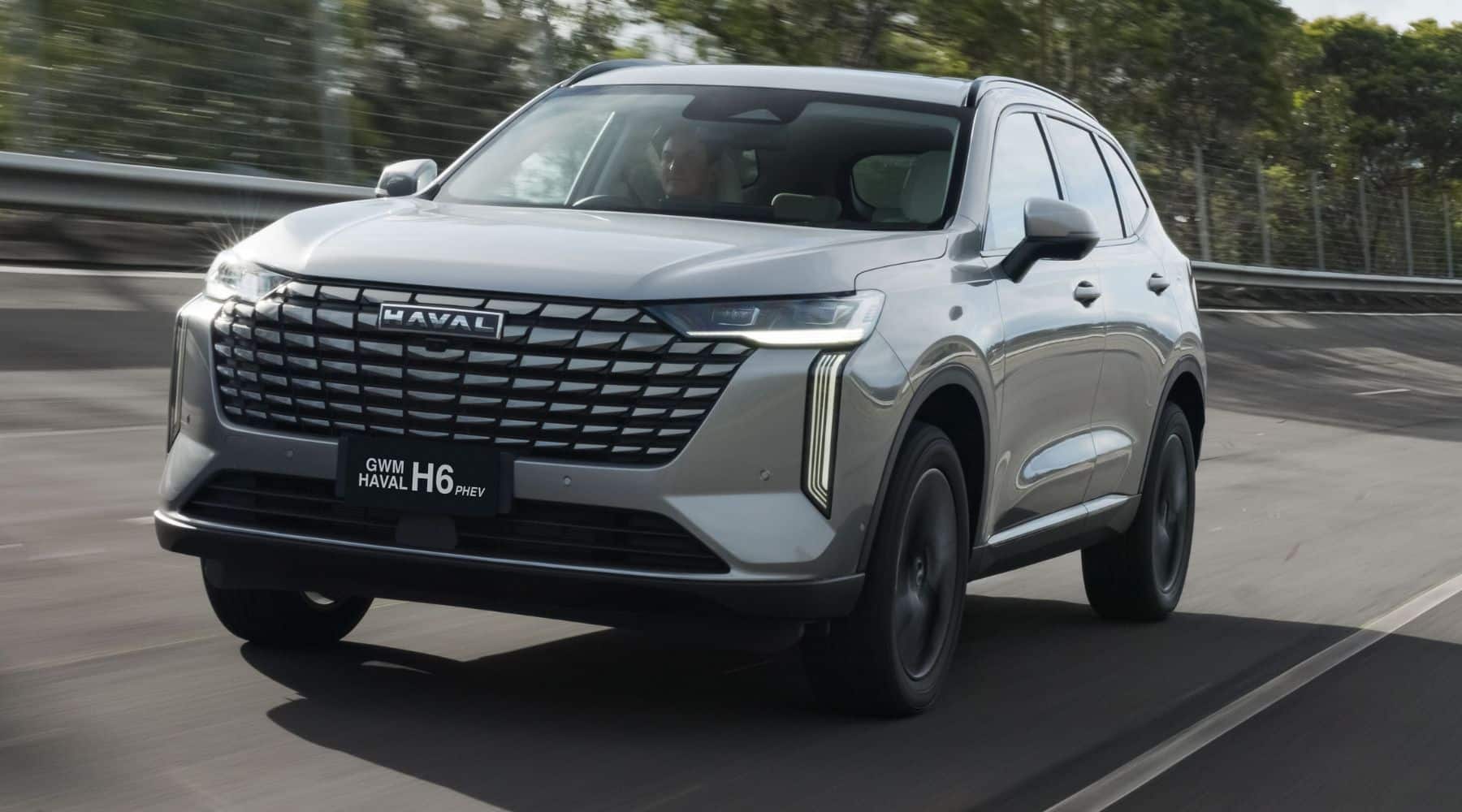
- Price: from $39,490 to $49,490
- Category: medium SUV
- Drivetrain: hybrid/PHEV
- Capacity: 5 seats
- Boot space: up to 560L
- ISOFIX child restraint points: 2 (outer rear seats)
- ANCAP safety rating: 5 stars
- 2025 VFACTS sales: 6,726 (hybrid and PHEV sales)
The H6 has made for a formidable double act with the Jolion, combining for over 32,600 of GWM’s 52,809 total new Australian sales in 2025. The medium SUV appeals to plenty of demographics with petrol, hybrid and PHEV versions, each of which is priced competitively in a hot, growing market.
It comes with a 360° Monitoring System, as well as other safety technologies like Smart Dodge, Traffic Sign Recognition, Traffic Jam Assist, Adaptive and Intelligent Cruise Control, Lane Change Assist, Rear Crossing Traffic Braking and plenty more. Intelligent Parking Assist is only available on the 2WD version of the Ultra Hybrid, though.
You’ll be able to make use of its 14.6-inch Full Colour Touch Screen Infotainment System, voice command and a six-way electric adjustable driver seat, which comes with Comfort-Tek Leather Accented Seat Trim. Plenty of families are turning to the H6, both hybrid and PHEV variants, and for good reason: mid-sized, partially electrified SUVs offering such benefits don’t come much cheaper.
Back to the best hybrids and PHEVs
Best family cars for towing
1. Ford Everest

- Price: from $59,490 to $82,917
- Category: large SUV
- Drivetrain: diesel
- Capacity: 5 to 7 seats
- Braked towing capacity: 3,500kg
- Boot space: up to 898L (5-seat mode)
- ISOFIX child restraint points: 2 (outer second row seats)
- ANCAP safety rating: 5 stars
- 2025 VFACTS sales: 26,161 (5th overall)
There’s a reason why the Everest is as popular as it is. Not only is it suited to small and large families, but it’s built for off-road adventures. Indeed, with a braked towing capacity reaching 3,500kg and a cavernous boot (in five-seat variants or with the third row folded), there’s no doubt that countless families will be using their Everests for caravanning and more.
Back to the best family cars for towing
2. Isuzu Ute MU-X

- Price: from $49,900 to $77,100
- Category: large SUV
- Drivetrain: diesel
- Capacity: 7 seats
- Braked towing capacity: 3,500kg
- Boot space: up to 311L
- ISOFIX child restraint points: 2 (outer second row seats)
- ANCAP safety rating: 5 stars
- 2025 VFACTS sales: 15,458 (20th overall)
Another heavy hitter in the large SUV space, the MU-X gives you access to a turbo-diesel-powered seven-seater that can tow boats, caravans and trailers up to 3,500kg, all for around $50,000 at its base. It’s no wonder Aussie families continue to clamour for it today.
Back to the best family cars for towing
3. Toyota LandCruiser Prado

- Price: from $80,655 to $101,365
- Category: large SUV
- Drivetrain: diesel
- Capacity: 7 seats
- Braked towing capacity: 3,500kg
- Boot space: up to 182L
- ISOFIX child restraint points: 2 (outer second row seats)
- ANCAP safety rating: 5 stars
- 2025 VFACTS sales: 26,106 (6th overall)
The LandCruiser Prado is a step up from the Everest and MU-X in terms of its price, but offers a whole heap in the way of tackling all types of terrain. The 3,500kg of braked towing capacity gives it all the grunt you need to take your family on the road.
Back to the best family cars for towing
4. Nissan Patrol

- Price: from $96,540 to $108,040
- Category: upper large SUV
- Drivetrain: petrol
- Capacity: 7 to 8 seats
- Braked towing capacity: 3,500kg
- Boot space: up to 467L
- ISOFIX child restraint points: 2 (outer second row seats)
- ANCAP safety rating: unrated
- 2025 VFACTS sales: 6,263
The Patrol is yet another big step in the pricey direction, setting you back close to $100,000 for the base model. For that reason, it obviously won’t be for everybody. With a towing capacity of 3,500kg, though, no one is disputing its credentials as a people-moving SUV with plenty of power.
You can choose between the eight-seat Ti and seven-seat Ti-L, with both models packing a 12.3-inch touchscreen infotainment system, tri-zone climate control air conditioning, wireless smartphone charging, off-road monitor, ten-way adjustable driver seat and eight-way adjustable front passenger seat with leather-accented trim and more. Ti-L-specific features include a 13-speaker Bose sound system, a centre console cool box in the first row and a sunroof.
Its standard safety features include its Follow Me Home headlight function, Intelligent Around-View Monitor with Moving Object Detection, Intelligent Forward Collision Warning and Intelligent Lane Intervention. You’ll be paying a pretty penny for your Patrol, so you’ll have to balance that with its clear off-road pedigree.
Back to the best family cars for towing
5. GWM Tank 300

- Price: from $46,190 to $55,190
- Category: large SUV
- Drivetrain: petrol/diesel/hybrid/PHEV
- Capacity: 5 seats
- Braked towing capacity: 3,000kg
- Boot space: 400L
- ISOFIX child restraint points: 2 (outer rear seats)
- ANCAP safety rating: 5 stars
- 2025 VFACTS sales: 5,035
From the most expensive to the least among our towing superstars, the GWM Tank 300 is much more affordably priced at under $50,000. It’s certainly built in the mould of a classic off-road 4×4, but comes in almost every possible drivetrain to allow families to pick their poison among diesel, petrol, hybrid and PHEV.
The Tank 300’s safety technologies include Lane Central Keeping, Lane Change Assist, Front Collision Warning, Rear Cross Traffic Alert (With Brake) and more, with the 360° View Monitor helping you keep an eye on your surroundings at all times. All models allow you to bask in the sunshine with a sunroof, with all except Lux variants coming with Nappa Leather Accented Seats.
Your 12.3-inch Full Colour Touch Screen Infotainment System helps you stay in control of the multimedia side of things, though if you’re buying the Ultra Petrol variant, wireless Apple CarPlay and Android Auto aren’t available. Still, for a vehicle that’s so competitively priced and is capable of 3,000kg loads, it’s a small price to pay.
Back to the best family cars for towing
Best family hatches
1. Toyota Corolla Hatch

- Price: from $32,110 to $40,450
- Category: hatch
- Drivetrain: hybrid
- Capacity: 5 seats
- Boot space: up to 333L
- ISOFIX child restraint points: 2 (outer rear seats)
- ANCAP safety rating: unrated
- 2025 VFACTS sales: 18,968 (16th overall, incl. sedan variants)
We’ve spoken about the Corolla already, but now we’re pivoting to the hatch version. It finds itself in a similar price bracket to the Mazda3 and i30 Hatch N Line in terms of smaller family cars, which is in the mid-range in terms of hatch outlay. Still, Toyota knows how to put a car together, so it’s hard to go wrong with a reliable model like this one (it still lacks an ANCAP rating like the sedan version, though).
2. Hyundai i30 N
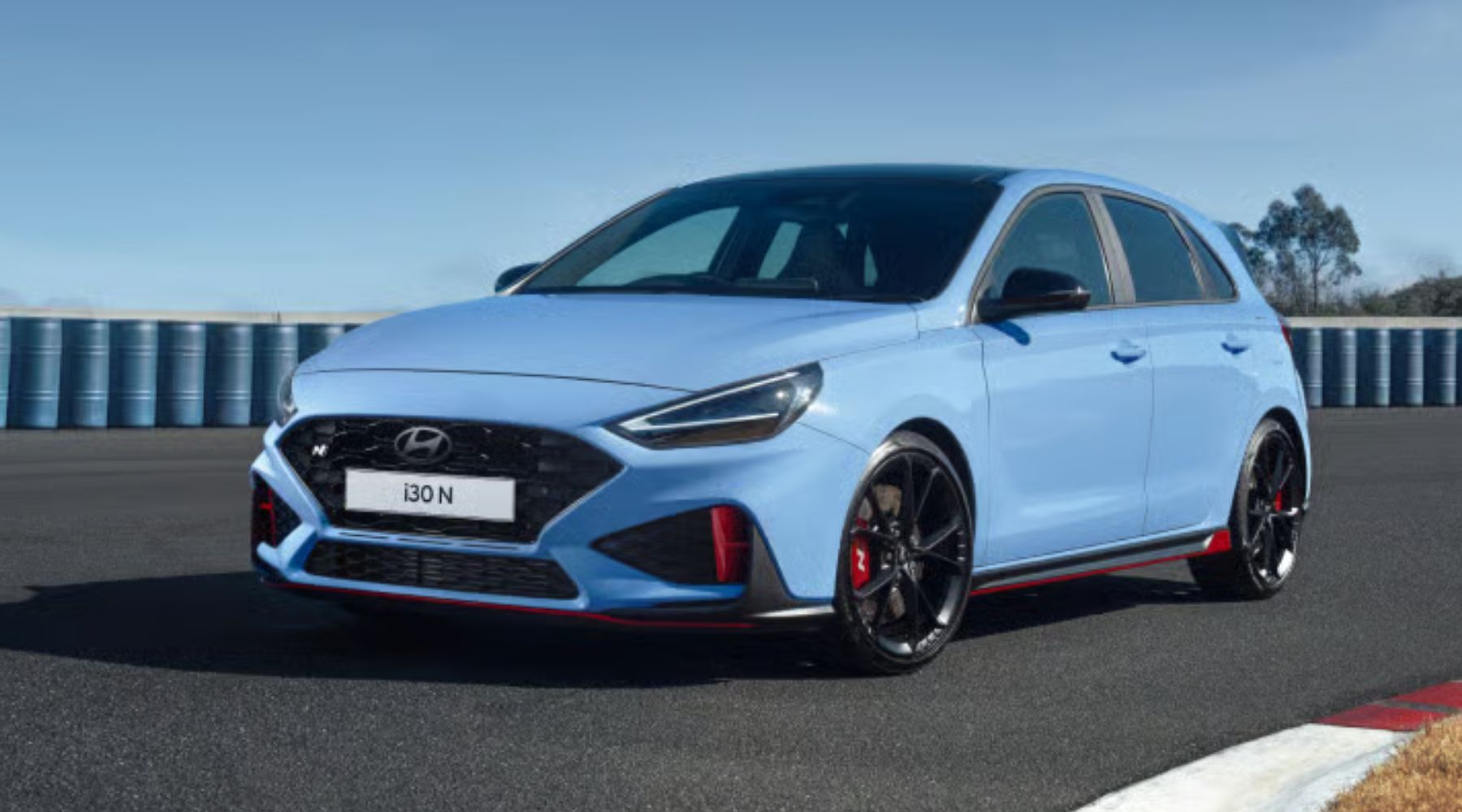
- Price: from $52,000 to $57,500
- Category: hatch
- Drivetrain: petrol
- Capacity: 5 seats
- Boot space: 381L
- ISOFIX child restraint points: 2 (outer rear seats)
- ANCAP safety rating: unrated
- 2025 VFACTS sales: 10,688 (incl. sedan variants)
The classic i30 hatch is no longer being sold on our shores, while the N Line was also removed from production in late 2025. That leaves us with the sporty N, shifts closer to Hyundai’s N range of performance hatches. Its striking design certainly evokes more of a performance feeling than the reliable, unflashy exterior of i30s gone by.
As is the case with many other Hyundai models, SmartSense is included as standard, with features such as Driver Attention Warning, Line Keeping Assist, Leading Vehicle Departure Alert, Forward Collision-Avoidance Assist and plenty more. The Premium version also adds Highway Driving Assist 1 to the stable of safety technologies.
Drivers can enjoy Apple CarPlay and Android Auto compatibility, alongside Live Traffic Updates and satellite navigation. The leather upholstery will make you feel like you’re in the cabin of a sports car, too, albeit smaller and a heck of a lot kinder on your wallet. The 381L of boot space for a hatch is nothing to sneeze at, either.
3. Volkswagen Golf

- Price: from $38,690 to $58,990
- Category: hatch
- Drivetrain: petrol
- Capacity: 5 seats
- Boot space: up to 374L
- ISOFIX child restraint points: 2 (outer rear seats)
- ANCAP safety rating: 5 stars
- 2025 VFACTS sales: 3,047
The Volkswagen Golf has long been synonymous with hatches in Australia, though stiff competition in the market from the likes of the Corolla, Mazda3, i30, BYD Dolphin and Kia K4 has seen it drop down the charts. Being a bit more expensive than some of its counterparts doesn’t help, but with a starting price of less than $40,000, there’s a lot you can get for your spend.
For starters, the Golf comes with the IQ.DRIVE suite of safety features, including distance warning display, Front Assist with pedestrian and cyclist monitoring functions, Park Assist (parking bay and parallel parking semi-automated steering assistance) and Travel Assist, which “combines the functions of Adaptive Cruise Control and Lane Assist with adaptive lane guidance”.
Digital Cockpit Pro provides easy access to all your driving tools like speedometer and driver assistance systems. Additionally, all variants above the base spec come packaged with the Discover audio and satellite navigation system, including a 12.9-inch colour capacitive touch screen display, IDA voice control and more.
4. MG MG3

- Price: from $21,990 to $29,990
- Category: hatch
- Drivetrain: petrol/hybrid
- Capacity: 5 seats
- Boot space: up to 293L
- ISOFIX child restraint points: 2 (outer rear seats)
- ANCAP safety rating: 4 stars
- 2025 VFACTS sales: 8,350
If you’re looking at trimming your new car budget back even further, the MG3 might still work for you. The hatch starts at $21,990, while it even offers hybrid powertrains from just $26,990 that cut its fuel consumption from 6.0L/100km to 4.3L/100km. Among new cars in Australia, only the Kia Picanto (from $19,190) comes in at a cheaper base price.
It’s safe to say that, on a $22,000 hatch, you aren’t getting the works in terms of creature comforts, but that doesn’t mean you’re getting nothing. The 10.25-inch Infotainment Screen is pretty big by hatch standards, while the push button start on the Excite and Essence variants is a nice touch. No DAB+ on the Vibe and Excite does sting, but won’t be a dealbreaker for the pricepoint.
They say good things come in small packages, and Aussie families looking to crush a bargain will be hoping that the MG3 fits the bill. It’s yet another hatch without a perfect five stars from ANCAP, though, where it scored only 75% for child occupant protection and 70% for safety assist.
5. Mazda3 Hatch

- Price: from $31,610 to $43,610
- Category: hatch
- Drivetrain: petrol
- Capacity: 5 seats
- Boot space: up to 295L
- ISOFIX child restraint points: 2 (outer rear seats)
- ANCAP safety rating: unrated
- 2025 VFACTS sales: 10,291 (incl. sedan variants)
The Mazda3 is another staple among smaller family cars, with both hatches and sedans available. Only the Corolla and i30 outsold it in the Australian small car segment in 2025, making up the only three models to hit five figures in annual sales. So, how does the hatch version stack up?
Let’s start with safety, an area in which it certainly isn’t lacking. Vision Technology, which is optional on Pure and Evolve models and standard on all others, includes driver monitoring, a 360° View Monitor, Front Cross Traffic Alert, Cruising and Traffic Support and front parking sensors. Features that are standard across all variants include Smart Brake Support, Intelligent Speed Assistance, satellite navigation and more.
Every Mazda3 comes with an eight-speaker sound system, which is upgraded to a 12-speaker Bose system on the top-spec G25 Astina, while the 8.8-inch infotainment screen on the G20 Pure and G20 Evolve turns into a 10.25-inch touchscreen on the four variants above them. You’ll also be able to charge your phone wirelessly from the G20 Evolve upwards.
6. BMW 1 Series

- Price: from $58,700 to $84,700
- Category: hatch
- Drivetrain: petrol
- Capacity: 5 seats
- Boot space: up to 380L
- ISOFIX child restraint points: 2 (outer rear seats)
- ANCAP safety rating: 4 stars
- 2025 VFACTS sales: 1,722
If you’re looking for a hatch that's a bit fancier, you might plump for something like the 1 Series from BMW. At a starting price of $58,700, reaching as high as almost $85,000 for the top-spec M135 xDrive, it’s definitely on the more expensive end of the scale for small non-SUVs.
The 1 Series’ classy exterior design is complemented by a swathe of attractive cabin features, from an electric blue trim on the leather upholstery to the 10.25-inch touchscreen display (and optional BMW Live Cockpit) on which you can even play video games while your car is at a driving stop. With respect to the other popular hatches on this list, gaming isn’t on the checklist there.
Alongside advanced safety features, the 1 Series has the ability to park itself and leave parking spaces through Parking Assistant Professional, which you can monitor on your smartphone. You can also use BMW Digital Key Plus to turn your smartphone into a key, which unlocks on approach. Overall, it’s clear that you’re getting cutting edge technology for your trouble, but you’ll have to consider whether $60,000 or more is suitable for your hatch.
Best luxury family cars
1. Land Rover Defender

- Price: from $96,255 to $325,532
- Category: large SUV
- Drivetrain: petrol/diesel/hybrid
- Capacity: 5 to 8 seats
- Boot space: up to 972L
- ISOFIX child restraint points: up to 5 (front passenger seat, outer second and third row seats)
- ANCAP safety rating: 5 stars
- 2025 VFACTS sales: 3,854
The flagship model offered by Land Rover, the Defender is a hard nut built for tackling rugged terrain of all types. In the large SUV bracket over $80,000, no model sold more in Australia in 2025 than the Defender. Its versatility is attractive to adventurous families, as not only does it have off-road pedigree, but also options for five, six, seven and even eight seats.
When you’re looking to go off the beaten track, the Defender comes with All Terrain Progress Control, which automatically manages your speed and engine output so you can stay locked into the path ahead. You can even take your Defender into water, with Wade Sensing helping you navigate underwater terrain safely up to 90cm deep. Park Assist and its 3D Surround Camera allow you to park with ease.
It comes with a 13.1-inch Pivi Pro infotainment system touchscreen, which comes with a remote app (to monitor your fuel level, locate your vehicle and more), Amazon Alexa integration and even Wi-Fi management. It goes without saying that the Defender and the other luxury cars we’ve rated are out of reach for most Aussie families. However, for those that are shopping in this range, you get top quality for top dollar.
2. BMW X3

- Price: from $88,100 to $131,400
- Category: medium SUV
- Drivetrain: petrol/PHEV
- Capacity: 5 seats
- Boot space: up to 570L
- ISOFIX child restraint points: 2 (outer rear seats)
- ANCAP safety rating: 5 stars
- 2025 VFACTS sales: 4,909
The X3 is BMW’s second-most popular model, having only been outsold by the X1 in Australia last year. Among the four X3 variants, you’ll be able to choose between mild hybrid petrol and PHEV versions of the luxury mid-sized SUV. As you might expect from a prestige carmaker like BMW, it’s packed to the gills with impressive features.
Inside the cabin, the 14.9-inch BMW Curved Display has everything you need, from your multimedia like music and even movie streaming (which you can watch while parked, of course) to features like Augmented View, which places arrows on your control display to show you exactly where to turn and get you to your destination.
Like the 1 Series, it comes with Driving Assistant Professional, Parking Assistant Professional, BMW Digital Key Plus and more for you to luxuriate in. Plus, with a boot space of 570L with all the seats up, you shouldn’t have many issues packing up the family. In the case of the X3, you’re paying for the label and all the glorious benefits that come with it.
3. Audi Q5

- Price: from $86,000 to $100,400
- Category: medium SUV
- Drivetrain: petrol/diesel/hybrid
- Capacity: 5 seats
- Boot space: 520L
- ISOFIX child restraint points: 2 (outer rear seats)
- ANCAP safety rating: 5 stars
- 2025 VFACTS sales: 3,570
We’ve spoken about a few head-turners in this piece, but the Q5 from Audi is the real deal. The distinctive Singleframe grille is a thing of beauty, catching the eye immediately on the road. It boasts a very handy minimum fuel economy of 5.4L/100km, owing in part to its mild hybrid technology.
The Q5 comes with an array of driver assistance systems, such as adaptive cruise control with stop and go function, 360° cameras including kerb view function, park assist plus and lane departure warning with emergency assist. That’s alongside 3-zone climate control air conditioning, leather upholstery, heated front seats and MMI navigation plus, which includes a 14.5-inch OLED colour display, voice control and 3D map display.
You can level up your Q5 with one of Audi’s various packages, too, like a Bang & Olufsen 3D sound system with the Premium package and 20-inch Audi Sport alloy wheels with the Style package. They’ll set you back an additional $3,400 to $5,900, though.
4. Mercedes-Benz GLC-Class

- Price: from $85,327 to $203,000
- Category: medium SUV
- Drivetrain: petrol/hybrid
- Capacity: 5 seats
- Boot space: up to 620L
- ISOFIX child restraint points: 2 (outer rear seats)
- ANCAP safety rating: 5 stars
- 2025 VFACTS sales: 5,826
Along with BMW, Mercedes-Benz is perhaps the carmaker that’s most synonymous with luxury in Australia. The GLC-Class medium SUV is the best-selling model among its vast lineup of valuable vehicles, with its combined sales between coupe and wagon variants totalling almost 6,000.
Active Lane Keeping Assist, Driving Assistance package Plus (which partially automates your driving) and Parking Package with 360° camera (which detects available parking spaces and is capable of manoeuvring into the space itself) are all very handy to have at your disposal. That’s on top of some next-level features like smartphone integration and a fingerprint sensor for accessing profile info and transaction details.
The GLC-Class’ optional 15-speaker Burmester 3D surround sound system gives your tunes the oomph they deserve, with music streaming in Dolby Atmos quality. Plus, Mercedes-Benz claims that the car comes with a spacious 620L of luggage area in the boot. Like all the other cars mentioned in this part of the list, quality is what you pay for with the GLC-Class and quality is what you get.
5. Lexus RX

- Price: from $101,100 to $111,100
- Category: large SUV
- Drivetrain: petrol/hybrid/PHEV
- Capacity: 5 seats
- Boot space: 612L
- ISOFIX child restraint points: 2 (outer rear seats)
- ANCAP safety rating: 5 stars
- 2025 VFACTS sales: 2,126
We’ve reached the final car on our list of family vehicles, and it’s another special one in the form of the Lexus RX. It’s able to be shaped and moulded to your needs, whether you’re after a sensible hybrid, a PHEV or even a turbo-charged petrol ride.
The RX is equipped with Lexus Safety System+, which includes Pre-Collision System with intersection collision avoidance support, Lane Departure Alert and Lane Tracing Assist, as well as Emergency Steering Assist, Rear Cross Traffic Alert, Driver Monitor Camera, Panoramic View Monitor (on all variants above the Luxury spec) and more. The 3-Zone Climate Control allows you to keep all parties happy on hot and cold days, too.
On the Luxury variants, you’ll enjoy a 12-speaker Panasonic sound system, which is beefed up to an unbelievable 21-speaker Mark Levinson surround sound system on higher specs. Your RX can also offer live traffic updates and information while it’s within 4G range, giving you a heads-up if there’s a pile-up on the freeway. There’s plenty on offer when you get behind the wheel of an RX.