


Green car loan interest rates









Rates correct as of September 2026. Quotes based on a $30,000, five-year car loan for a borrower with good credit.
How is a EV car loan different from standard vehicle finance?
Green or EV car loans are the same as regular car loans in terms of their structure. You’ll still be approved for your lump sum and repay it weekly, fortnightly or monthly over a period of one to seven years. The primary differences lie in the cars that you can buy with this product and the rates you’ll receive.
While car loans allow you to buy just about any car within your lender’s qualification criteria, green car loans are only available for cars classed as green by your lender. This definition varies between providers, but can include:
- Electric vehicles
- PHEVs
- Hybrid vehicles
- Fuel-efficient and/or low-emission petrol vehicles
You’ll need to check whether your green car qualifies for a reduced rate with your lender before you apply.
Luxury car tax discounts
Another noteworthy difference between green and non-green vehicles is the increased luxury car tax (LCT) threshold. For reference, the tax payable is 33% of any amount above the threshold set for the vehicle you’re buying. The formula for working out the payable LCT is:
(LCT value − LCT threshold) × 10 ÷ 11 × 33%
As of the 2025-26 financial year, the green car LCT threshold is set at $91,387, compared to $80,567 for other cars. This increased threshold applies to vehicles that don’t exceed a combined fuel economy of 7.0L/100km. You can see how much difference the threshold makes for green and non-green cars here:
| Car type | Purchase price | LCT threshold | LCT payable | Total cost |
|---|---|---|---|---|
| Petrol | $90,000 | $80,567 | $2,830 | $92,830 |
| Electric | $90,000 | $91,387 | $0 | $90,000 |
You’ll be paying more for a non-eco-friendly vehicle if it sits above the threshold compared to an equivalent green vehicle.
How much can I save with a EV car loan?
The rate discount you can receive from your lender can vary between 0.50% p.a. and as much as 1.50% p.a. in some cases. Even a small difference in rates can save you a substantial amount, as the following table demonstrates:
| Type of car loan | Interest rate | Monthly repayment | Total interest | Total saving |
|---|---|---|---|---|
| Standard car loan | 7.50% p.a. | $1,002 | $10,114 | N/A |
| Green car loan #1 | 7.00% p.a. | $990 | $9,404 | $710 |
| Green car loan #2 | 6.50% p.a. | $978 | $8,698 | $1,415 |
| Green car loan #3 | 6.00% p.a. | $967 | $7,998 | $2,115 |
| Calculations based on a $50,000, five-year car loan for an electric car. | ||||
As you can see, a 1.50% p.a. discount on a $50,000 EV can save you more than $2,100 in interest alone in this instance. That’s even before accounting for fee reductions or waivers, which are also common, that’ll bump up your savings even further.
The amount that you end up saving on your green loan ultimately depends on the generosity of your lender (how big their rate discount is) and the size of your loan, as larger loans attract more interest. Adjusting the loan size in the above example to $100,000 means that the difference between 6.00% p.a. and 7.00% p.a. balloons out to over $4,200.
EV car loans vs novated leases
Another popular finance option for electric vehicles is novated leasing. It’s a salary sacrificing arrangement whereby you pay for your car and lease expenses from your pre-tax income, which reduces your payable income tax.
A novated lease can offer significant tax savings, particularly for EVs that qualify for a fringe benefits tax (FBT) exemption under the LCT threshold. This can lower your overall vehicle costs even further. You can see how the two finance types compare for some of the best EV models in Australia:
2025 BYD Dolphin Premium
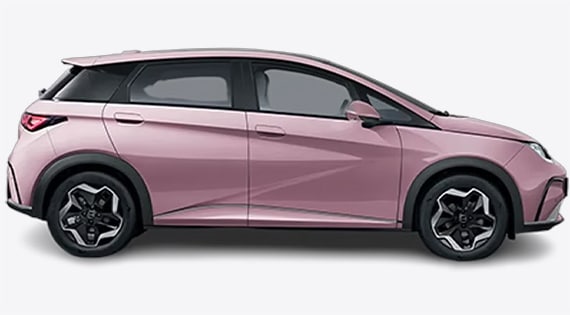
| Finance type | Purchase price | Interest rate | Weekly payment | Total cost over five years (inc. on-road) |
|---|---|---|---|---|
| Car loan | $36,990 | 5.75% p.a. | $164 (post-tax) | $67,796 |
| Novated lease | $36,990 | 7.50% p.a. | $162 (pre-tax) | $47,333 |
|
Car loan Novated lease |
|
$36,990 $36,990 |
|
5.75% p.a. 7.50% p.a. |
|
$164 (post-tax) $162 (pre-tax) |
|
$67,796 $47,333 |
2025 Mini Cooper JCW Electric

| Finance type | Purchase price | Interest rate | Weekly payment | Total cost over five years (inc. on-road) |
|---|---|---|---|---|
| Car loan | $63,990 | 5.75% p.a. | $283 (post-tax) | $99,034 |
| Novated lease | $63,990 | 7.50% p.a. | $218 (pre-tax) | $69,546 |
|
Car loan Novated lease |
|
$63,990 $63,990 |
|
5.75% p.a. 7.50% p.a. |
|
$283 (post-tax) $218 (pre-tax) |
|
$99,034 $69,546 |
2025 Tesla Model Y Performance
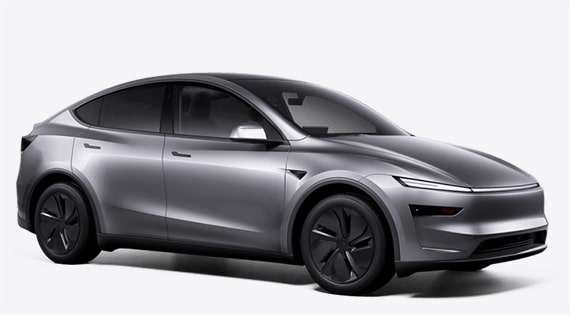
| Finance type | Purchase price | Interest rate | Weekly payment | Total cost over five years (inc. on-road) |
|---|---|---|---|---|
| Car loan | $82,900 | 5.75% p.a. | $369 (post-tax) | $120,912 |
| Novated lease | $82,900 | 7.50% p.a. | $280 (pre-tax) | $87,311 |
|
Car loan Novated lease |
|
$82,900 $82,900 |
|
5.75% p.a. 7.50% p.a. |
|
$369 (post-tax) $280 (pre-tax) |
|
$120,912 $87,311 |
Model prices sourced from CarsGuide and are correct as of August 2025. Prices do not include on-road costs or other expenses related to the car purchase process. Calculations are for illustrative purposes only and aren’t necessarily reflective of the car loan or novated lease rate or terms you’ll receive. Total cost calculations include an annual running cost of $5,000. Car loan interest rate based on lowest available rate through Savvy as of September 2025. Novated lease calculations based on a $90,000 salary and a car driven between 10,000km and 15,000km per year. Overall novated lease cost calculations are inclusive of tax savings. They do not take into account personal factors, additional income, deductible benefits, personal vs business use ratios and credit suitability.
When annual tax savings are incorporated into the novated lease cost, it’s clear to see that it can prove a much cheaper option than a car loan for the purchase of electric vehicles.
Why apply for a car loan with Savvy?
The pros and cons of green car loans
Pros
-
Discount on interest rate and fees
The main benefit of green car finance is the discount available to vehicle buyers, which comes in the form of lower rates and reduced or waived fees.
-
Same loan structure as standard car loans
This is the same product as a car loan, meaning there aren’t any major structural differences you’ll need to wrap your head around.
-
Reduce your carbon footprint
By purchasing an electric or hybrid vehicle, you can be safe in the knowledge that you're helping reduce emissions in Australia.
Cons
-
Criteria differ between lenders
What constitutes a green car can vary between lenders, so it’s important to double-check before you apply. When you go through Savvy, we’ll handle this for you.
-
Fewer options available for used green cars
Because EVs and PHEVs are relatively new to the Aussie market, there may be fewer used options available.
-
Not available with all lenders
Finally, there’s the simple fact that not all lenders actually offer discounts for green vehicles. Your options for discounted finance may be limited.
EV and hybrid rebates by state
Depending on where you live in Australia, you may be able to benefit from EV incentives. The following states and territories currently have schemes in place:
- The ACT offers incentives for zero-emission vehicles, including discounted registration, no-interest loans of up to $15,000 for eligible buyers and stamp duty exemptions (exemptions will end on 1 September 2025).
- The Northern Territory offers EV and PHEV owners free registration and a stamp duty concession of up to $1,500 (for cars up to $50,000) until 30 June 2027.
Green car schemes have now closed in these states:
How to apply for a EV car loan with Savvy
-
Apply online
Fill out our simple web form to apply, telling us about your current financial situation and the loan you’re after.
-
Send through your docs
Supply any documents required for profile verification, which you can do easily through our online portal.
-
Get a call from your broker
Once we have all the information, your broker will reach out to chat about the green finance options available to you.
-
Find your ideal car
If you haven’t already found your ideal EV or hybrid, we can help you source one through our in-house car broker team.
-
Prepared and approved
Your broker will prepare your forms and apply on your behalf. They’ll let you know when it’s approved.
-
Sign on the dotted line
We’ll send you the contracts to sign and, once it’s all settled, the car is yours!
Why is the Australian Government pushing EV sales?
There are undoubtedly many reasons why the Australian Government has been offering a range of EV incentives, from the increased LCT threshold to the FBT exemption and, more recently, a deal with Hyundai Capital Australia to discount interest rates on Hyundai and Kia dealer finance.
However, the biggest and most obvious is that increasing the Aussie uptake of EVs will help the Government reach its target of net zero emissions by 2050. Indeed, according to the Climate Change Authority, to meet the more short-term target of slashing emissions by at least 62% by 2035, EVs must make up half of all new car sales between now and then. In 2025, that figure only sat at 8.3%.
The recent $60 million investment in discounting Hyundai finance rates came through the Clean Energy Finance Corporation (CEFC), a body with the stated purpose of “[investing] in clean energy technologies to reduce Australia’s greenhouse gas emissions”.
The program is seen as a cheaper way for the Government to get people on board the EV train than the FBT exemption, which has ballooned out in cost from its original projection of $90 million to a projected $1.35 billion in 2025-26.
Most popular electric cars in Australia: 2026
If you’re wondering what EV might be suitable for you and your family, or aren’t sure what vehicles qualify for a green car loan, we’ve compiled a list of the ten most popular cars sold in Australia for each category in the first half of 2026.