
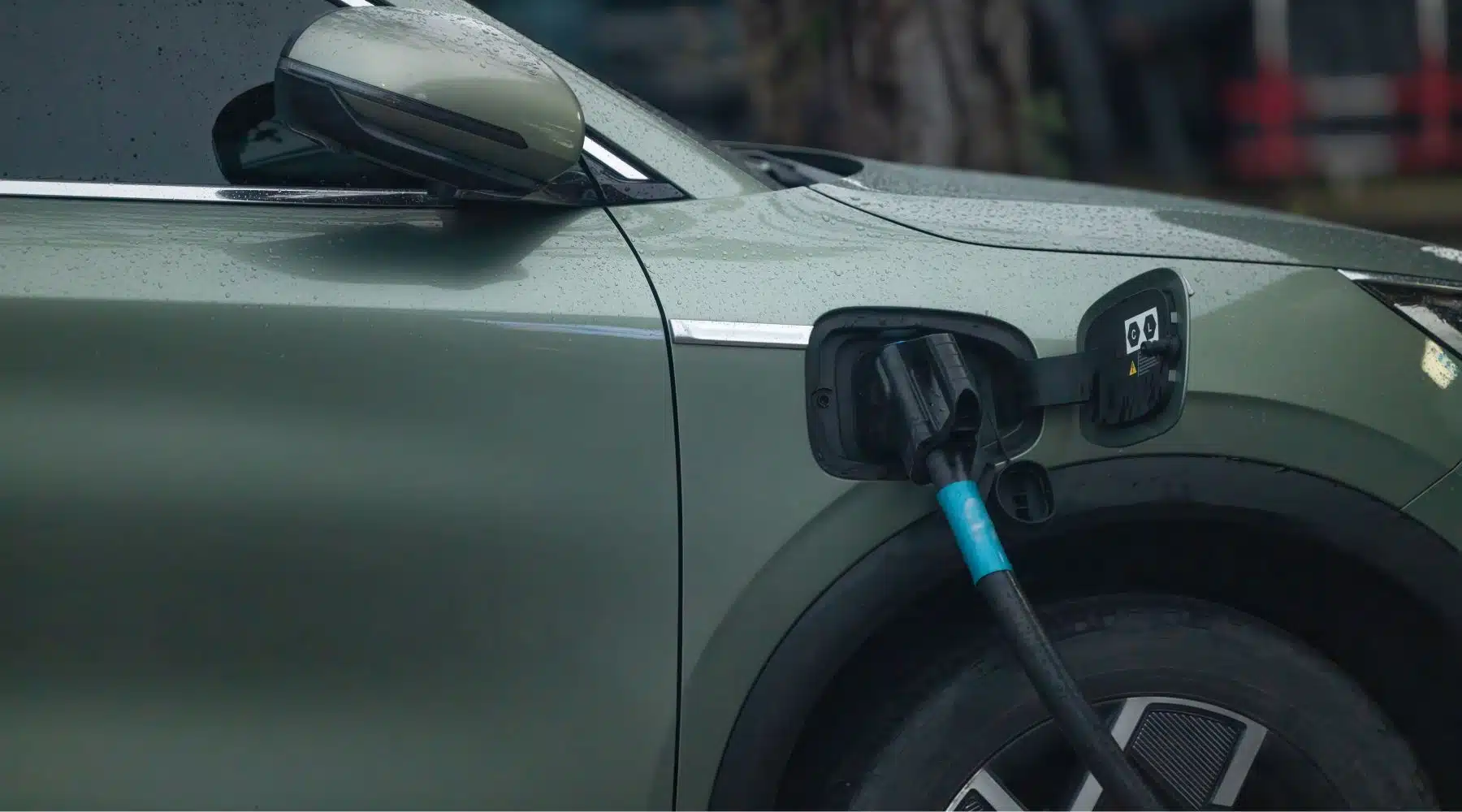


There’s no denying that Australians have taken advantage of the fringe benefits tax (FBT) exemption on electric cars since its introduction in 2022. The Federal Treasury originally forecast only 4,700 novated leases being taken out to capitalise on the tax break, according to the Australian Financial Review, but this number has ballooned to over 100,000.
Perhaps more importantly, initial projections from 2022 had the incentive costed at $90 million for the 2025-26 financial year. However, it’s since been revealed that the exemption is now expected to cost $1.35 billion. With a blowout worth 15 times what was originally budgeted for, a review has been announced by the Government into whether it should be scrapped.
Canning the exemption would have a massive impact on EV sales and novated leasing specifically, so it’s worth looking into how it works now and what’ll change if it’s axed.
First, how does the FBT exemption work for EVs?
FBT is a tax paid by employers on benefits provided to their employees. This can be anything from offering a parking space to discounted gym memberships and other entertainment costs. In terms of the cost, it’s charged at 47% on the taxable value of the benefit (which is 20% using the statutory formula).
A popular example of a fringe benefit is salary packaging or sacrificing, which is what’s involved in novated leasing. Taking out a novated lease on a car means you’ll receive a tax benefit by paying for the lease through your pre-tax income, but you’ll also be required to pay the cost of the FBT passed on by your employer.
The ATO allows this to be offset by contributing to your vehicle’s expenses through your post-tax income, which is known as the Employee Contribution Method (ECM).
However, the big exception to the rule is EVs. They offer considerably greater savings to employees who finance them via a novated lease, as there’s no need to pay any post-tax contributions on cars priced below the luxury car tax (LCT) threshold of $91,387 and first held after 1 July 2022.
Depending on your salary, the tax you save using this arrangement could almost halve the cost of your EV. That’s why shrewd Aussies have been signing up in droves.
FBT exemption leaving a lasting impression on the industry
According to Adrian Taylor, General Manager of Savvy Benefits and a veteran of over 15 years in the novated leasing industry, the impact the exemption has had can’t be understated.
“Over the last two decades, novated leasing has become simplified and FBT risk reduced, but nothing has ever been as significant as the FBT exemption”, he said.
“The FBT exemption for plug-in hybrid vehicles (PHEVs) prior to 1 April 2025 and EVs generated unprecedented growth in the industry.
“Electric vehicles under management have grown 20% year-on-year, while total vehicles under management grew at twice the rate (8% to 10%) compared to before the exemption’s introduction (4% to 5%).”
How the FBT exemption removal could impact novated leasing and EV sales
The most obvious effect of removing the FBT exemption for EVs is that they’ll become far less attractive to prospective novated lease customers, who may then decide against salary packaging entirely. In Mr Taylor’s view, the knock-on effects would be significant.
“We expect the industry to retract to, and potentially beyond, previous markers, largely due to the resultant perception that novated leasing only works for EVs”, he explained.
“Naturally, companies will make moves to protect profits.
“We’re seeing jobs lost to AI or moved offshore in the banking sector, while sales and marketing face pressure on all fronts as commissions and budgets reduce.”
The change would undoubtedly have an impact on EV sales as a whole, too. 103,270 were registered as sold in 2025, the first time they’ve reached six figures in Australian history. There are many reasons for this, with increasing options and lower entry points in terms of price being key among them, but the novated leasing avenue saw 21,000 added in the first half of 2025 alone.
It seems that, in the eyes of the Australian Government, the issue isn’t so much about novated leases themselves, but the significant benefit that buying an EV can have for higher income earners paying tax at a rate of 37% to 45%.
Providing a further incentive to those already doing well for themselves will likely be lower on their priority list, which is probably why they’ve shifted their focus to a different solution that isn’t income dependent.
Is the Australian Government already planning for life after the FBT exemption?
A recent announcement by the Government’s Clean Energy Finance Corporation (CEFC) that it’s entering into a partnership with Hyundai Capital Australia to reduce interest rates on dealer finance for Hyundai and Kia EVs looks to be a clear signal of their intent moving forward.
The agreement will see the Government invest $60 million to cut rates by between 0.50% p.a. and 1.00% p.a. on loans for eligible EVs priced below the LCT threshold, which are:
Hyundai
- Elexio
- Inster
- Ioniq 5
- Kona Electric
Kia
- EV3
- EV4
- EV5
- EV6
This is certainly a cheaper way to support the integration of EVs into the market for arguably a simpler product, but the savings on offer for drivers aren’t nearly as lucrative. A $70,000 car loan with a 1.00% p.a. discount over five years could save $1,900 in interest, compared to the tens of thousands potentially on offer right now through a novated lease with the EV exemption.
This isn’t to say that novated leasing isn’t still a suitable option for Australians looking to reduce their tax bill, though.
“While the challenge for the novated leasing industry has traditionally been awareness and education, the next is going to be demonstrating the fact that non-EVs also offer great savings, as they have done for over 40 years now”, Mr Taylor said.
“For example, a $50,000 packaged EV might cost $15,000 pre-tax per year and provide $4,500 in tax savings.
“Under the ECM, this may shift to $5,000 pre-tax and $10,000 post-tax, so the annual tax savings on offer for a non-EV fall to $1,500.
“This means it’s still more cost-effective than a traditional car loan, but nowhere near as lucrative as it currently is with the exemption in place.”
- Run, don’t walk: Labor considers axing EV tax break after cost blowout - Australian Financial Review
- Luxury car tax rate and thresholds - Australian Taxation Office
- Electric vehicle tax incentives: Novated lease numbers surge, scheme boosts Australian sales - The Nightly
- New partnership to reduce the cost of EVs - energy.gov.au