

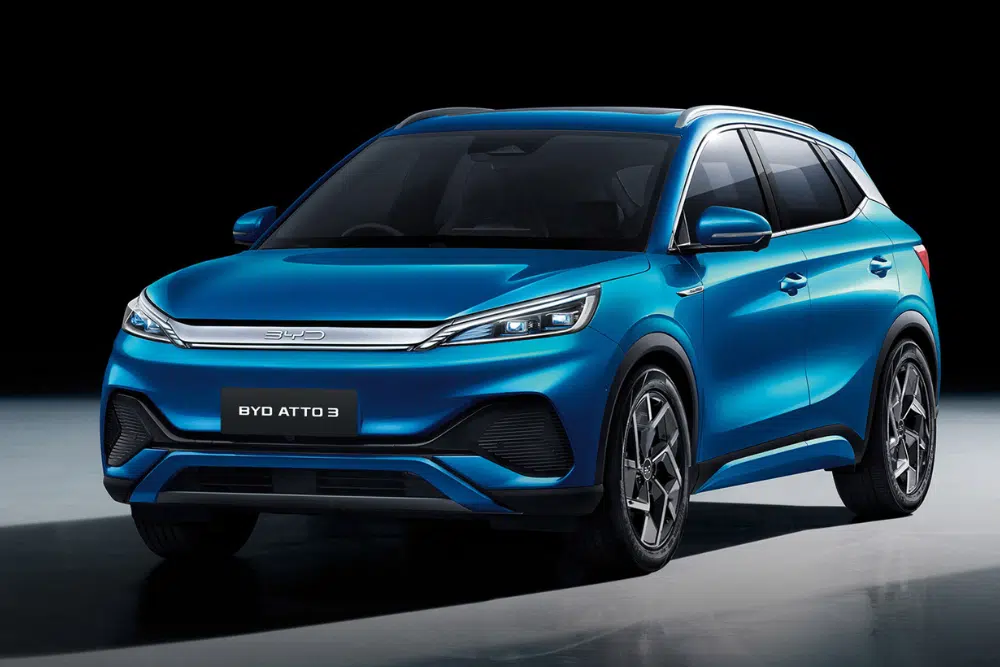


The influx of competitively priced vehicles from Chinese manufacturers has unquestionably changed the game in Australia. Indeed, the market share of Chinese-owned brands on our shores rose to 216,442 in 2025, compared to 151,574 the year before. That’s an increase of 42.8% year-on-year.
This growth was largely dominated by four brands: GWM, BYD, MG and Chery. Between them, they accounted for 181,411 new registrations, or 14.6% of all new cars sold here last year. There’s no doubt that they’re setting the bar high when it comes to producing SUVs and electric vehicles on a budget and are gaining a great deal of name recognition for it.
However, if you’re someone who likes to rotate through cars every three to five years, their depreciation rates are worth taking notice of. Our analysis has found that some of the leading Chinese-manufactured cars are dropping in value by upwards of 40% in just over a year.
Car depreciation rates
The simplest way to analyse which cars are the best at retaining value and which aren’t is to look at how much models from previous years are worth now. We’ve taken a look at RedBook to track each model’s price when new and current resale value to provide a depreciation guide. You can see the difference between Chinese and non-Chinese models in the select groups chosen here:
The cars that depreciate the most
Among all models listed in the graph above, the Atto 3 from BYD experienced the highest depreciation rate from its 2024 model at 35.84%. However, the Tiggo 7 Pro from Chery experienced a staggering 42.01% drop in value in just over a year (this wasn’t included in the graph as its Australian entry came in 2023).
Over a longer term, the Tesla Model Y RWD had its value from 2022 almost halved (48.93% depreciation rate). That’s in large part due to the recent reduction in the Model Y’s price, which has exacerbated the issue of depreciation significantly.
There’s a mix of reasons why depreciation is higher for Chinese-made cars than others. Reputation is certainly one of them, with plenty of Aussies still seeing them as cheaply made and unreliable. It’s arguably just as much to do with aggressive sales tactics and discounted pricing on newer models, though.
The cars that hold their value the most
Toyota’s trusty RAV4 was the second-most popular new car in Australia in 2024 and 2025 and its resale value reflects that. Remarkably, a 2024 RAV4 Edge eFour sells today for just 4.3% below its original selling price, making it one of the best vehicles in terms of resale value in Australia.
Other Toyota models like the Corolla Ascent Sport Hybrid and the HiLux SR5 Auto only saw decreases of around 10.0% in the value of their 2024 models. The immense popularity and demand for these models is a large part of why they retain their value so well, with pre-orders of the RAV4 made in late 2025 expected to arrive in Q2 of 2026.
You can see just how much of a difference there is between the RAV4 and the Atto 3 here:
Car depreciation and negative equity
For those who set and forget on their car, depreciation isn’t going to be a major deal, as it’s more a consideration for those who like to refresh their wheels every few years. This commonly coincides with the end of a car loan, novated lease or commercial lease, which typically last five years.
All the models we’ve looked at thus far have been between two and four years old, meaning they’re within the average car loan term period. This is where negative equity can rear its ugly head.
Negative equity is when you owe more on your vehicle than what it’s actually worth. For instance, if you bought your car for $30,000 with a five-year car loan and its value fell to $20,000 after year one, you’d have negative equity on your vehicle.
This means that if you wanted to sell it, you’d have to pay the difference between your loan balance and the sale price of the car out of pocket. This can also happen if you’re paying a residual on your car finance, which is mandatory for novated and finance leases but optional for car loans.
Car depreciation and interest
While data shows some of the cheaper Chinese vehicles that are newer to the market depreciate at a faster rate, they do have the benefit of accruing less interest thanks to their lower price tag. Car depreciation will only affect you if you were to sell or refinance the vehicle, whereas you’ll have to repay interest no matter what. Here’s how it all adds up:
| 2021 Model | Price when new | Depreciation | Interest paid (5.85% p.a.) | Combined cost |
|---|---|---|---|---|
| MG MG3 Core | $18,490 | $7,115 | $2,881 | $9,995 |
| MG ZS Excite | $22,490 | $7,889 | $3,504 | $11,393 |
| Toyota RAV4 Edge eFour | $52,320 | $7,947 | $8,151 | $16,098 |
| Subaru Forester L Hybrid | $40,490 | $12,139 | $6,308 | $18,447 |
| Ford Ranger Wildtrak 4WD DR Double Cab | $64,590 | $24,215 | $10,062 | $34,277 |
| Calculations based on a five-year car loan repaid monthly. | ||||
As you can see, it isn’t just a matter of picking the cheapest car when you’re financing it. Even though the 2021 RAV4 Edge eFour was almost $12,000 more expensive than the Forester L Hybrid, you’d be ahead on the combined cash loss if you were to sell both in 2026.
Calculating car depreciation for your business
If the car you’re purchasing is for commercial use, you’ll likely be able to claim its depreciation as a tax deduction. The ATO lists two main methods for calculating depreciation, prime cost and diminishing value, so it’s important to speak with your accountant or a tax professional to work out what you can claim for your business’ vehicle.