

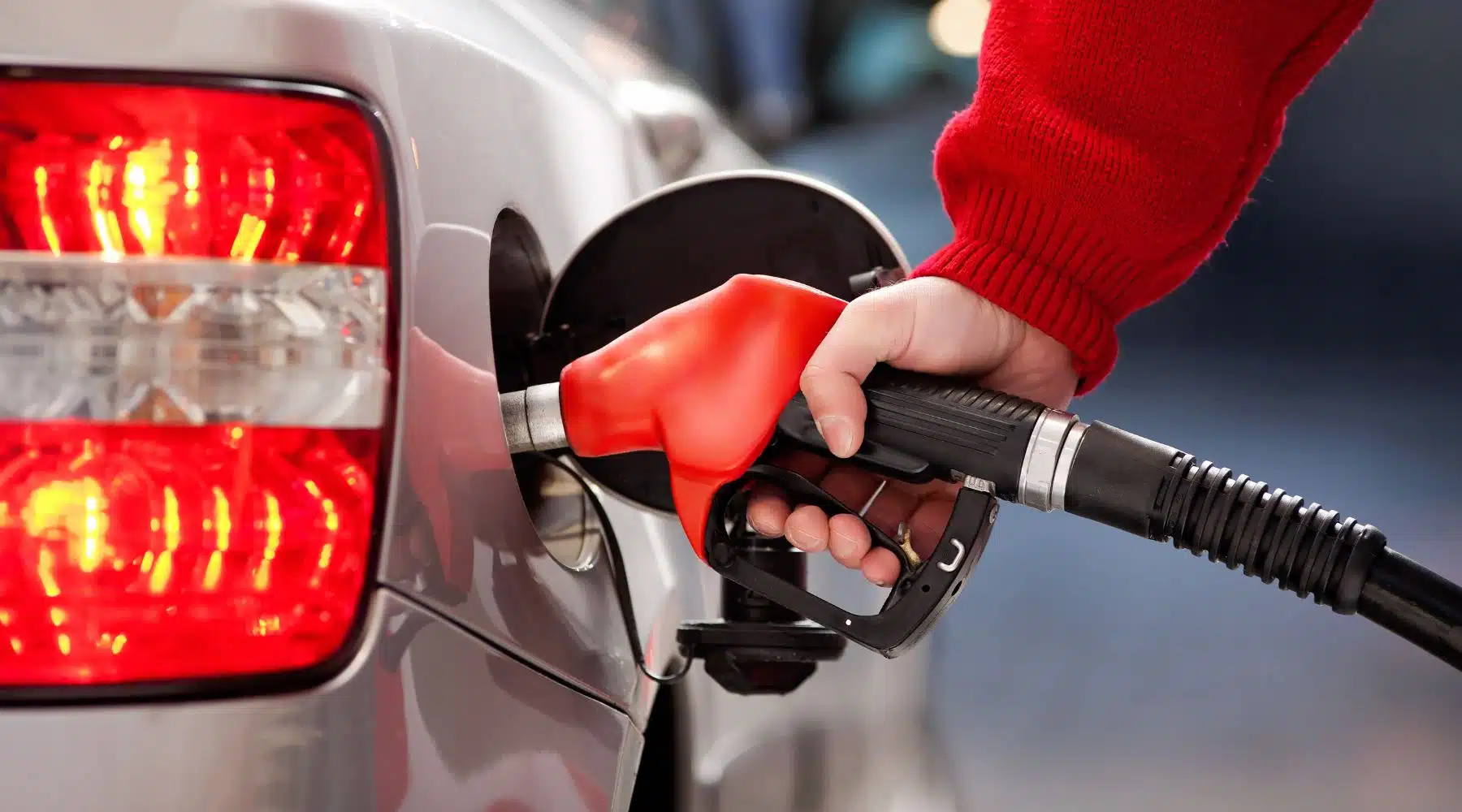


With conflict reaching new heights in the Middle East on the weekend, Australians are expected to be hit hard at the bowser. Prominent economists like Dr Shane Oliver are talking about oil prices shooting up by US$40 a barrel, which could lead to an increase of approximately 40 cents per litre in the cost of petrol.
Dr Oliver, chief economist for AMP, believes that the knock-on effect of a substantial petrol price rise would lead to a “cut back in spending elsewhere in the economy”.
“A 40 cents a litre rise in petrol prices would add about 0.8% to CPI inflation, but it would also impart a dampening impact on growth,” he explained.
Savvy’s cost of owning a car data shows that we’re already forking out $17,811.95 per year to run a vehicle. AAA data shows fuel costs sit at $93.18 per week for the typical household, which equates to $4,845.35 per year. A jump in prices by 40 cents a litre would increase the weekly cost to $114.41, an additional outlay of $21.23 that'll set drivers back an extra $1,104.00 per year.
You can see in the following table how much an increase in fuel prices might impact your car running costs, whether you fill it up with E10 or 98:
| Fuel price/L | Annual fuel cost | Weekly cost | Weekly increase |
|---|---|---|---|
| $1.756 | $4,845.35 | $93.18 | – |
| $1.856 | $5,121.35 | $98.49 | $5.31 |
| $1.956 | $5,397.35 | $103.80 | $10.62 |
| $2.056 | $5,673.35 | $109.10 | $15.92 |
| $2.156 | $5,949.35 | $114.41 | $21.23 |
| $2.256 | $6,225.35 | $119.72 | $26.54 |
| $2.356 | $6,501.35 | $125.03 | $31.85 |
| $2.456 | $6,777.35 | $130.33 | $37.15 |
| $2.556 | $7,053.35 | $135.64 | $42.46 |
| $2.656 | $7,329.35 | $140.95 | $47.77 |
| $2.756 | $7,605.35 | $146.26 | $53.08 |
| Typical household calculations assume two cars are owned and driven a combined 27,600km per year at a fuel economy of 10.0L/100km. Calculations based on fuel price up to ten decimal places, but rounded to the nearest three decimal places in the table. | |||
Of course, fuel is hardly cheap right now as is, with prices in Sydney and Melbourne already sitting closer to $2.20 per litre for E10. Exacerbating the issue is Australia's limited fuel supply, with only enough for 36 days' worth of petrol and 34 days of diesel, according to Energy Minister Chris Bowen. That's well short of the 90-day minimum required by the International Energy Agency (IEA), of which Australia is a member.
Given this is a global conflict, there’s not much the Australian Government is likely to be able to do. A reduction in the fuel excise could be a possibility, but that may only further add to Australia’s debt and fuel inflation.
However, it’s worth noting that the Government halved the fuel excise when Russia invaded Ukraine. The current fuel excise is 52.6 cents, so if it were to be halved again, it could reduce consumers’ exposure by 26.3 cents a litre.
How else will Australians be affected?
It won’t just be at the petrol pump that we’ll be feeling the impact. A significant jump in fuel prices will mean that companies' supply chain costs will soar and are likely to hit us at the supermarket checkout. Dr Oliver describes the impending fuel price hike and its subsequent impact on the economy as a “tax on households”.
All of this will place further pain on Aussies already in the midst of a cost-of-living struggle. After the 0.25% rate rise from the RBA in February, mortgage holders have been slugged an extra $90 per month (based on a $600,000 home loan).
Renters are feeling the pinch, too. Median rent reached as high as $817 in the December Quarter of 2025 in Sydney and no less than $601 in Hobart, which was the cheapest of all Australian capital cities, according to Cotality.
Understandably, the conflict in the Middle East brings with it a great deal of unknown. However, even before the issues in the region, Australians were flocking to credit cards. RBA data in November 2025 showed the value of card balances accruing interest had skyrocketed to their highest levels since August 2020, offering further evidence that household budgets can’t stretch any further.
- Gulf War 3 – the threat to economies and markets from the US/Iran war - AdviserVoice
- Don’t panic: The Albanese Government outlines how many days Australia has before it runs out of petrol - news.com.au
- Petrol and diesel prices could hit record highs as Australia’s fuel stocks remain short of 90-day target - CarExpert
- Halving fuel excise - Budget Archive
- Excise duty rates for fuel and petroleum products - Australian Taxation Office