

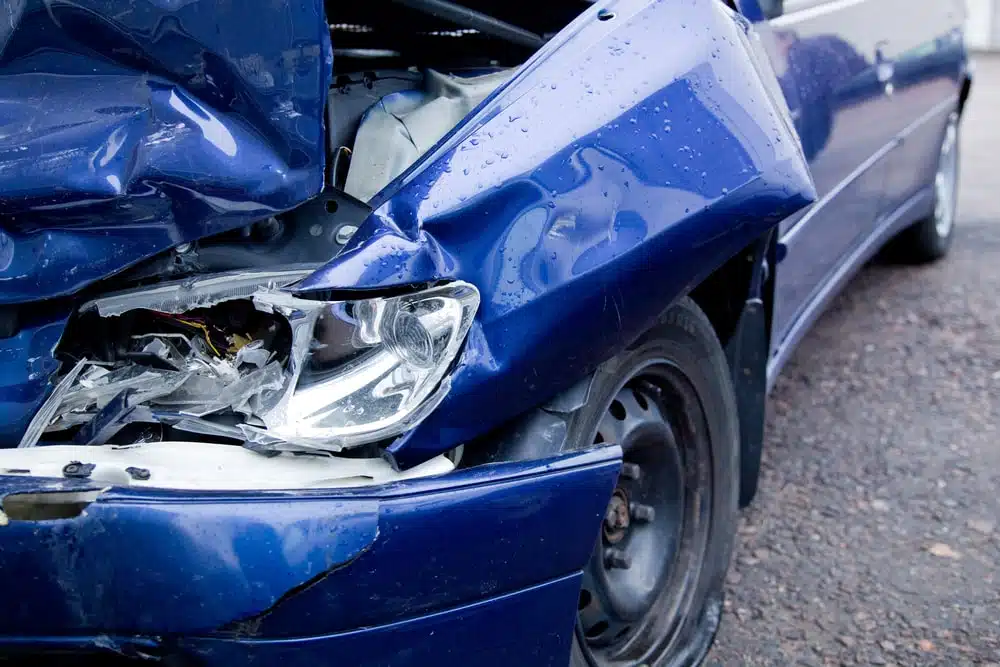


Having your car written off is one of the more stressful outcomes of a motor vehicle accident. Whether it happens after a collision or sustains damage due to flood, fire or theft, being told your car is a write-off raises a lot of questions about what comes next. Understanding how write-offs work and what your rights are as a policyholder can make a significant difference to the outcome you walk away with.
What does it mean when a car is written off?
A vehicle is written off when a car insurance provider determines that repairing it either isn't economically viable or isn't safe to do. There are two categories of write-off that insurers consider in Australia:
Statutory write-off
A statutory write-off is a vehicle that has been so severely damaged that it can never be re-registered in any Australian state or territory. This includes cars that have been crushed, submerged, burnt out or involved in a collision that has compromised the structural integrity beyond repair.
Once declared a statutory write-off, the vehicle is permanently recorded on the Written-Off Vehicle Register (WOVR) in your state or territory and can only be used for parts or scrap. It cannot legally be returned to the road under any circumstances.
Repairable write-off
A repairable write-off is a vehicle that an insurer has deemed uneconomical to repair, despite being structurally capable of being fixed. Unlike a statutory write-off, a repairable write-off can be re-registered after undergoing a structural inspection to confirm it meets roadworthiness standards.
However, the vehicle will always remain listed on the WOVR, which means its history as a write-off is permanently visible to any future buyer. If you're considering purchasing a repairable write-off, it's worth approaching with caution and checking the vehicle's WOVR status before committing.
When will an insurer write off my car?
An insurer will write off your car when the estimated cost of repairs approaches or exceeds the vehicle's pre-incident market value. Most insurers apply an internal threshold, typically somewhere in the range of 70% to 80% of the car's value, though this varies between insurers. If the repair bill goes beyond that threshold, a write-off is usually the outcome.
When you make a claim, your insurer will send a qualified assessor to inspect the vehicle. The assessor evaluates the extent of the damage and produces a report, which the insurer then uses alongside its own valuation criteria to make its decision. It's worth noting that a write-off isn't always the result of obvious or extensive damage, though.
How much will I be paid for a written-off car?
The amount you receive as a payout from your insurer for your written-off car depends on whether you choose market value coverage or agreed value coverage. Here’s how each option works:
Market value policies
With a market value policy, your insurer determines what your car was worth immediately before the incident and pays you that amount, minus your excess. They’ll typically use industry valuation tools like RedBook and Glass's Guide alongside comparable listings for similar vehicles in your area.
Importantly, the payout is based on what your car would have sold for on the open market the day before the incident, not what you originally paid for it, what you still owe on a car loan or what it’s worth now that it’s been written off.
Agreed value policies
Under an agreed value policy, you can set a nominated sum with your insurer that you’ll be paid in the event of a write-off, minus your excess. This removes the uncertainty of market valuation and means you know exactly what you'll receive if your car is written off.
Agreed value policies typically cost more in premiums and aren't offered by all insurers, but they provide greater certainty, particularly for vehicles that may depreciate quickly.
Case study: Market value vs agreed value write-off
Let's say you own a four-year-old SUV and make a write-off claim with a $500 excess. Under a market value policy, your insurer values the car at $14,000 based on current market data, leaving you with a payout of $13,500.
Under an agreed value policy taken out when the car was newer, the agreed value was set at $16,000, resulting in a payout of $15,500. That $2,000 difference can be significant, particularly if you're trying to replace the vehicle with something comparable.
When conducting these calculations, though, it’s important to consider how much more you’re paying for agreed value cover over your policy term, as this is effectively deducted from the $2,000 additional payout.
If you still owe money on your car loan, your insurer’s payout goes towards clearing the finance balance first. If the market value is less than your outstanding loan debt, you’ll still owe the difference to your lender (unless you have GAP insurance).
Can I dispute a write-off decision or valuation?
Yes, you can dispute an insurer’s decision to write off your vehicle or their valuation of your car. Here's how to go about it:
- Contact your insurer as quickly as possible: once you receive your insurer’s decision, it’s important to act quickly. In the event you disagree with their write-off decision, request that they don’t report your vehicle to the WOVR in your state or territory straight away. According to the Financial Rights Legal Centre, your insurer will notify the WOVR within seven days and the decision is unlikely to be reversed once they do.
- Request the insurer's written valuation: in the case of a valuation disagreement, ask your insurer to provide a written explanation of how they calculated the market value of your vehicle, including the tools and criteria used. This gives you a clear basis for comparison.
- Gather your own evidence: the next step is all about gathering evidence. If you’re disputing a write-off decision, get quotes from a crash repairer or salvage yard stating that the repairs are economically viable or speak to a mechanic if it’s been deemed non-repairable. For valuations, grab listings of vehicles similar to yours to show what you think it should be worth. An independent valuation from a qualified assessor can also strengthen your case.
- Lodge a formal complaint through the insurer's IDR process: failing that, all Australian insurers are legally required to have an internal dispute resolution process. Submitting a formal dispute as quickly as possible allows the insurer to review their decision, and they are required to respond within a set timeframe.
- Escalate to AFCA if needed: if the IDR process doesn't resolve the issue satisfactorily, you can escalate your complaint to the Australian Financial Complaints Authority (AFCA). AFCA is a free service for complainants and has the authority to make binding decisions on insurers. It doesn’t have the authority to force the WOVR to take down your car’s listing, but you can receive compensation in some cases.
Can I keep my car after a write-off?
Yes, you may be able to negotiate a buy-back with your insurer if your car has been written off. This involves you purchasing the wreck back from them, rather than surrendering it as part of the claim settlement. This is more common with repairable write-offs, where the owner may want to repair the vehicle themselves or sell it for parts.
If you do negotiate a buy-back, the cost of the wreck will generally be deducted from your settlement payout, rather than paid separately. It's worth noting that the buy-back price can sometimes exceed what the wreck is actually worth on the open market, and reregistering or reinsuring the car with the same provider is impossible in the event of a statutory write-off.
How to check if a car has been written off
If you're buying a used car, checking its write-off history before you commit is an important step. There are two main ways to do this:
- Check the WOVR in your state or territory: most Australian states and territories offer free WOVR checks through their respective transport authority's online portal, searchable by VIN or number plate. A WOVR check will tell you whether a vehicle has ever been declared a statutory or repairable write-off anywhere in Australia.
- Run a PPSR search: a Personal Property Securities Register (PPSR) check costs $2 but covers more ground than a WOVR check alone. It’ll tell you whether a vehicle has any outstanding finance owing against it, whether it has been reported stolen and whether it appears on the write-off register. For anyone purchasing a used vehicle privately, a PPSR search is worth the small cost.
One reason these checks matter is a practice known as vehicle rebirthing, where a written-off car's VIN is transferred onto a stolen vehicle to give it a false identity and make it appear legitimate. Running a WOVR and/or a PPSR check significantly reduces the risk of unknowingly purchasing a rebirthed vehicle, which can result in the car being seized by authorities with no recourse for the buyer.
What type of car insurance covers write-offs?
Whether a write-off is covered depends on the type of policy you have in place. Here's how each cover type stacks up:
| Policy type | Covers write-off? | Details |
|---|---|---|
| Comprehensive | Yes | Covers write-offs caused by accident, theft, fire and weather events, as well as damage to other cars for which you’re at fault, subject to policy terms and conditions |
| Third party fire and theft (TPFT) | In select cases | Covers write-offs caused by fire or theft only, as well as damage to other people’s property |
| Third party property damage (TPPD) | For other vehicles only | Only covers damage you cause to other people's property, with your own vehicle not covered under any circumstances |
| Compulsory third party (CTP) | No | Covers personal injury liability only, with no cover for vehicle damage of any kind |
| All insurance coverage is at the discretion of your insurer and subject to the terms and conditions of your policy’s Product Disclosure Statement (PDS). | ||
If you're financing your car, it's worth knowing that most lenders require you to hold comprehensive cover as a condition of the loan. In the event of a write-off, your insurer will settle directly with the lender up to the outstanding loan balance, with any remaining payout going to you.
If you're not sure whether your current policy covers you for a write-off, or you're looking to compare your options, Savvy can help you find a comprehensive car insurance policy that fits your needs.
Need finance for a replacement car?
If your write-off payout doesn't stretch far enough to cover the cost of a replacement vehicle, a car loan can help bridge the gap. If you received a payout from your insurer, you can put that amount towards a deposit on your next car, which reduces the amount you'd need to borrow.
Whether you're replacing a written-off vehicle or simply getting back on the road after a stressful event, comparing your car loan options to find a deal that works for you is a great place to start. When you apply for a car loan with Savvy, we handle all the heavy lifting for you, making the process straightforward.
- Written-off Vehicles - Financial Rights Legal Centre
- Insurance complaints - Australian Financial Complaints Authority
- Personal Property Securities Register - Personal Property Securities Register